

Reliability in cryogenic deflashing is determined by the stability of the cooling system, the precision of media handling, and the durability of the chamber components. Synco Industries designs these systems to maintain consistent temperatures and media flow, ensuring that thermoset parts are cleaned without surface damage. Evaluating these specific engineering factors helps manufacturers avoid costly downtime and quality defects.
1. Temperature Control Precision
Stable sub-zero temperatures are the foundation of effective flash removal. Cryogenic deflashing relies on the thermal shock of liquid nitrogen to embrittle flash and burrs. The equipment must maintain a consistent temperature, typically between -150°C and -196°C, to ensure the polymer becomes brittle enough to shatter. Fluctuations in temperature can lead to incomplete cleaning or damage to the base material.
2. Nitrogen Supply and Recovery Systems
An efficient nitrogen recovery loop reduces operational costs and ensures continuous supply. The system must capture and re-liquefy nitrogen vapor to minimize waste. A robust recovery system prevents pressure drops that could interrupt the deflashing cycle. Synco Industries integrates vacuum recovery systems that optimize gas usage, ensuring the machine runs efficiently even during high-volume production.
3. Media Handling and Separation
Reliable media separation prevents clogging and maintains cleaning efficacy. The machine must effectively separate the deflashing media, such as plastic grit or nylon, from the parts after the cycle. Inadequate separation can lead to media buildup in the nozzles or chamber, reducing impact force. High-quality systems use automated sieving and air classification to keep the media clean and reusable.
4. Chamber Insulation and Sealing
Superior insulation minimizes heat ingress and protects the cooling system. The deflashing chamber must be heavily insulated to maintain the cryogenic environment. Poor sealing allows ambient heat to enter, which increases nitrogen consumption and reduces the effectiveness of the thermal shock. Durable gaskets and insulated doors are critical for maintaining the internal temperature throughout the cycle.
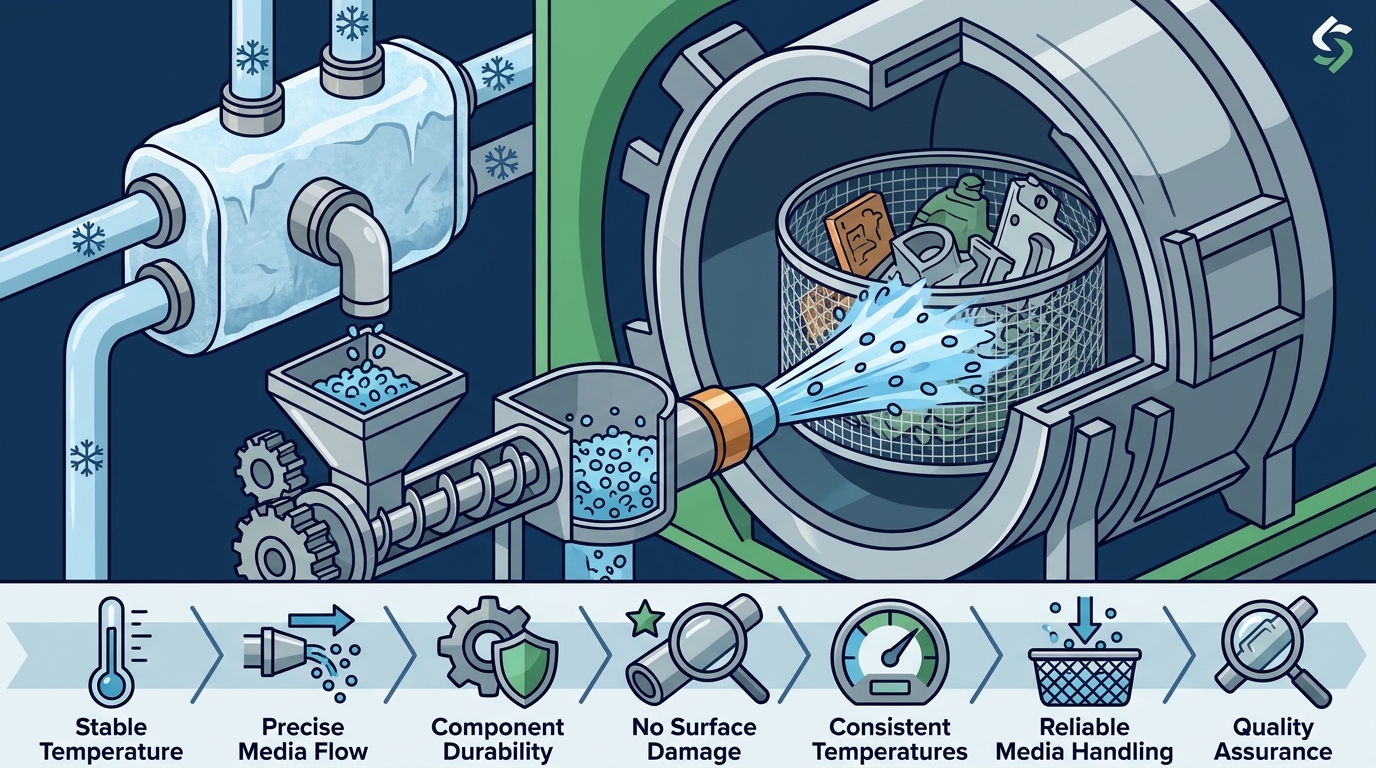
5. Nozzle Durability and Alignment
6. Automation and Control Logic
7. Safety and Ventilation Integration
Choosing the Right Equipment
Selecting cryogenic deflashing equipment requires balancing production volume, part complexity, and budget. For high-volume thermoset production, prioritize systems with robust nitrogen recovery and automated media handling. Synco Industries offers specialized cryogenic deflashing machines designed for these demands, ensuring long-term reliability and efficiency. To discuss your specific production needs, .
Frequently Asked Questions
What temperature is required for cryogenic deflashing?
Cryogenic deflashing typically requires temperatures between -150°C and -196°C to effectively embrittle flash and burrs on thermoset materials.
How does nitrogen recovery impact reliability?
Nitrogen recovery systems reduce gas consumption and prevent supply interruptions, which are critical for maintaining consistent deflashing performance and lowering operational costs.
Can cryogenic deflashing damage thermoset parts?
When properly calibrated, cryogenic deflashing does not damage the base material. The process targets only the brittle flash, leaving the main part structure intact.
What media is used in cryogenic deflashing?
Common media include plastic grit, nylon, and polycarbonate. The choice of media depends on the part material and the desired surface finish.
How often should nozzles be replaced?
Nozzle replacement frequency depends on usage and media type. Regular inspection and timely replacement ensure consistent media impact and cleaning quality.