
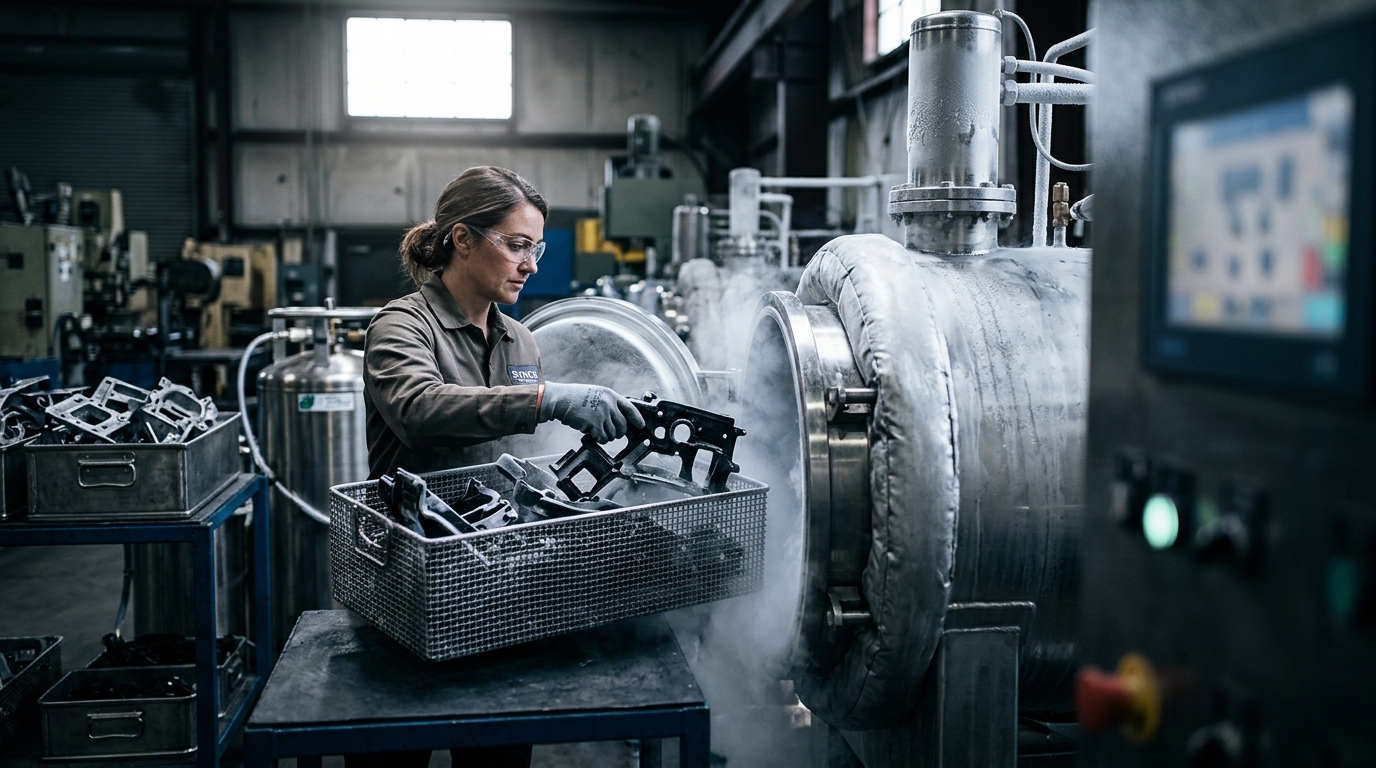
Cryogenic deflashing machines are highly reliable for high-volume thermoset production when properly validated and maintained. Synco Industries provides robust cryogenic systems designed for continuous industrial duty, ensuring consistent flash removal without damaging delicate thermoset components. This guide covers reliability factors, material suitability, validation protocols, nitrogen infrastructure, and consistency metrics to help manufacturers optimize their production lines.
Cryogenic Deflashing Reliability
Cryogenic deflashing is a process that uses extreme cold to embrittle flash and burrs on plastic parts, allowing them to be removed by impact with abrasive media. For high-volume thermoset production, reliability hinges on the machine's ability to maintain stable temperatures and consistent media flow over extended periods. Synco Industries designs its Cryogenic Deflashing Machines with heavy-duty cooling systems and robust structural components to handle 24/7 industrial duty. The reliability of these systems is further supported by the company's ISO certification and CE certified machinery, ensuring adherence to international safety and quality standards.
Thermal Stability and Component Durability
Thermal stability is the primary driver of machine reliability. Fluctuations in chamber temperature can lead to inconsistent flash embrittlement, resulting in incomplete removal or part damage. High-quality cryogenic units utilize precision temperature controllers and insulated chambers to maintain a stable environment. Synco's infrastructure, which includes advanced manufacturing units and R&D departments, ensures that these thermal components are built to withstand the rigors of continuous operation. The use of high-grade components in the cooling circuit prevents leaks and maintains pressure integrity, which is critical for long-term uptime.
Media Handling and Recovery Systems
Reliability is also determined by the efficiency of the media handling system. In high-volume production, the machine must continuously separate used media from removed flash and return fresh media to the blast chamber. Synco integrates Vacuum Blasting and recovery systems that minimize media loss and reduce manual intervention. These systems are designed to handle the specific characteristics of thermoset flash, which can be more brittle and generate finer debris than thermoplastic flash. Efficient separation ensures that the blast wheel or nozzle does not clog, maintaining consistent impact force throughout the production cycle.
Thermoset Material Suitability
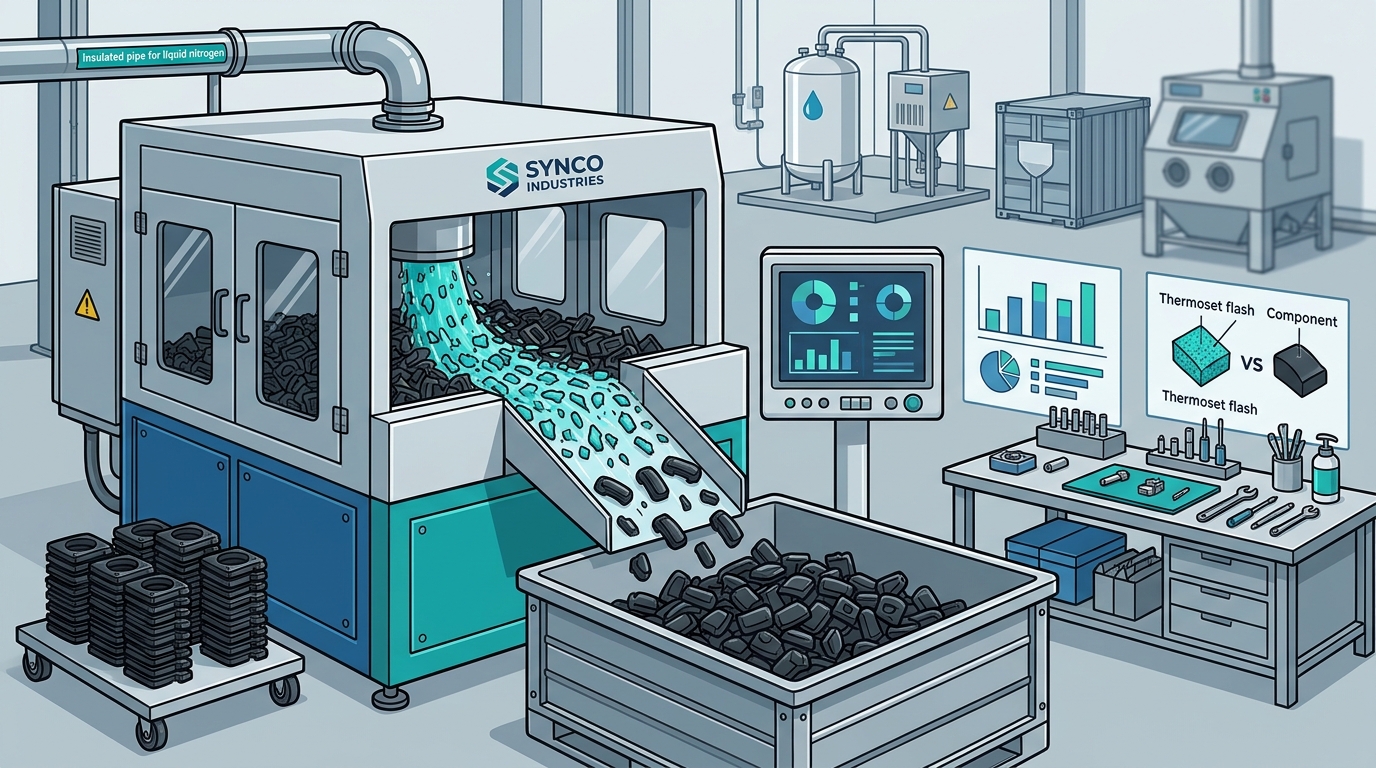
Thermoset materials, such as phenolic resins, epoxy, and unsaturated polyester, undergo a chemical curing process that makes them rigid and heat-resistant. This rigidity makes them particularly suitable for cryogenic deflashing because the material does not soften or deform under the impact of abrasive media at low temperatures. The Thermoset Deflashing Machines offered by Synco are specifically engineered to accommodate the unique properties of these materials. Unlike thermoplastics, which may require careful temperature control to avoid melting, thermosets benefit from the embrittlement effect of cryogenic temperatures, making flash removal more efficient and less likely to cause surface damage.
Impact Resistance and Surface Integrity
The suitability of cryogenic deflashing for thermosets is further enhanced by the material's high impact resistance at ambient temperatures. When cooled to cryogenic levels, the flash becomes brittle and shatters upon impact, while the main body of the part remains intact due to its inherent toughness. This differential in brittleness allows for precise flash removal without the need for high-pressure blasting that could erode the part surface. Synco's expertise in Shot Blasting Machines ensures that the abrasive media and impact parameters are calibrated to preserve the surface integrity of thermoset components, which is critical for applications in electrical, automotive, and aerospace industries.
Compatibility with Complex Geometries
Process Validation Requirements
Process validation is a critical step in ensuring that cryogenic deflashing meets the quality standards required for high-volume production. This involves defining the process parameters, such as temperature, media type, and blast duration, and verifying that they consistently produce the desired outcome. Synco Industries emphasizes robust Quality Control Processes, engaging third-party inspectors to ensure that the supplied equipment meets the required specifications. Validation typically includes initial qualification, ongoing monitoring, and periodic re-validation to account for any changes in material or process conditions.
Defining Critical Process Parameters
Critical process parameters (CPPs) must be identified and controlled to ensure consistent flash removal. These parameters include the chamber temperature, the type and size of the abrasive media, the blast pressure, and the cycle time. By establishing control limits for each CPP, manufacturers can detect deviations before they result in defective parts. Synco's R&D unit works with clients to define these parameters based on the specific thermoset material and part geometry. The use of automated controls and data logging systems allows for real-time monitoring of these parameters, providing a traceable record of the process for quality assurance purposes.
Statistical Process Control
Statistical Process Control (SPC) is a key tool in validating cryogenic deflashing processes. By collecting data on flash removal effectiveness and part dimensions, manufacturers can identify trends and variations in the process. SPC charts help to distinguish between common cause variation, which is inherent to the process, and special cause variation, which indicates a problem that needs to be addressed. Synco's machines are designed to provide the data necessary for SPC analysis, enabling manufacturers to maintain process capability and reduce scrap rates. This data-driven approach is essential for achieving the high levels of consistency required in high-volume production environments.
Nitrogen Infrastructure
Nitrogen is the primary gas used in cryogenic deflashing to cool the parts and media to the required temperatures. The reliability of the deflashing process depends on a stable and sufficient supply of high-purity nitrogen. Synco Industries provides guidance on the nitrogen infrastructure required for cryogenic systems, including gas generation, storage, and distribution. A well-designed nitrogen system ensures that the machine can maintain the desired temperature without interruptions, which is critical for continuous production.
Gas Purity and Flow Rates
The purity of the nitrogen gas is a critical factor in cryogenic deflashing. Impurities in the gas can affect the cooling efficiency and potentially contaminate the parts. High-purity nitrogen, typically 99.9% or higher, is recommended for most applications. The flow rate of the gas must be sufficient to maintain the chamber temperature, especially during high-volume production when the heat load is greater. Synco's engineering team can calculate the required gas flow rates based on the machine's capacity and the specific production schedule. This ensures that the nitrogen infrastructure is sized appropriately to support the deflashing process without excessive energy consumption.
Storage and Distribution Systems
Flash Removal Consistency
Flash removal consistency is the ultimate measure of cryogenic deflashing reliability. In high-volume production, every part must be cleaned to the same standard, with no residual flash or burrs. Synco Industries focuses on achieving this consistency through precise control of the process parameters and robust machine design. The use of automated systems and data logging allows for real-time adjustments to maintain consistent flash removal. This consistency is critical for downstream processes, such as painting or assembly, where any residual flash can cause defects.
Media Selection and Abrasion Control
The selection of the abrasive media is a key factor in achieving consistent flash removal. Different media types, such as glass beads, steel shots, or plastic grits, have different impact characteristics and are suitable for different materials and part geometries. Synco offers a range of Abrasives and Cut Wire Shots that can be tailored to the specific requirements of the thermoset part. By selecting the appropriate media and controlling the impact energy, manufacturers can achieve consistent flash removal without damaging the part surface. Regular inspection of the media for wear and contamination is also essential to maintain consistency over time.
Automated Monitoring and Feedback
Automated monitoring and feedback systems play a crucial role in maintaining flash removal consistency. These systems can use sensors to detect the presence of flash on the parts and adjust the process parameters accordingly. For example, if a sensor detects that a part has not been fully cleaned, the system can extend the blast cycle or adjust the media flow to ensure complete removal. Synco's machines are designed to integrate with these automated systems, providing a closed-loop control that ensures consistent quality. This level of automation reduces the need for manual inspection and allows for higher production throughput.
Key Takeaways
- Cryogenic deflashing is highly reliable for thermoset production when using robust, CE-certified machinery.
- Thermoset materials benefit from cryogenic temperatures due to their rigidity and impact resistance.
- Process validation requires defining and controlling critical process parameters such as temperature and media type.
- A stable supply of high-purity nitrogen is essential for maintaining consistent chamber temperatures.
- Statistical Process Control (SPC) helps identify trends and variations in the deflashing process.
- Automated monitoring systems can adjust process parameters in real-time to ensure consistent flash removal.
- Proper media selection and maintenance are critical for preserving part surface integrity.
- Synco Industries provides comprehensive support for cryogenic deflashing systems, from design to validation.
Frequently Asked Questions
What is the primary advantage of cryogenic deflashing for thermosets?
The primary advantage is that the extreme cold embrittles the flash, making it easy to remove without damaging the main part body.
How does Synco ensure the reliability of its cryogenic machines?
Synco uses high-grade components, ISO-certified quality control processes, and CE-certified machinery to ensure reliability.
What type of nitrogen is required for cryogenic deflashing?
High-purity nitrogen, typically 99.9% or higher, is required to ensure efficient cooling and prevent contamination.
Can cryogenic deflashing handle complex part geometries?
Yes, the embrittlement effect allows flash to be removed from tight corners and recesses that are difficult to access with mechanical tools.
What is the role of Statistical Process Control in cryogenic deflashing?
SPC helps identify trends and variations in the process, allowing manufacturers to maintain process capability and reduce scrap rates.
How does media selection affect flash removal consistency?
The type and size of the abrasive media determine the impact energy, which must be calibrated to remove flash without damaging the part surface.
Conclusion
Cryogenic deflashing machines are a reliable solution for high-volume thermoset production, provided that the process is properly validated and maintained. By focusing on thermal stability, material suitability, and consistent flash removal, manufacturers can achieve high-quality results with minimal scrap. Synco Industries offers a comprehensive range of Deflashing Machines and support services to help you implement a successful cryogenic deflashing process. To discuss your specific production needs, for a consultation.