
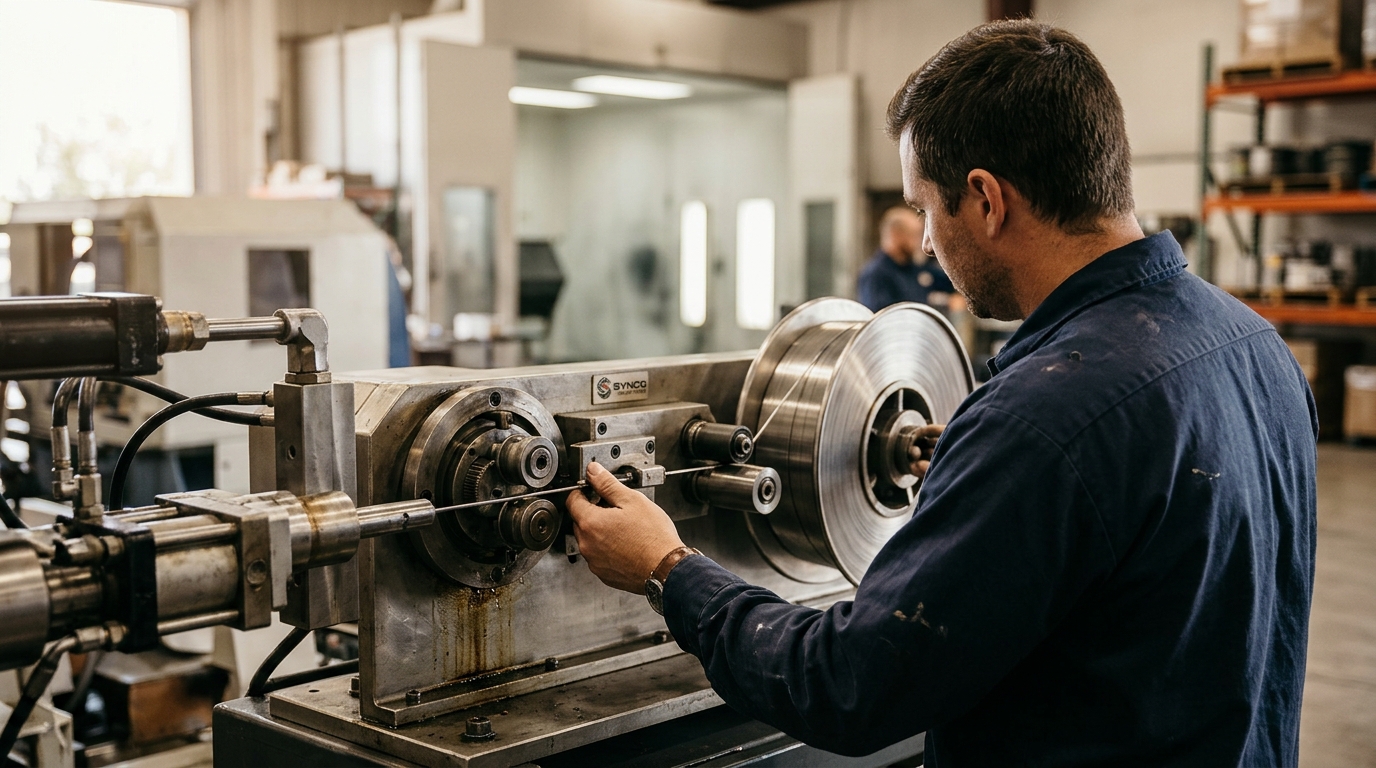
Wire feed control is the primary mechanism that dictates the stability of a thermal spray process. Inconsistent wire delivery leads to fluctuating particle velocity and poor coating adhesion. Synco Industries designs its thermal spray systems with precise feed mechanisms to ensure that every layer of coating is uniform and reliable.
1. Precision Wire Feed Speed Regulation
Stable wire speed is the foundation of a consistent particle stream. The feed speed must remain constant to ensure that the wire melts at a predictable rate. Variations in speed cause fluctuations in the size and temperature of the molten particles. This directly impacts the porosity and density of the final coating. For additional details, review the synco co in.
2. Dual Motor Drive Systems
Independent motor control prevents wire tangling and feed interruptions. Many high-performance systems use two motors to drive the feed rollers. This setup allows for precise tension management and smooth acceleration. It ensures that the wire is fed into the torch without slippage or breakage. For additional details, review the Spares 8211 Synco Industries.
3. Real-Time Wire Tension Monitoring
Constant tension monitoring detects feed issues before they affect the coating. A sensor system tracks the resistance encountered by the wire as it moves through the feed path. If the tension drops or spikes, the system can alert the operator or adjust the feed rate. This prevents the deposition of unmelted or partially melted particles.
4. Automatic Wire Length Compensation
Automatic compensation maintains the correct wire protrusion from the torch tip. As the wire is consumed, the length of the wire extending from the nozzle changes. This change affects the melting efficiency and particle trajectory. An automatic compensation feature adjusts the feed to keep the wire length constant throughout the spraying cycle.
5. High-Resolution Encoder Feedback
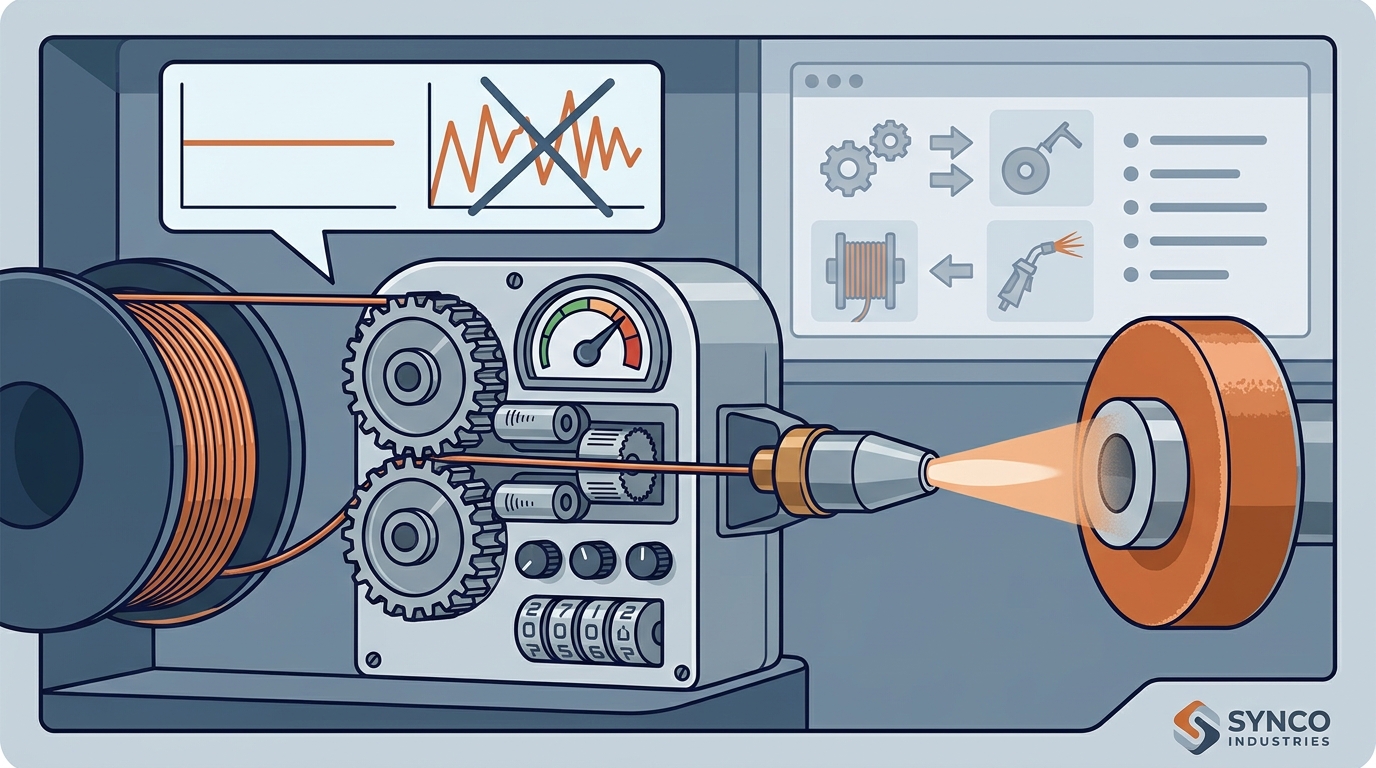
Encoder feedback provides accurate data on the actual amount of wire delivered. Optical or magnetic encoders count the rotations of the feed rollers. This data is compared against the commanded feed speed to detect any discrepancies. High-resolution encoders ensure that the system responds quickly to any changes in wire diameter or feed conditions.
6. Integrated Gas Flow Synchronization
Synchronizing gas flow with wire feed ensures optimal combustion and particle velocity. The ratio of fuel gas to oxygen must match the wire feed rate to achieve complete melting. A control system that links gas valves to the wire feed motor maintains this critical balance. This synchronization is essential for achieving high deposition efficiency and strong mechanical bonding.
7. Programmable Feed Profiles
Programmable profiles allow for tailored feed rates during different phases of the coating process. Operators can set specific feed speeds for the start, middle, and end of a spray pass. This capability is useful for managing heat input and preventing overheating of the substrate. It allows for the creation of complex coating geometries with consistent quality.
Choosing the Right Control Features
Frequently Asked Questions
Why is wire feed speed critical in thermal spraying?
Wire feed speed determines the rate at which material is melted and deposited. Inconsistent speed leads to variations in particle size and temperature, which directly affect coating density and adhesion.
How does dual motor drive improve coating consistency?
Dual motor drives provide independent control over each feed roller. This ensures smooth wire delivery and prevents tangling, which can cause interruptions in the spray process.
What is the role of wire tension monitoring?
Wire tension monitoring detects changes in the resistance of the wire feed path. It helps identify issues such as wire breakage or feed roller slippage before they impact the coating quality.
Can wire feed profiles be customized for different coatings?
Yes, programmable feed profiles allow operators to adjust the wire feed rate at different stages of the spraying process. This customization helps manage heat input and achieve the desired coating properties.
How does gas flow synchronization affect coating quality?
Gas flow synchronization ensures that the fuel and oxygen ratios match the wire feed rate. This balance is essential for complete wire melting and optimal particle velocity, which are key to a dense and well-bonded coating.