
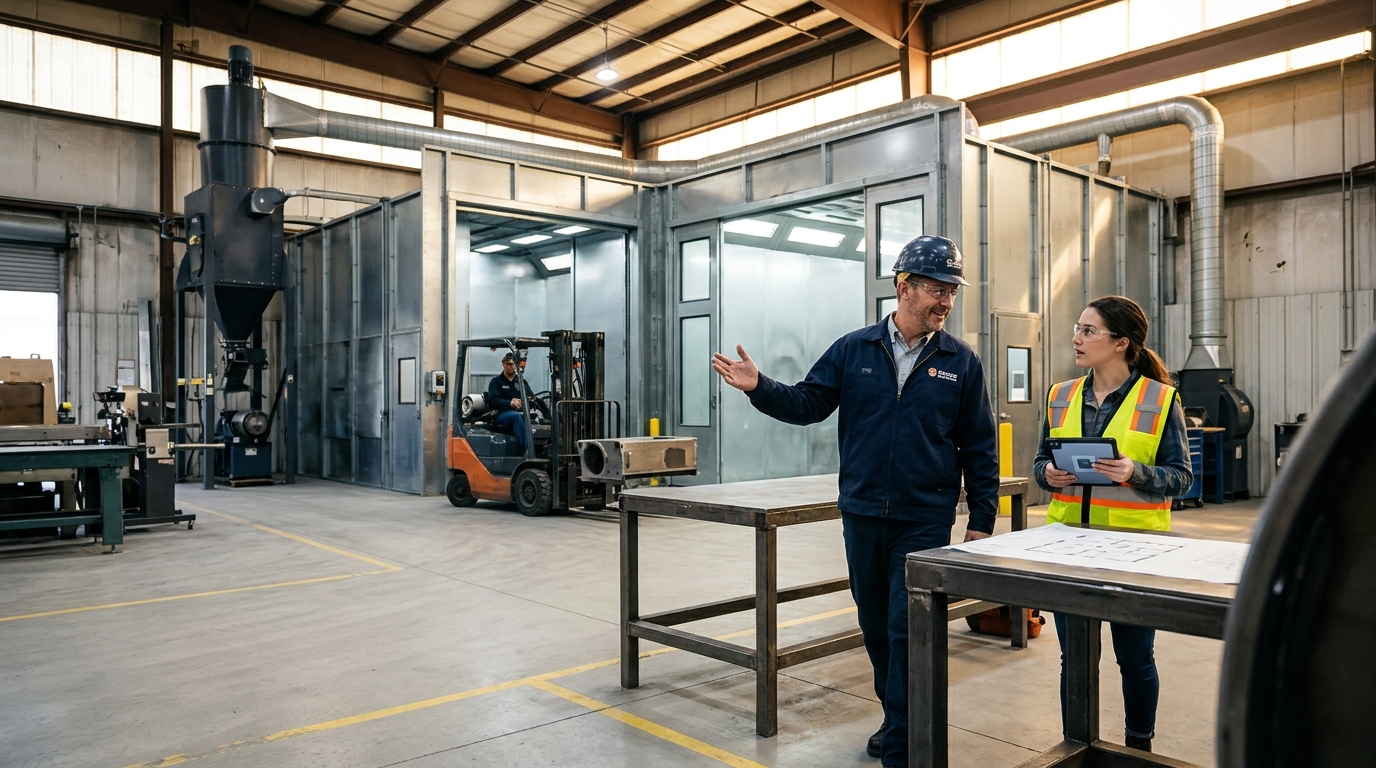
Selecting the right blast room layout is critical for optimizing production flow and surface finish quality in industrial settings. The configuration of the room directly impacts how parts move through the blasting process, how media is recovered, and the overall footprint required on the factory floor. Synco Industries designs these systems to integrate seamlessly with existing manufacturing lines, ensuring that surface preparation does not become a bottleneck in your production cycle.
1. Walk-In Blast Rooms
Ideal for large, heavy components that require manual handling. Walk-in rooms provide a spacious, enclosed environment where operators can enter the chamber to blast large items like structural steel or heavy machinery parts. This layout is best suited for low-volume, high-value items where the part size exceeds the capacity of automated conveyors. The open access allows for flexible positioning of the blast nozzles to reach complex geometries. For additional details, review the Spares 8211 Synco Industries.
2. Table-Type Blast Rooms
Best for small to medium parts requiring consistent, high-volume processing. Table-type rooms feature a conveyor system that moves parts through the blasting zone on a continuous or batch basis. This layout is highly efficient for automotive components, castings, and machined parts that need uniform surface preparation. The automated movement ensures that every part receives the same blast intensity and duration, reducing variability in the final finish.
3. Hangar-Type Blast Rooms
Designed for large, irregularly shaped items that cannot fit on a table. Hangar-type rooms utilize a hoist or crane system to suspend parts within the blasting chamber. This configuration is common in the aerospace and heavy engineering sectors where large assemblies need to be blasted from multiple angles. The suspended parts allow for 360-degree access, ensuring that all surfaces are cleaned effectively without the need for manual repositioning.
4. Tumbler-Type Blast Rooms
Optimized for small, durable parts that can withstand tumbling action. Tumbler rooms use a rotating drum to tumble parts against the blasting media, providing a uniform finish on all sides. This layout is highly efficient for high-volume production of small items like fasteners, gears, and small castings. The tumbling action ensures that no part is shielded by another, resulting in consistent surface roughness and cleaning.
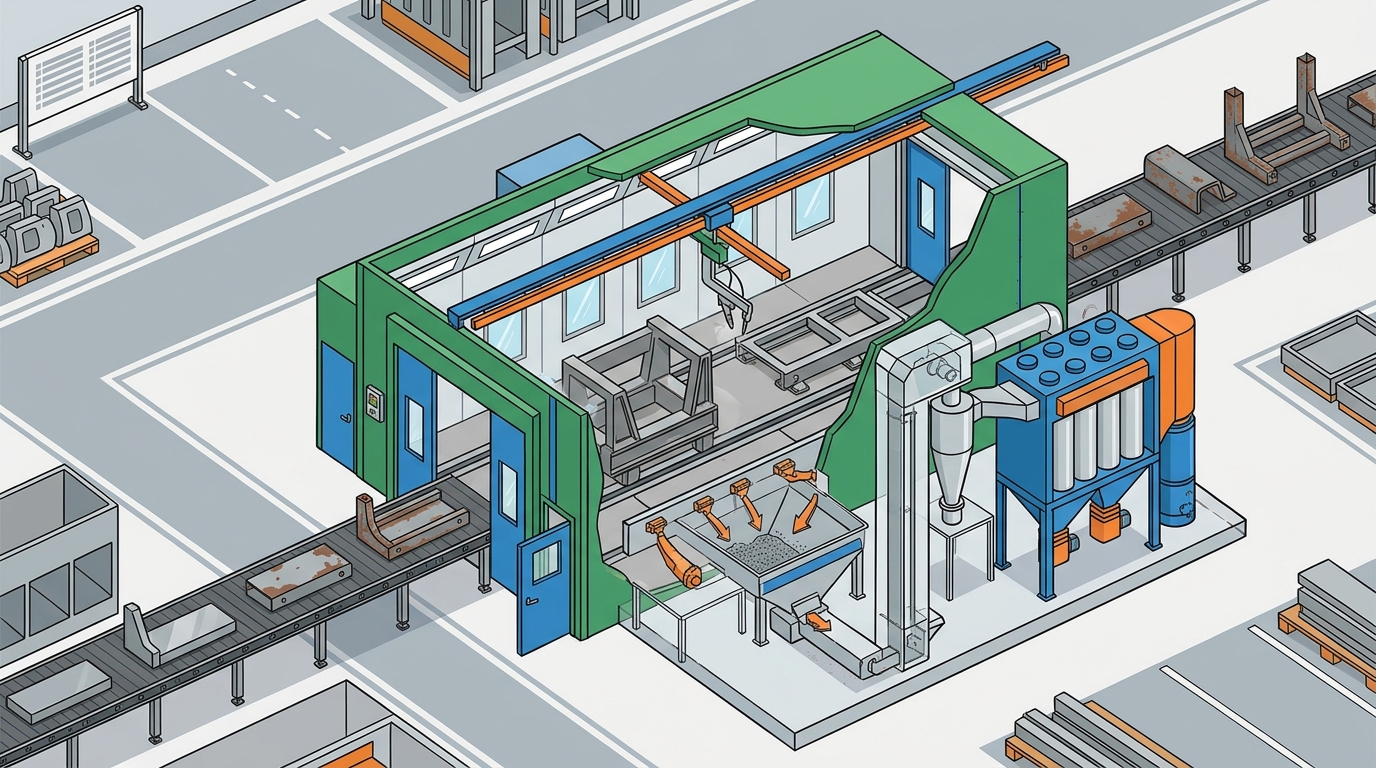
5. Portable Blast Rooms
Flexible solutions for on-site or temporary blasting requirements. Portable blast rooms are compact, mobile units that can be moved to different locations within a factory or to job sites. This layout is ideal for maintenance, repair, and overhaul (MRO) operations where parts need to be blasted in situ. The portability allows for quick setup and teardown, minimizing downtime and maximizing equipment utilization.
6. Wet Blast Rooms
Effective for dust control and finishing with water-soluble media. Wet blast rooms use a slurry of water and abrasive media to clean and finish surfaces. This layout is particularly useful in environments where dust control is a major concern, such as in food processing or pharmaceutical facilities. The water helps to suppress dust and can also provide a smoother finish on certain materials. Synco Industries offers wet blasting machines that are designed for efficient media recovery and dust suppression.
7. Vacuum Blast Rooms
Advanced systems for precise media recovery and environmental compliance. Vacuum blast rooms use a vacuum system to recover spent media and dust from the blasting chamber. This layout is ideal for applications where media recovery is critical, such as in the production of high-purity components. The vacuum system ensures that no media is left on the part, preventing contamination and ensuring a clean finish. Synco Industries provides vacuum blasting machines that offer superior media recovery and environmental control.
Choosing the Right Layout
The best blast room layout depends on the size, shape, and volume of the parts being processed, as well as the specific surface finish requirements. For large, heavy items, a walk-in or hangar-type room is often the best choice. For small, high-volume parts, a table-type or tumbler-type room is more efficient. If dust control or media recovery is a priority, consider a wet or vacuum blast room. Synco Industries can help you select the right layout for your specific application, ensuring that your surface preparation process is both efficient and effective.
Frequently Asked Questions
What is the difference between a walk-in and a hangar-type blast room?
A walk-in blast room allows operators to enter the chamber to blast large parts manually, while a hangar-type room uses a hoist or crane to suspend parts for blasting. Walk-in rooms are better for parts that require manual positioning, while hangar-type rooms are better for large, suspended assemblies.
Which blast room layout is best for small parts?
Table-type and tumbler-type blast rooms are best for small parts. Table-type rooms use a conveyor to move parts through the blasting zone, while tumbler-type rooms use a rotating drum to tumble parts against the media. Both layouts are highly efficient for high-volume production of small items.
Can blast rooms be customized for specific factory needs?
Yes, blast rooms can be customized to fit specific factory needs, including part size, shape, and volume. Synco Industries offers customized blasting machines that can be tailored to your specific requirements, ensuring that the system integrates seamlessly with your existing production line.
What is the advantage of using a wet blast room?
The main advantage of using a wet blast room is dust control. Wet blast rooms use a slurry of water and abrasive media to clean and finish surfaces, which helps to suppress dust and can provide a smoother finish on certain materials. This layout is ideal for environments where dust control is a major concern.
How does a vacuum blast room work?
A vacuum blast room uses a vacuum system to recover spent media and dust from the blasting chamber. The vacuum system ensures that no media is left on the part, preventing contamination and ensuring a clean finish. This layout is ideal for applications where media recovery is critical, such as in the production of high-purity components.
Where can I find more information about Synco Industries' blast room solutions?
You can find more information about Synco Industries' blast room solutions on their website. Synco Industries is a leading manufacturer of shot blasting machines and related equipment, offering a wide range of solutions for industrial surface preparation.