
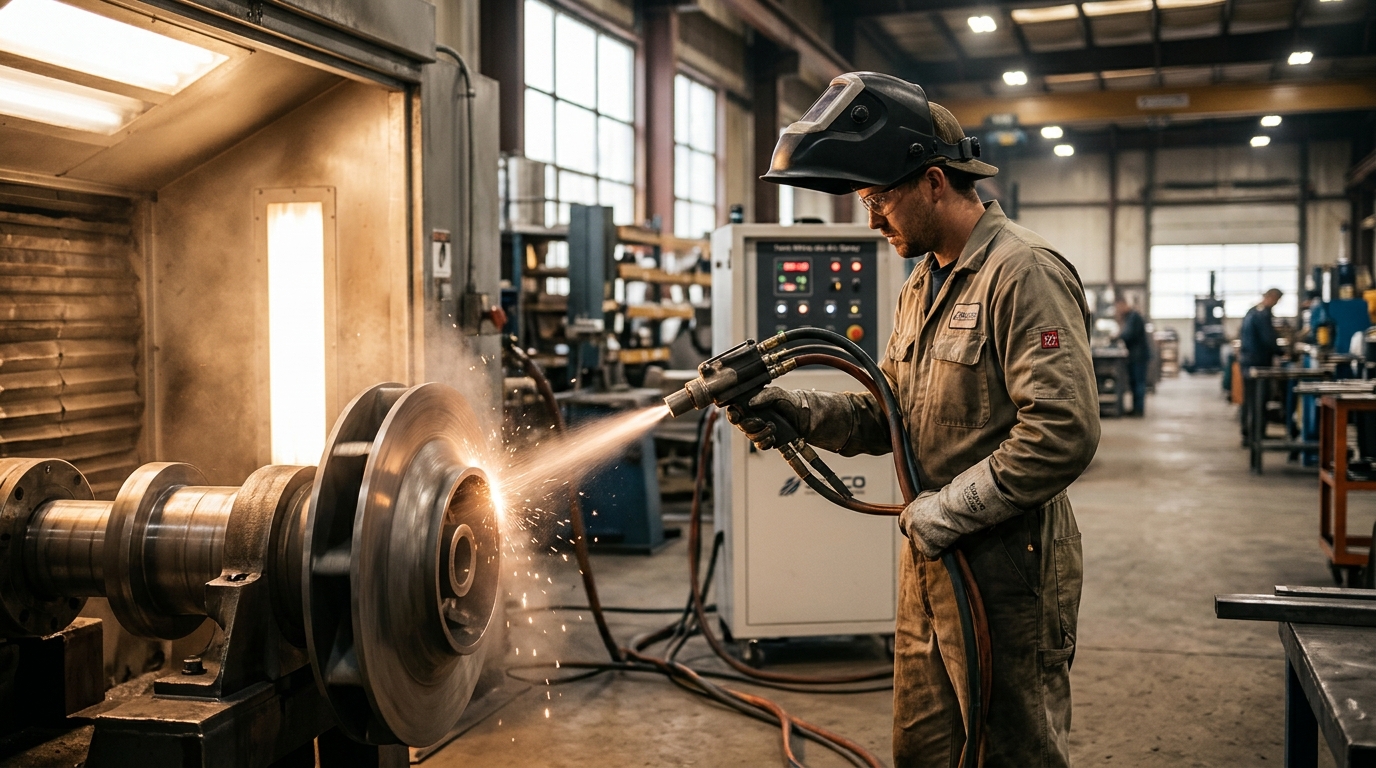
Deposition rate is the mass of coating material applied per unit of time, typically measured in kilograms per hour. In industrial arc spraying, this metric directly impacts production throughput, labor costs, and equipment utilization. Synco Industries provides specialized arc spray systems designed to optimize these rates for specific industrial applications, ensuring that manufacturers achieve the right balance between speed and coating quality.
Understanding Deposition Rate Metrics
Deposition rate is a critical performance indicator for thermal spray processes. It is defined as the ratio of the mass of material successfully deposited onto the substrate to the total mass of material fed into the spray gun. This metric is distinct from transfer efficiency, which accounts for material lost to the atmosphere or floor. For industrial operators, a higher deposition rate generally translates to lower material waste and reduced operating costs per square meter of coated surface. For additional details, review the Products 8211 Synco Industries.
Comparison of Arc Spray System Types
High-current arc spray systems push the boundaries of deposition speed by using significantly higher electrical currents. While these systems can achieve very high mass transfer rates, they require robust power supplies and careful monitoring to prevent wire burnout or inconsistent coating density. The choice between these systems depends on the specific industrial requirement, whether it is rapid coverage or precise dimensional control.
Impact of Material Properties on Deposition
The physical and chemical properties of the coating material play a decisive role in determining the achievable deposition rate. Materials with lower melting points, such as aluminum and its alloys, generally melt faster and deposit at higher rates than high-melting-point materials like nickel or stainless steel. This difference in melting behavior means that the same arc spray system will produce different deposition rates when switching between material types.
Wire diameter is another critical variable. Thicker wires can carry more material and often result in higher deposition rates, but they require higher currents to melt completely. If the current is insufficient for the wire diameter, the wire may not melt fully, leading to poor adhesion and reduced effective deposition. Synco Industries supplies a range of thermal spray wires, including specialized alloys, that are optimized for specific arc spray systems to ensure consistent and efficient deposition.
Optimizing Throughput in Industrial Settings
In high-volume industrial environments, optimizing deposition rate is essential for maintaining production schedules. Operators must balance the spray gun speed, the traverse pattern, and the arc parameters to achieve a uniform coating thickness without excessive overlap. Excessive overlap can lead to heat buildup and potential coating defects, while insufficient overlap can result in thin spots and poor coverage.
Automated arc spray systems offer the advantage of consistent parameter control, which helps maintain a stable deposition rate over long production runs. Manual systems rely on operator skill to adjust the gun position and speed, which can introduce variability in the deposition rate. For critical applications, such as those in the automotive or aerospace sectors, automated systems are often preferred to ensure repeatability and quality control. Synco Industries offers both manual and automated solutions, allowing manufacturers to select the configuration that best fits their production needs.
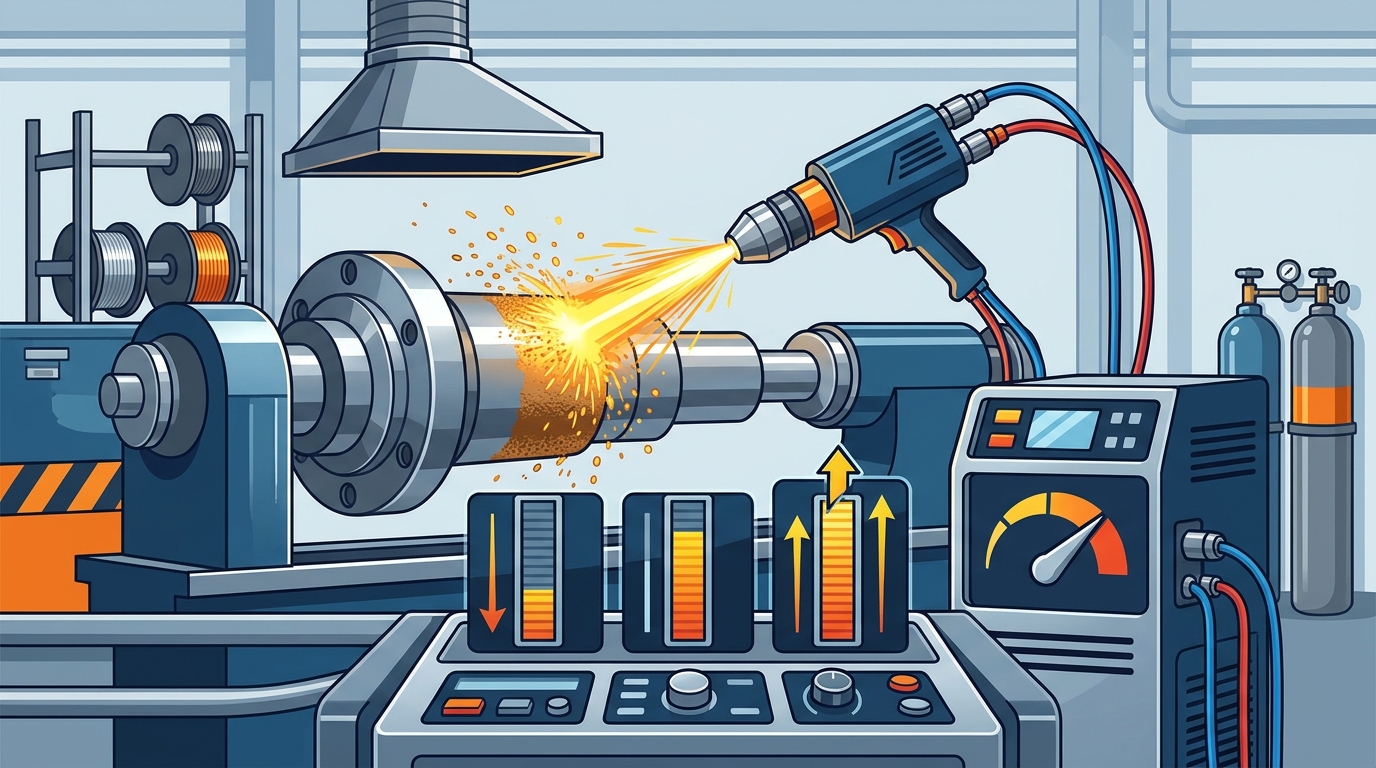
Key Takeaways
- Deposition rate is the mass of coating applied per unit of time and is a key cost driver in thermal spraying.
- Twin-wire arc spray systems generally provide higher deposition rates than single-wire systems due to simultaneous melting of two wires.
- Material melting point and wire diameter significantly influence the achievable deposition rate for a given system.
- High-current systems can achieve very high deposition speeds but require careful parameter management to avoid defects.
- Automated systems help maintain consistent deposition rates and coating uniformity in high-volume production.
- Optimizing arc current, wire feed speed, and standoff distance is essential for maximizing effective deposition.
Frequently Asked Questions
What is the typical deposition rate for twin-wire arc spray?
Twin-wire arc spray systems typically achieve deposition rates ranging from 2 to 5 kilograms per hour, depending on the material and parameters.
How does wire diameter affect deposition rate?
Thicker wires generally allow for higher deposition rates because they carry more material, but they require higher currents to melt completely.
Can single-wire systems match the speed of twin-wire systems?
Single-wire systems typically have lower deposition rates than twin-wire systems because they melt only one wire at a time.
What role does arc current play in deposition?
Arc current determines the melting rate of the wire; higher currents increase the melting rate and thus the potential deposition rate.
How does material type influence deposition speed?
Materials with lower melting points, like aluminum, deposit faster than high-melting-point materials like nickel or stainless steel.
Where can I find arc spray systems in India?
Synco Industries manufactures and supplies a wide range of arc spray systems and thermal spray equipment in India.
Conclusion
Selecting the right arc spray system requires a careful analysis of deposition rate requirements, material properties, and production goals. By understanding how different system types and parameters affect mass transfer, manufacturers can optimize their processes for efficiency and quality. Synco Industries provides expert guidance and high-performance equipment to help you achieve the optimal deposition rates for your specific industrial applications. To discuss your requirements, .