
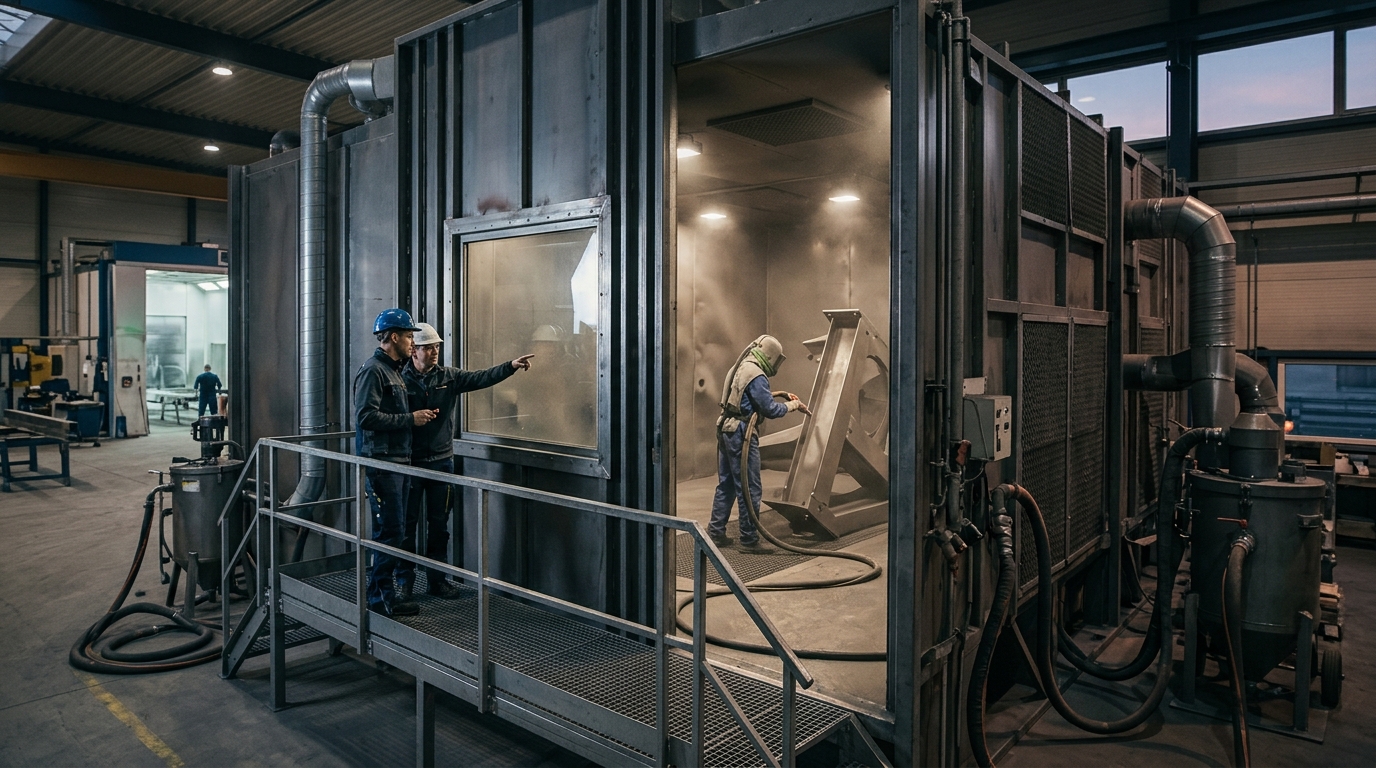
Modern manufacturing facilities utilize blast rooms to prepare surfaces for painting, coating, or inspection by removing rust, scale, and contaminants. These enclosed environments control dust and noise while ensuring consistent surface profiles. Synco Industries designs these systems to meet specific production needs, from small parts to large structural components. The right setup depends on part size, throughput, and the type of abrasive media used.
Enclosed Blast Rooms for Dust Control
Enclosed blast rooms are the standard for facilities that require strict environmental control. A blast room is a sealed chamber where abrasive media is propelled against workpieces to clean or texture the surface. This design contains dust and prevents it from escaping into the main workshop. It is essential for facilities that must comply with local air quality regulations. By keeping the media contained, these rooms also reduce the amount of abrasive needed, lowering long-term operating costs. For additional details, review the Spares 8211 Synco Industries.
Walk-In and Drive-Through Configurations
Media Recirculation and Recovery Systems
Some setups use vacuum recovery, which is gentler on the media. This method is suitable for finer abrasives or when the surface finish requires less aggressive cleaning. Synco Industries offers vacuum recovery systems that integrate seamlessly with their blast room designs. The choice between pressure and vacuum recovery depends on the type of media and the desired surface profile.
Automated Nozzle and Satellite Systems
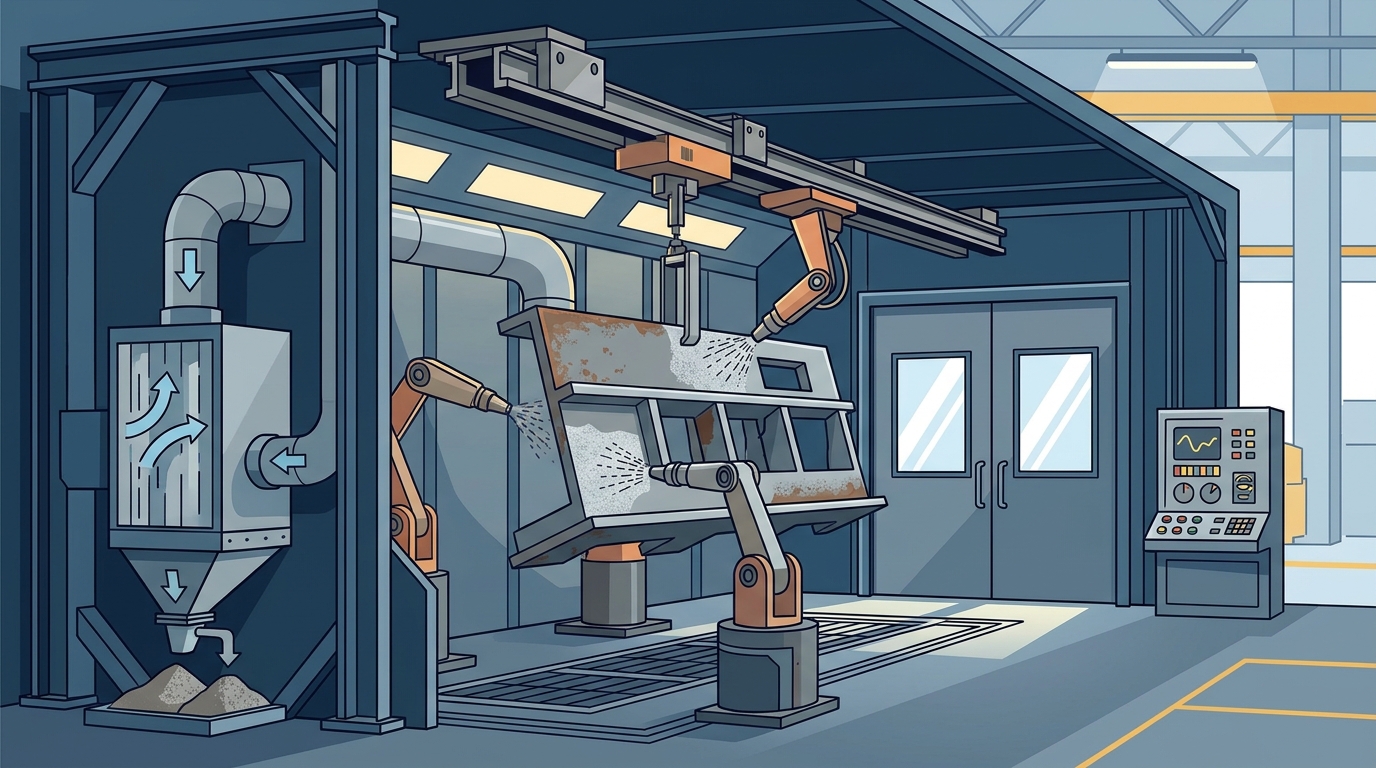
Automation is a key trend in modern blast room setups. Automated nozzle systems use robotic arms or fixed nozzles to direct the abrasive stream. A satellite blasting system is a configuration where multiple nozzles are mounted on a rotating arm or fixed positions around the workpiece. This ensures that all sides of the part are cleaned evenly. It is particularly useful for complex shapes that are difficult to clean manually.
These systems can be programmed to adjust the angle and pressure of the blast. This precision is critical for industries that require specific surface roughness levels. For example, aerospace components often need a very consistent surface profile for paint adhesion. Automated systems provide the repeatability that manual blasting cannot guarantee. Synco Industries designs these systems with advanced controls to meet such stringent requirements.
Specialized Rooms for Wet and Dry Blasting
Dry blasting remains the most common method for heavy industrial applications. It is faster and more aggressive than wet blasting. The choice between wet and dry depends on the material being cleaned and the desired outcome. Synco Industries provides both wet and dry blast room solutions, allowing facilities to choose the best fit for their specific needs.
Key Takeaways
- Enclosed blast rooms control dust and noise, making them essential for regulatory compliance.
- Walk-in and drive-through rooms accommodate large parts and high-volume production.
- Media recirculation systems reduce waste and lower operating costs by reusing abrasive.
- Automated nozzle and satellite systems ensure uniform cleaning and repeatability.
- Wet blasting is suitable for delicate parts and paint removal, while dry blasting is faster for heavy industrial use.
- Choosing the right setup depends on part size, throughput, and surface finish requirements.
Frequently Asked Questions
What is the main difference between a blast room and a blast booth?
A blast room is a fully enclosed chamber, while a blast booth is often a smaller, open-fronted enclosure. Blast rooms provide better dust control and are suitable for larger parts.
How does media recirculation work in a blast room?
Can blast rooms be automated?
Yes, blast rooms can be automated with robotic nozzles and conveyor systems. This ensures consistent cleaning and reduces labor costs.
What types of parts can be cleaned in a blast room?
Blast rooms can clean a wide range of parts, from small components to large structural beams and vehicle bodies.
Is wet blasting better than dry blasting?
Wet blasting is better for delicate parts and paint removal, while dry blasting is faster and more aggressive for heavy industrial use.
Conclusion
Selecting the right blast room setup is critical for efficient surface preparation in modern manufacturing. Facilities must consider part size, throughput, and environmental regulations when choosing a system. Synco Industries offers a range of blast room solutions, from small enclosed chambers to large drive-through configurations. To discuss your specific requirements, for a consultation.