
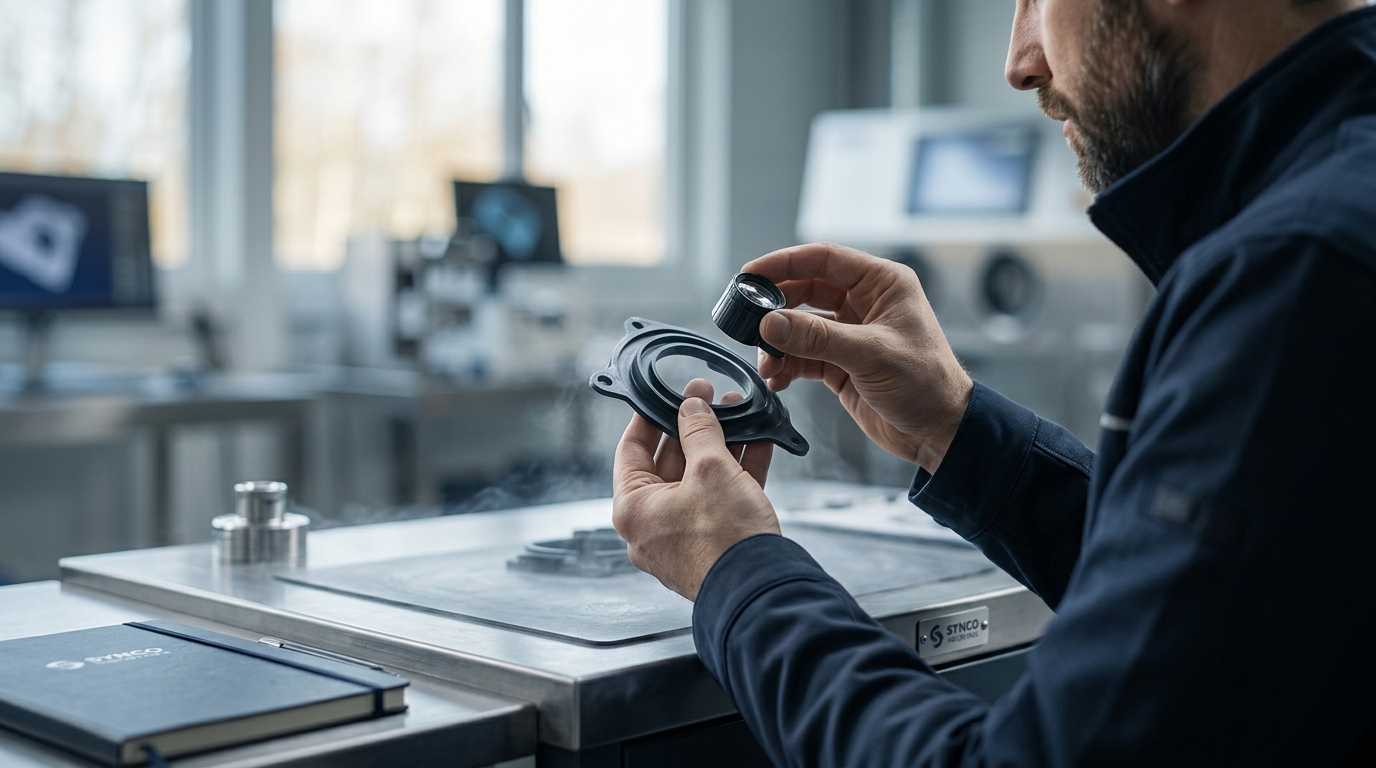
The Physics of Brittle Rubber
Rubber is naturally elastic and tough at room temperature. This elasticity makes it difficult to remove thin flash without tearing the surrounding material. When exposed to liquid nitrogen, the rubber undergoes a glass transition. It becomes rigid and brittle, similar to glass. This change in physical state is the core mechanism of cryogenic deflashing. For additional details, review the Contact Us 8211 Synco.
The brittleness allows for controlled fracture. Instead of stretching and tearing, the flash snaps off cleanly. This is critical for parts with thin walls or complex internal channels. The process relies on the differential in thermal contraction between the flash and the main part. The flash, being thinner, cools and contracts faster, creating stress points that facilitate clean separation. For additional details, review the Ovens 8211 Synco Industries.
Preserving Complex Geometries
Thermal Shock and Flash Separation
The rapid cooling provided by liquid nitrogen creates thermal shock. This shock induces micro-cracks in the flash material. The cracks propagate along the interface between the flash and the part. This natural separation line is often cleaner than what can be achieved by manual trimming. For additional details, review the Spares 8211 Synco Industries.
The process is highly repeatable. Once the part is cooled to the correct temperature, the flash removal is consistent. This consistency is vital for high-volume production. It reduces the need for secondary finishing operations. It also minimizes waste by ensuring that only the flash is removed.
Integration with Industrial Systems
Implementing cryogenic deflashing requires specialized equipment. Synco Industries manufactures cryogenic deflashing machines tailored for industrial use. These systems integrate cooling chambers, media handling, and recovery units. They are designed to handle the specific thermal requirements of rubber processing.
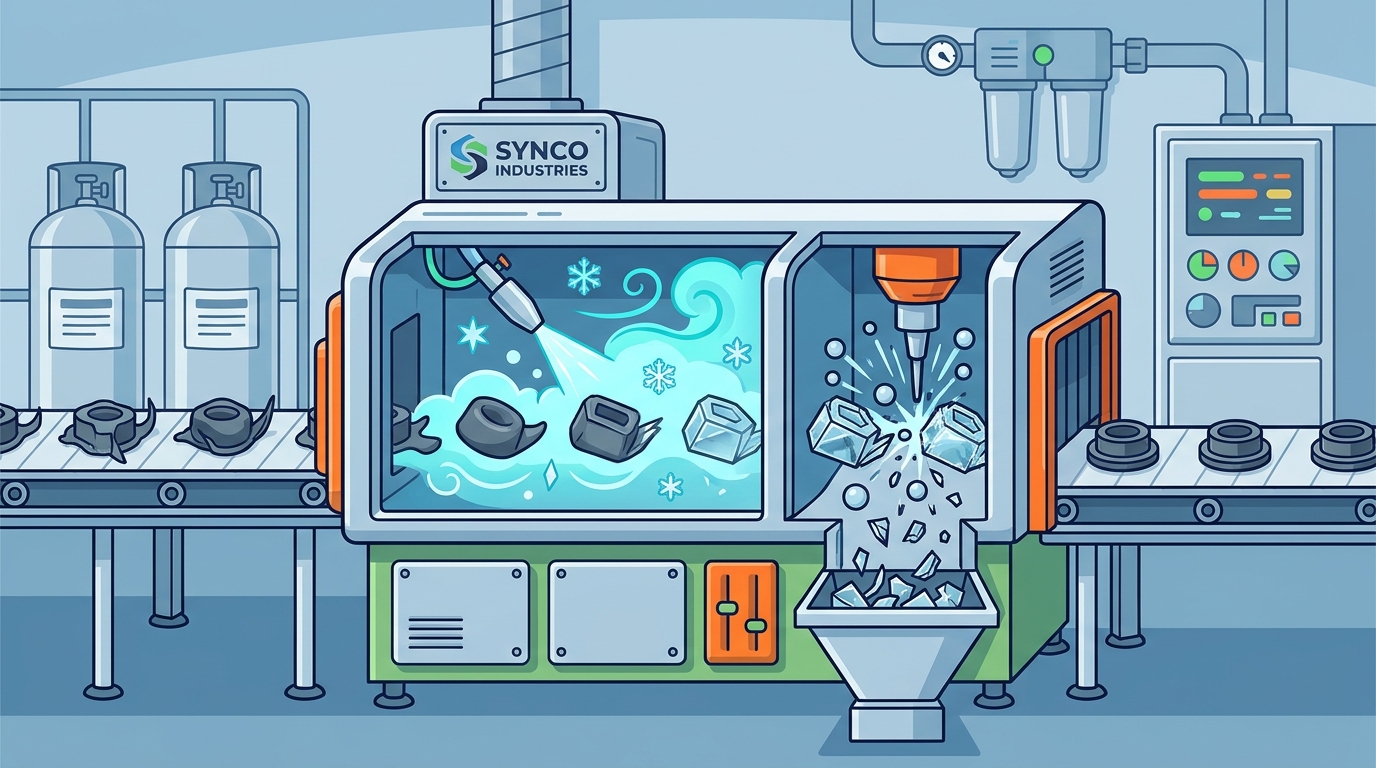
Quality and Surface Finish
Cryogenic deflashing produces a high-quality surface finish. The flash removal is clean and precise. This results in a smooth surface that is ready for subsequent processing. It eliminates the need for sanding or polishing, which can be time-consuming and inconsistent.
The improved surface finish enhances the aesthetic appeal of the part. It also improves functional performance. For example, in sealing applications, a smooth surface ensures better contact and reliability. The process reduces the risk of defects that can occur with manual or mechanical methods. It provides a consistent, high-quality output that meets industry standards.
Key Takeaways
- Cryogenic deflashing makes rubber brittle, enabling clean flash removal.
- The process preserves intricate geometries and tight tolerances.
- Thermal shock creates natural separation lines for flash.
- Specialized equipment is required for safe and effective operation.
- The method improves surface finish and reduces secondary processing.
- It is highly repeatable and suitable for high-volume production.
Frequently Asked Questions
What is cryogenic deflashing?
Cryogenic deflashing is a process that uses liquid nitrogen to cool rubber parts, making them brittle for precise flash removal.
Why is it better for intricate edges?
It preserves complex geometries by avoiding direct mechanical contact with the main part body.
Does it damage the rubber part?
No, the process targets only the flash, which becomes brittle and separates cleanly without damaging the main part.
What equipment is needed?
Specialized cryogenic deflashing machines, such as those from Synco Industries, are required for safe and effective operation.
Is it suitable for high-volume production?
Yes, the process is highly repeatable and consistent, making it ideal for high-volume manufacturing.
How does it improve surface finish?
It produces a clean and smooth surface, eliminating the need for secondary finishing operations like sanding.