
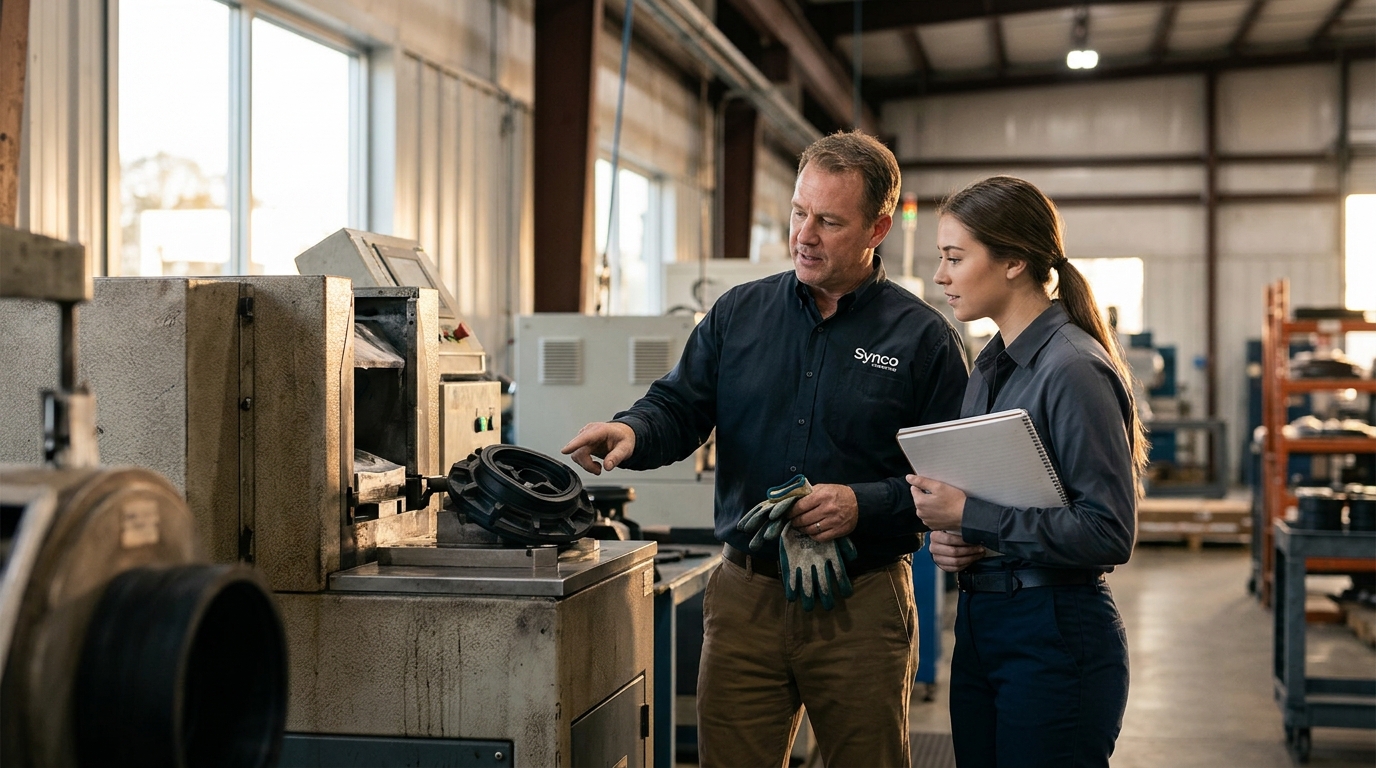
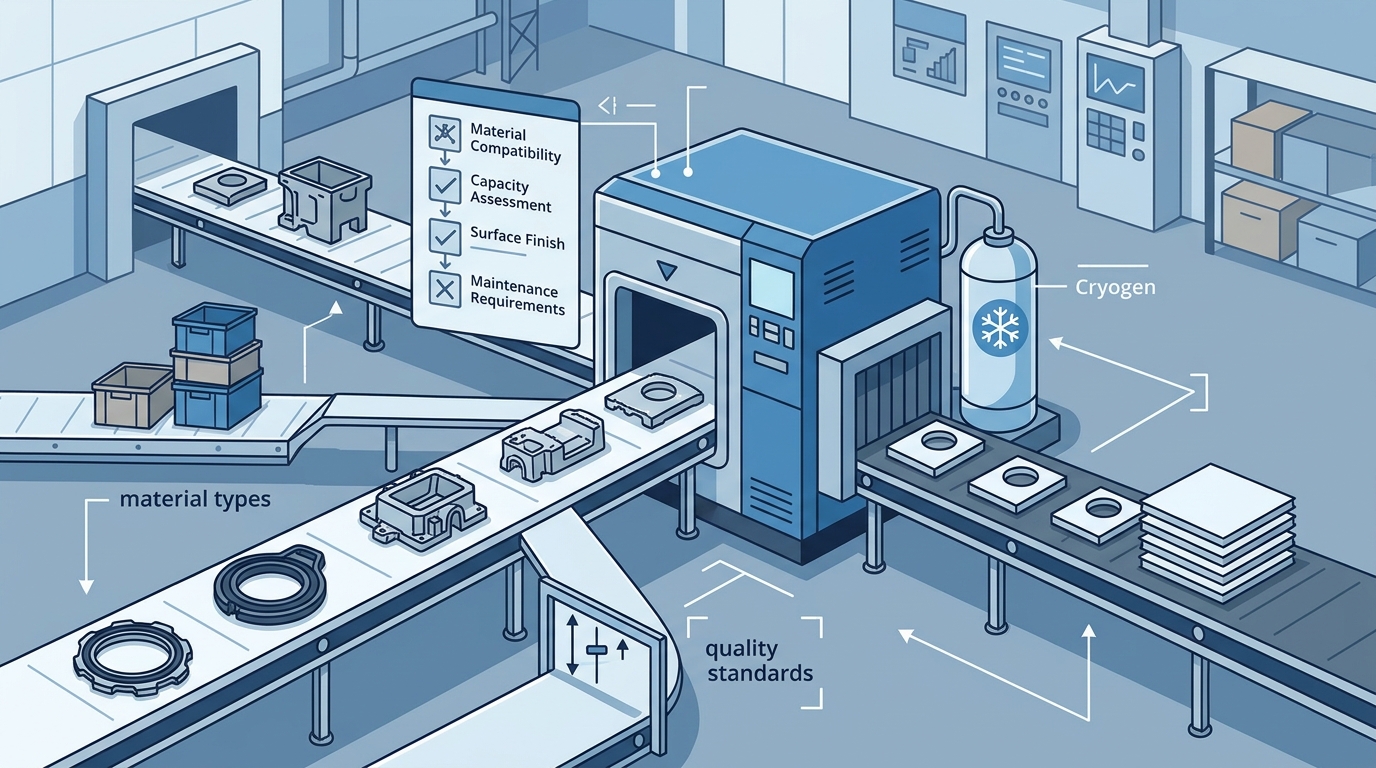
Choosing the right cryogenic deflashing machine depends on your material type, production volume, and quality standards. Synco Industries provides specialized equipment designed to handle these variables efficiently. This guide outlines the critical factors you must evaluate to ensure your investment aligns with your operational goals and long-term maintenance requirements.
Material Compatibility and Media Selection
The primary factor in selecting a machine is the specific material you are processing. Cryogenic deflashing is a process that uses liquid nitrogen to embrittle flash and burrs, allowing them to be removed by media impact. Different materials react differently to the thermal shock of liquid nitrogen. For example, silicone and rubber components require specific media types to avoid surface damage. Synco Industries offers a range of abrasives tailored for various substrates. You must verify that the machine's media handling system supports the specific grit size and type required for your material. This ensures effective flash removal without compromising the structural integrity of the part.
Production Volume and Throughput Capacity
Your daily output requirements dictate the size and type of the machine you need. High-volume production lines require machines with larger tumbling drums or continuous processing capabilities. A machine that is too small will create a bottleneck, while one that is too large may be inefficient for smaller batches. Consider the cycle time and the number of parts per cycle. Synco Industries manufactures tumblast machines and other airless systems that can be scaled to match your throughput. Evaluate your peak production hours to determine the necessary capacity. This ensures your equipment can keep pace with your demand without excessive downtime for maintenance or media replenishment.
Quality Standards and Surface Finish Requirements
Maintenance Requirements and Operational Costs
Space Constraints and Integration with Existing Lines
The physical footprint of the machine must fit within your existing production floor. Cryogenic deflashing machines can vary in size, from compact units to large industrial systems. You must ensure there is adequate space for the machine, as well as for operators to load and unload parts. Integration with your existing production line is also important. The machine should be able to connect to your conveyor systems or other processing stations. Synco Industries designs equipment with flexibility in mind, allowing for easy integration into various production setups. Consider the workflow of your facility to ensure the machine fits seamlessly into your operations. This minimizes the need for additional handling and transport of parts.
Key Takeaways
- Material compatibility is the first and most critical factor in machine selection.
- Production volume determines the required capacity and cycle time of the machine.
- Quality standards dictate the level of control and precision needed in the machine.
- Maintenance requirements and operational costs impact the long-term value of the investment.
- Space constraints and integration capabilities ensure the machine fits your existing workflow.
- Choosing a reputable manufacturer like Synco Industries ensures access to quality equipment and support.
Frequently Asked Questions
What is cryogenic deflashing?
Cryogenic deflashing is a process that uses liquid nitrogen to embrittle flash and burrs on parts, allowing them to be removed by media impact.
What materials can be processed with cryogenic deflashing?
Cryogenic deflashing is suitable for a wide range of materials, including rubber, silicone, plastics, and some metals.
How does the media selection affect the process?
The media selection determines the aggressiveness of the impact and the resulting surface finish. Different media types are used for different materials.
What is the typical cycle time for a cryogenic deflashing machine?
The cycle time varies depending on the machine size and the material being processed. It can range from a few minutes to over an hour.
How much maintenance does a cryogenic deflashing machine require?
Regular maintenance is required to ensure optimal performance. This includes checking the liquid nitrogen supply, cleaning the media separation system, and inspecting the tumbling drum.
Can cryogenic deflashing machines be integrated into existing production lines?
Yes, cryogenic deflashing machines can be integrated into existing production lines. They can connect to conveyor systems and other processing stations.