
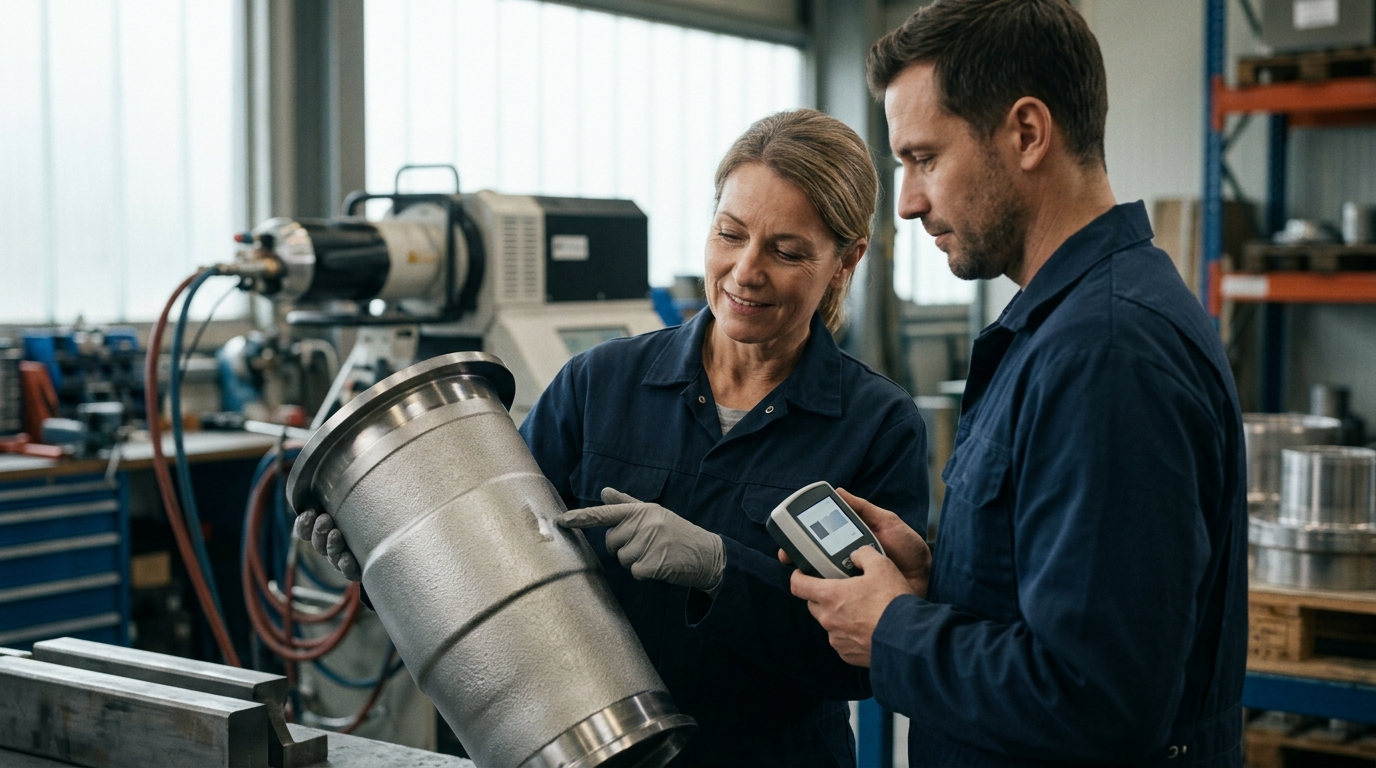
Arc spray generally produces stronger coating adhesion than flame spray because it melts particles at higher temperatures, resulting in better substrate bonding. This thermal advantage allows arc-sprayed coatings to fracture internally rather than delaminating at the interface. Synco Industries provides both thermal spray equipments to help manufacturers select the right process for their specific durability needs.
Thermal Mechanisms and Particle Velocity
The core difference in adhesion lies in how the coating material is melted and accelerated. Arc spray is a process that uses an electric arc to melt wire feedstock, achieving temperatures significantly higher than those in flame spray. These high temperatures ensure the particles are fully molten and possess high kinetic energy upon impact. This energy transfer is critical for creating a strong mechanical and metallurgical bond with the substrate.
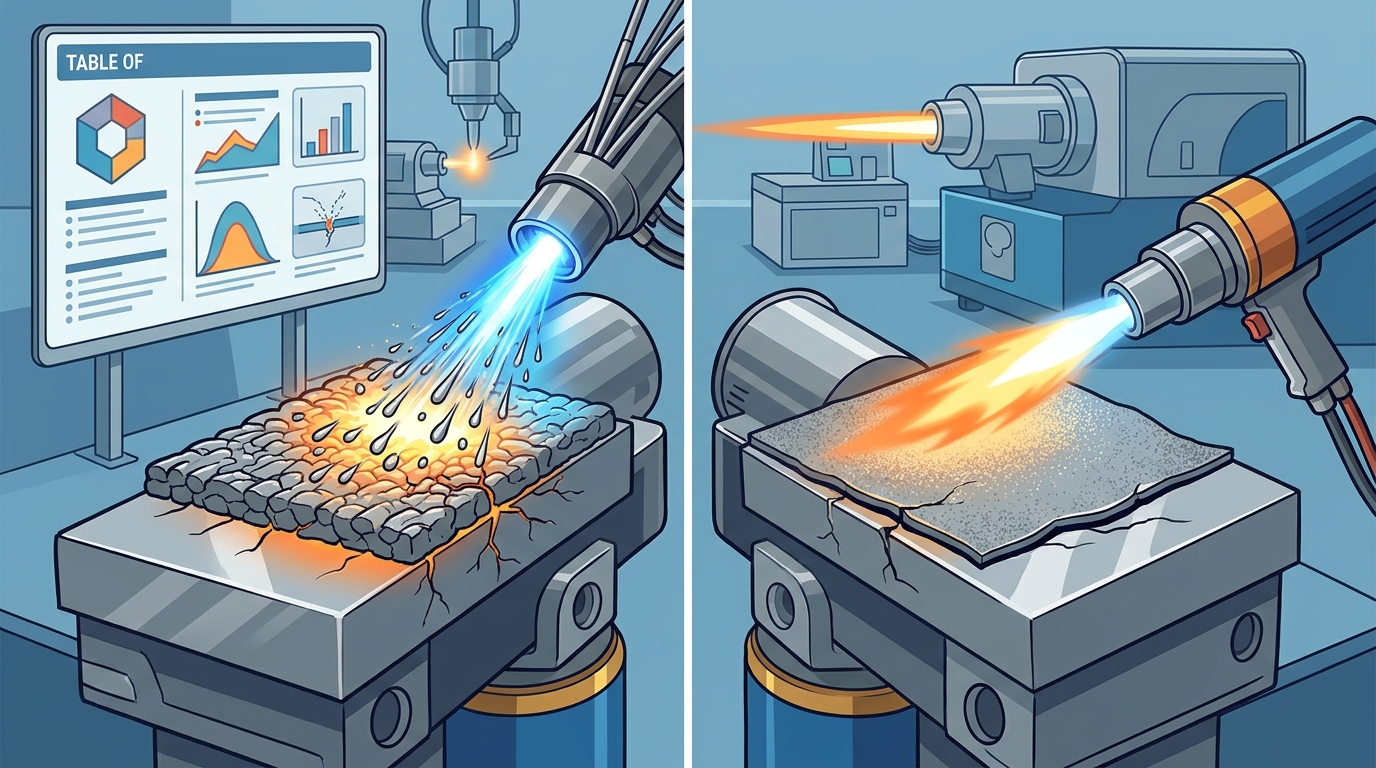
In contrast, flame spray relies on the combustion of fuel gas and oxygen to heat the material. While effective for certain alloys, the lower thermal energy often results in particles that are not fully melted or have lower velocity. This can lead to a weaker interface. Research indicates that arc-sprayed films tend to fracture internally during failure tests, whereas flame-sprayed films often fail at the adhesion interface, confirming the superior bond strength of the arc process.
Failure Modes and Interface Integrity
Understanding how a coating fails is the best way to judge its adhesion quality. When a coating is subjected to stress, the location of the fracture reveals the strength of the bond. If the coating breaks within its own body, the adhesion to the base metal was strong enough to hold. If it separates from the base metal, the bond was the weak point.
Studies on the adhesion of flame and plasma sprayed coatings show that failure mechanisms vary significantly by process. Flame-sprayed films often traverse the adhesion interface, indicating a potential weakness in the bond. Arc-sprayed coatings, however, exhibit cohesive failure more frequently. This distinction is vital for heavy industry applications where components face extreme mechanical stress. Synco Industries engineers often recommend arc spray for applications where delamination is a critical risk, ensuring the coating remains intact under load. according to PDF THE ADHESION
Material Compatibility and Oxidation
The chemical environment during spraying also impacts adhesion. Flame spray involves a combustion process that can introduce oxidation into the coating material. This oxidation can create a brittle layer that weakens the bond. Arc spray, using an electric arc, provides a more controlled melting environment. This control helps maintain the metallurgical integrity of the coating, leading to a cleaner and stronger interface with the substrate.
For materials like zinc and aluminum, which are commonly used for corrosion protection, the process choice is critical. Arc spraying is expected to provide more durable Zn-Al coatings than flame spray due to better adhesion. The higher energy input ensures that the particles bond more effectively, reducing the risk of early failure in corrosive environments. Synco Industries offers a range of thermal spray wires specifically formulated to perform optimally in arc spray systems, maximizing this adhesion potential.
Surface Preparation and Substrate Interaction
Even with the superior thermal properties of arc spray, surface preparation remains the foundation of adhesion. The substrate must be clean, dry, and properly profiled to allow the molten particles to anchor effectively. Inadequate cleaning or blasting can lead to delamination, regardless of the spraying process used. This is a common failure mode in both flame and arc spray applications if not managed correctly.
Proper surface preparation ensures that the high-velocity particles from an arc spray system can penetrate the substrate surface, creating a strong mechanical interlock. Synco Industries provides shot blasting machines that prepare surfaces to the exact profile required for thermal spray adhesion. By integrating blasting and spraying solutions, manufacturers can ensure that the substrate is ready to accept the high-energy impact of arc-sprayed particles, resulting in a robust and durable coating.
Practical Implications for Heavy Industry
For heavy industrial manufacturers, the choice between arc and flame spray is not just about initial cost but about long-term asset life. Arc spray's superior adhesion translates to reduced maintenance downtime and extended component life. This is particularly important in sectors like automotive, steel mills, and oil and gas, where component failure can be costly and dangerous.
By selecting the right thermal spray system, manufacturers can ensure that critical components withstand extreme mechanical and chemical stress. Synco Industries supports this transition by providing robust equipment and consumables tailored for demanding environments. The company's expertise in both thermal spray powders and equipment ensures that the entire coating process is optimized for maximum adhesion and performance. This holistic approach helps industries achieve reliable, repeatable, and application-specific coating solutions.
Key Takeaways
- Arc spray produces stronger adhesion than flame spray due to higher melting temperatures and particle velocities.
- Arc-sprayed coatings typically fail internally (cohesive failure), while flame-sprayed coatings often fail at the interface (adhesive failure).
- Higher thermal energy in arc spray reduces oxidation and improves the metallurgical bond with the substrate.
- Surface preparation is critical for both processes, but arc spray benefits more from a well-profiled, clean substrate.
- Synco Industries offers integrated solutions including blasting and spraying equipment to optimize adhesion outcomes.
- For corrosion-resistant coatings like Zn-Al, arc spray provides more durable protection due to superior bonding.
Frequently Asked Questions
Why does arc spray have better adhesion than flame spray?
Arc spray uses an electric arc to melt wire at higher temperatures, resulting in fully molten particles with high kinetic energy. This energy transfer creates a stronger bond with the substrate compared to the lower-energy flame spray process.
What is the difference in failure modes between the two processes?
Arc-sprayed coatings tend to fracture internally, indicating strong adhesion. Flame-sprayed coatings often fail at the adhesion interface, suggesting a weaker bond between the coating and the substrate.
Does surface preparation affect adhesion differently in arc spray?
Yes, while both processes require clean and profiled surfaces, arc spray's high-energy particles benefit significantly from a well-prepared substrate to achieve optimal mechanical interlocking and adhesion.
Can flame spray be used for high-stress applications?
Flame spray is suitable for certain applications, but for high-stress or critical components where delamination is a risk, arc spray is generally preferred due to its superior adhesion strength.
What materials are best suited for arc spray adhesion?
Materials like zinc, aluminum, and various alloys perform well in arc spray. The high energy input ensures these materials bond effectively, making them ideal for corrosion protection and wear resistance.
How does Synco Industries support adhesion optimization?
Synco Industries provides both the thermal spray equipment and the necessary surface preparation tools, such as shot blasting machines, to ensure the entire process is optimized for maximum coating adhesion.
Conclusion
Achieving strong coating adhesion is critical for the longevity and performance of industrial components. Arc spray offers a distinct advantage over flame spray in this regard, thanks to its higher thermal energy and superior bonding mechanisms. By understanding the differences in failure modes and material compatibility, manufacturers can make informed decisions that enhance asset life and reduce downtime. Synco Industries is committed to providing the tools and expertise needed to achieve these results, ensuring that your coating solutions deliver the durability and reliability your operations demand. To explore how the right equipment can enhance your coating adhesion, for a consultation.