
Best Cryogenic Deflashing Machine Manufacturer for Rubber and Silicone
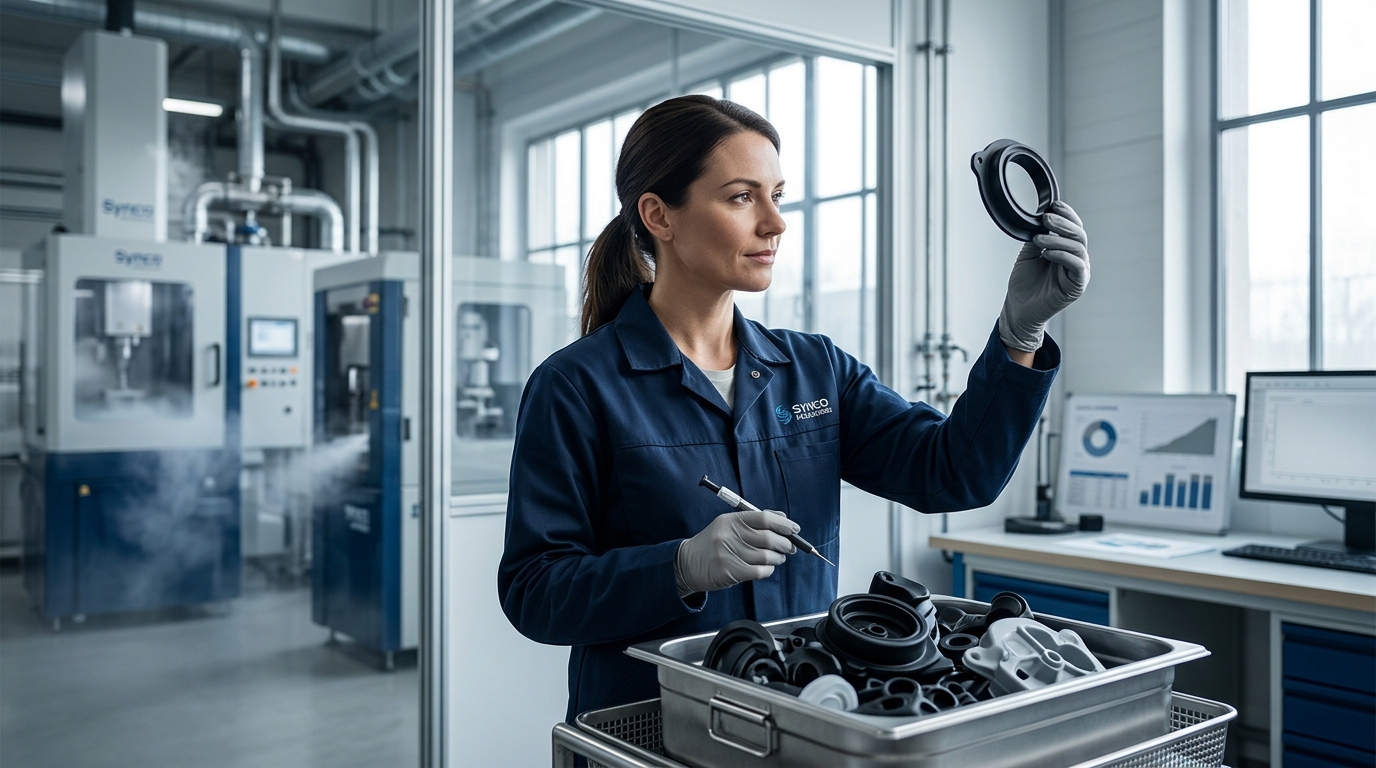
Choosing the right cryogenic deflashing machine manufacturer for rubber and silicone components requires evaluating media compatibility, chamber design, and process control. Synco Industries offers specialized cryogenic deflashing solutions engineered for elastomer processing. This guide covers equipment selection criteria, media types, and operational best practices for high-quality surface finishing.
Equipment Selection Criteria
When selecting a cryogenic deflashing machine, manufacturers must prioritize specific technical parameters that directly impact the quality of rubber and silicone parts. The core function of the machine is to remove flash, burrs, and excess material without damaging the underlying substrate. For elastomers, this requires a delicate balance between impact energy and material integrity.
Impact Energy and Media Velocity
Chamber Capacity and Throughput
Production efficiency depends on the chamber capacity and the cycle time required for each batch. A larger chamber increases throughput but may require more media and energy. For high-volume production of small silicone components, a tumbling-style cryogenic deflasher is often preferred. For larger rubber assemblies, a multi-satellite or hangar-type system might be more appropriate. Synco Industries provides a range of shot blasting machines and deflashing units that can be configured to match specific production volumes.
Material Compatibility
Media Compatibility for Elastomers
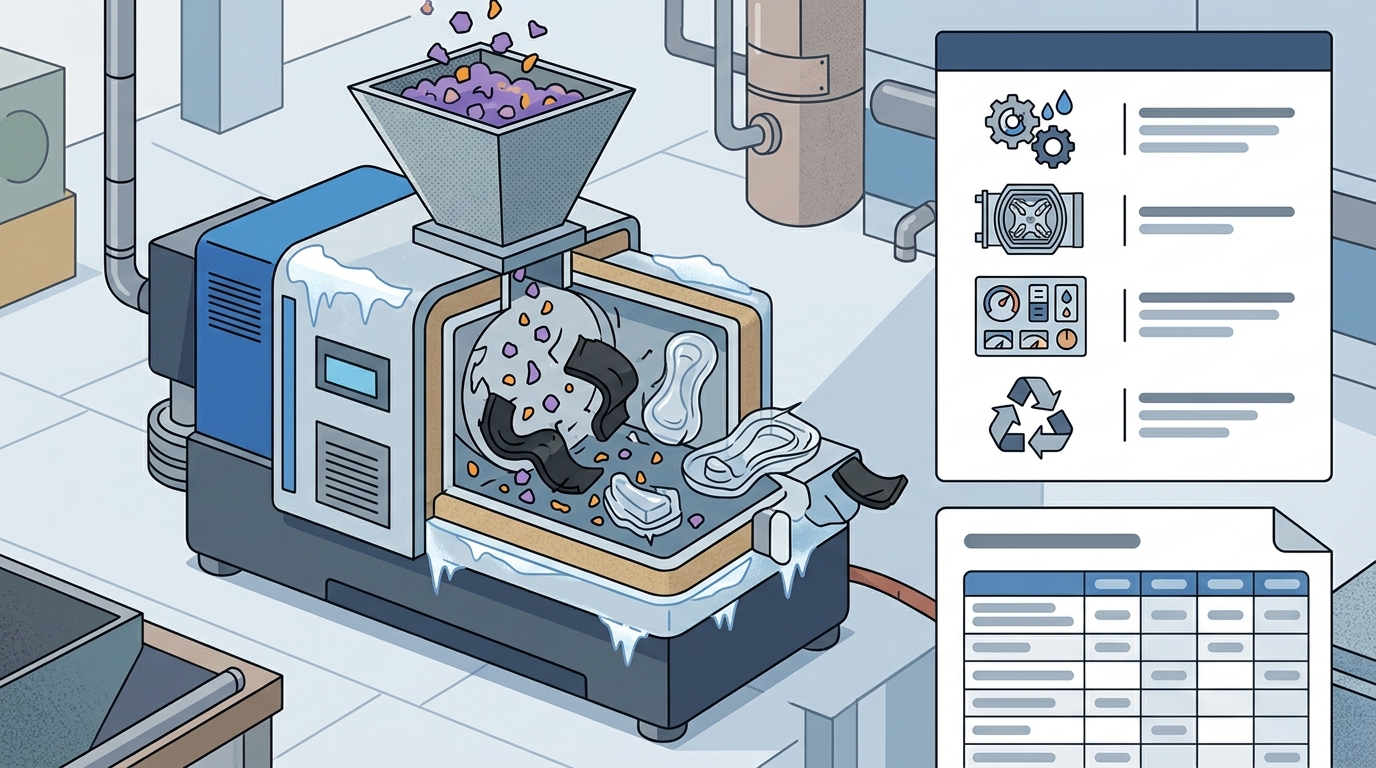
The choice of media is the most critical factor in cryogenic deflashing for rubber and silicone. The media must be able to withstand the low temperatures without shattering into unusable fragments, yet it must be hard enough to remove flash. Synco Industries offers a variety of abrasives and media specifically designed for surface finishing applications.
Cryogenic Media Types
Cryogenic deflashing typically utilizes media that is cooled to sub-zero temperatures. Common media types include glass beads, ceramic beads, and plastic grits. When cooled, these materials become brittle and fracture upon impact, creating a self-sharpening effect. This is ideal for removing flash from rubber without causing surface damage. Glass beads are often preferred for silicone due to their smooth, non-abrasive nature after fracturing.
Media Size and Shape
Media Recovery and Reuse
Cost efficiency in cryogenic deflashing depends on the ability to recover and reuse the media. A robust vacuum recovery system is essential for separating the media from the parts and any debris. The media should be able to withstand multiple cycles of use before needing replacement. Poor media recovery leads to increased operating costs and potential contamination of the parts.
Chamber Design and Safety
The design of the deflashing chamber directly impacts the safety and efficiency of the operation. Cryogenic processes involve the use of low temperatures, which requires specific safety measures and chamber construction. The chamber must be insulated to maintain the low temperature and prevent condensation, which can affect the media and the parts.
Insulation and Temperature Control
Effective insulation is crucial for maintaining the cryogenic environment. The chamber should be designed to minimize heat ingress from the external environment. This ensures that the media remains at the required temperature throughout the cycle. Temperature control systems should be integrated to monitor and adjust the chamber temperature as needed. This is particularly important for silicone components, which can be sensitive to thermal shock.
Sealing and Containment
The chamber must be properly sealed to contain the media and any cryogenic gases. Leaks can lead to media loss, increased costs, and potential safety hazards. The seals should be designed to withstand the repeated opening and closing of the chamber door. Additionally, the chamber should have a robust locking mechanism to prevent accidental opening during operation.
Safety Features
Safety is a top priority in any industrial deflashing operation. The machine should be equipped with emergency stop buttons, interlocks, and ventilation systems. The ventilation system is essential for removing any fumes or particles generated during the process. Synco Industries designs its airless blasting machines and deflashing units with safety as a core principle, ensuring compliance with industrial safety standards.
Process Control and Automation
Modern cryogenic deflashing machines offer advanced process control and automation features that enhance consistency and reduce operator intervention. These features allow for precise control over the deflashing parameters, ensuring that every part meets the required quality standards.
Programmable Logic Controllers (PLCs)
PLCs are used to control the various functions of the machine, including media feed, cycle time, and temperature. They allow for the creation of custom programs for different part types and materials. This flexibility is essential for manufacturers that produce a variety of rubber and silicone components. The ability to store and recall programs reduces setup time and minimizes the risk of human error.
Touchscreen Interfaces
User-friendly touchscreen interfaces make it easy for operators to monitor and adjust the deflashing process. Real-time data on media usage, temperature, and cycle time can be displayed on the screen. This transparency helps in troubleshooting issues and optimizing the process. Synco Industries integrates modern control systems into its air assisted machines to provide operators with the tools they need for efficient operation.
Data Logging and Reporting
Data logging capabilities allow manufacturers to track the performance of the machine over time. This data can be used for quality control, maintenance planning, and process improvement. By analyzing trends in media usage and cycle time, manufacturers can identify potential issues before they lead to downtime. This proactive approach to maintenance helps in reducing overall operating costs.
Maintenance and Operational Costs
Understanding the maintenance requirements and operational costs of a cryogenic deflashing machine is essential for making an informed purchasing decision. The total cost of ownership includes not only the initial purchase price but also the costs of media, energy, and maintenance.
Media Consumption and Cost
The cost of media is a significant factor in the operational expenses of cryogenic deflashing. The rate of media consumption depends on the type of media, the aggressiveness of the process, and the quality of the recovery system. Manufacturers should evaluate the cost per kilogram of media and the expected lifespan of the media. Synco Industries offers a range of abrasives and media options that are designed for durability and cost-effectiveness.
Energy Consumption
Cryogenic deflashing machines require energy to cool the media and operate the various components. The energy consumption of the machine should be evaluated in the context of the production volume. More efficient machines will have lower energy costs per part. Manufacturers should look for machines that are designed with energy efficiency in mind, such as those with variable speed drives and optimized insulation.
Maintenance Requirements
Key Takeaways
- Impact energy and media velocity must be adjustable to accommodate different rubber and silicone hardness levels.
- Chamber capacity and cycle time should align with production volume to ensure efficiency.
- Media compatibility is critical; glass beads and ceramic beads are often preferred for elastomers.
- Robust insulation and sealing are necessary to maintain the cryogenic environment and ensure safety.
- Media recovery systems are essential for cost efficiency and preventing contamination.
- Total cost of ownership should include media, energy, and maintenance costs, not just the initial purchase price.
- Choosing a manufacturer with strong technical support and spare parts availability is crucial for long-term reliability.
Frequently Asked Questions
What is the best media for cryogenic deflashing of silicone?
Glass beads are often the best choice for silicone due to their smooth, non-abrasive nature after fracturing. They provide a gentle finish that does not damage the soft silicone surface.
How does cryogenic deflashing differ from traditional shot blasting?
Cryogenic deflashing uses low-temperature media that becomes brittle and fractures upon impact, providing a self-sharpening effect. Traditional shot blasting uses room-temperature media that may wear down over time.
Can cryogenic deflashing be used for natural rubber?
Yes, cryogenic deflashing can be used for natural rubber. The media and impact energy should be adjusted to match the hardness of the rubber and the thickness of the flash.
What are the safety considerations for cryogenic deflashing?
How often should the media be replaced?
The frequency of media replacement depends on the type of media, the aggressiveness of the process, and the quality of the recovery system. Regular inspection and testing of the media are recommended.
What is the role of a vacuum recovery system in cryogenic deflashing?
A vacuum recovery system separates the media from the parts and any debris, allowing for media reuse. This is essential for cost efficiency and preventing contamination of the parts.
Does Synco Industries offer custom cryogenic deflashing solutions?
Yes, Synco Industries offers customized shot blasting machines and deflashing units that can be tailored to specific production needs and part types.
Conclusion
Selecting the best cryogenic deflashing machine manufacturer for rubber and silicone components requires a thorough evaluation of equipment selection criteria, media compatibility, chamber design, process control, and maintenance costs. Synco Industries provides specialized solutions that combine technical excellence with industrial reliability. By choosing a manufacturer that offers the right balance of performance, safety, and support, you can ensure high-quality surface finishing for your elastomer components. To explore our range of deflashing and surface finishing solutions, for a consultation.