
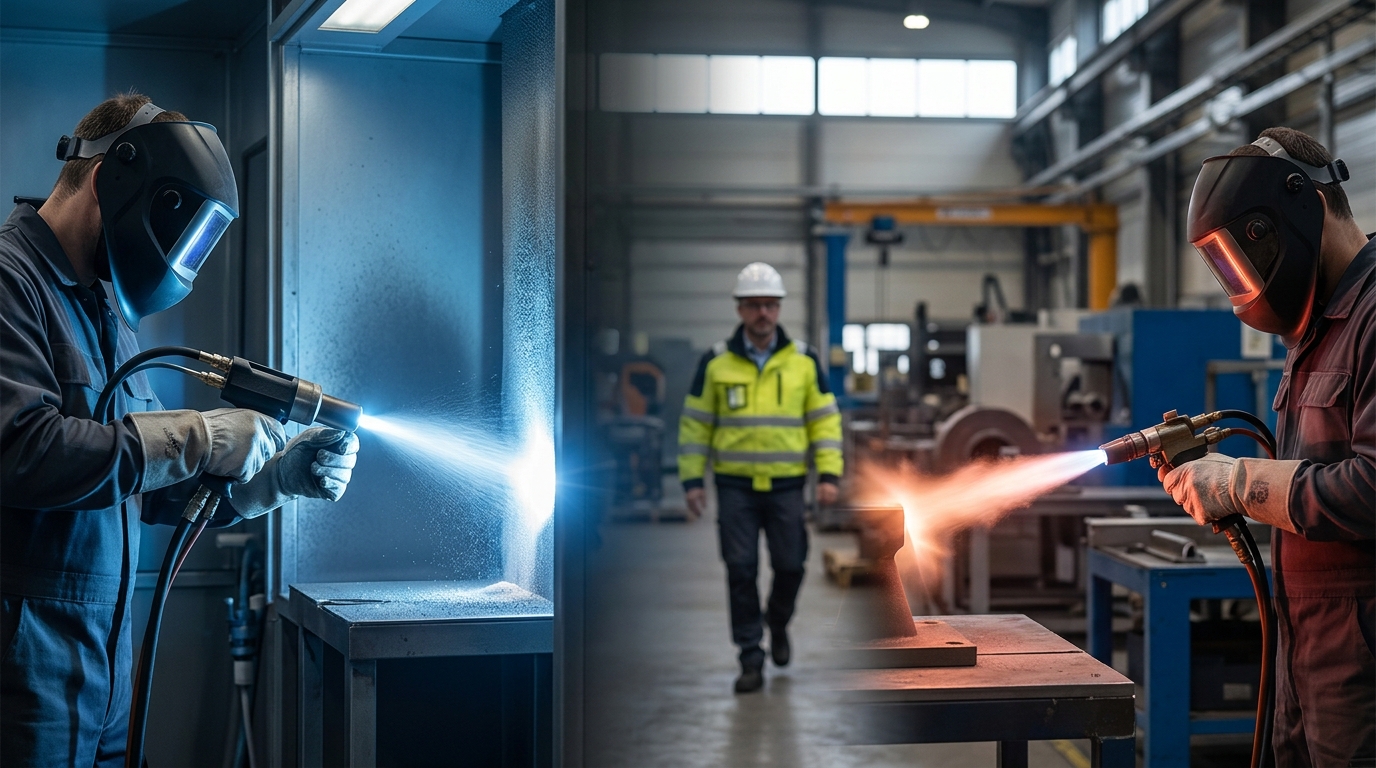
Arc spray systems use an electric arc to melt wires, while flame spray systems use a fuel gas and oxygen flame. Arc spray offers higher deposition rates and lower operating costs, whereas flame spray provides superior bond strength and lower substrate heat input. This guide details the technical differences between these two thermal spray processes, helping manufacturers select the right equipment for their specific coating requirements.
Bond Strength
Bond strength is the mechanical interlocking and metallurgical adhesion between the coating and the substrate. In arc spray, the high velocity of the molten particles impacts the substrate with significant kinetic energy, creating a strong mechanical anchor. However, the rapid cooling rate in arc spray can sometimes lead to higher residual stresses within the coating layer. Flame spray, by contrast, produces particles with lower velocity but higher temperature. This results in a coating with lower residual stress and often superior metallurgical bonding, particularly for corrosion-resistant alloys. For applications requiring extreme durability under cyclic loading, flame spray often provides a more robust bond interface.
Operating Costs
Operating costs are a primary driver for production line efficiency. Arc spray systems are significantly more economical to run because they rely on electricity, which is generally cheaper and more consistent than fuel gases. The energy efficiency of the electric arc allows for a lower cost per kilogram of coating material. Flame spray systems require a continuous supply of fuel gas, such as acetylene or propane, and oxygen. These consumables add to the operational expense. Additionally, flame spray equipment often requires more frequent maintenance of the burner tip and gas regulators, which can increase long-term maintenance budgets.
Deposition Rates
Deposition rate refers to the mass of coating material applied per unit of time. Arc spray systems typically achieve much higher deposition rates than flame spray systems. The intense heat of the electric arc melts the wire feedstock rapidly, allowing for a high volume of material to be atomized and deposited in a short period. This makes arc spray ideal for large-scale applications where speed is critical, such as coating large structural steel components. Flame spray systems operate at a slower pace due to the lower energy input of the flame. While slower, this controlled deposition allows for finer control over the coating thickness and uniformity in precision applications.
Equipment Portability
Equipment portability is crucial for field applications and maintenance work. Arc spray systems are generally more compact and self-contained, often powered by standard electrical outlets or portable generators. This makes them easier to transport to remote sites. Flame spray systems require the transport of pressurized gas cylinders, which adds weight and bulk to the setup. The need for gas handling equipment makes flame spray less convenient for mobile field repairs. For on-site maintenance of large infrastructure, the lighter footprint of arc spray equipment is often a significant advantage.
Material Compatibility
Material compatibility determines which alloys can be effectively sprayed. Arc spray is highly versatile and can process a wide range of metals, including zinc, aluminum, and various steel alloys. It is particularly effective for high-conductivity metals. Flame spray is also versatile but excels with materials that require lower heat input to prevent substrate damage. It is commonly used for spraying nickel-based superalloys and certain stainless steels. The choice of material often dictates the process selection, as some alloys may oxidize differently under the high-temperature conditions of arc spray versus the flame environment.
Substrate Heat Input
Substrate heat input is the amount of thermal energy transferred to the base material during the spraying process. Arc spray transfers more heat to the substrate due to the high temperature of the molten particles. This can be a concern for thin-walled components or heat-sensitive substrates, as it may cause warping or distortion. Flame spray delivers less total heat to the substrate, making it suitable for delicate parts or materials with low thermal mass. Managing substrate temperature is a critical factor in preventing thermal distortion, and flame spray is often preferred when heat control is paramount.
Heat Source Differences
Heat Source Mechanisms
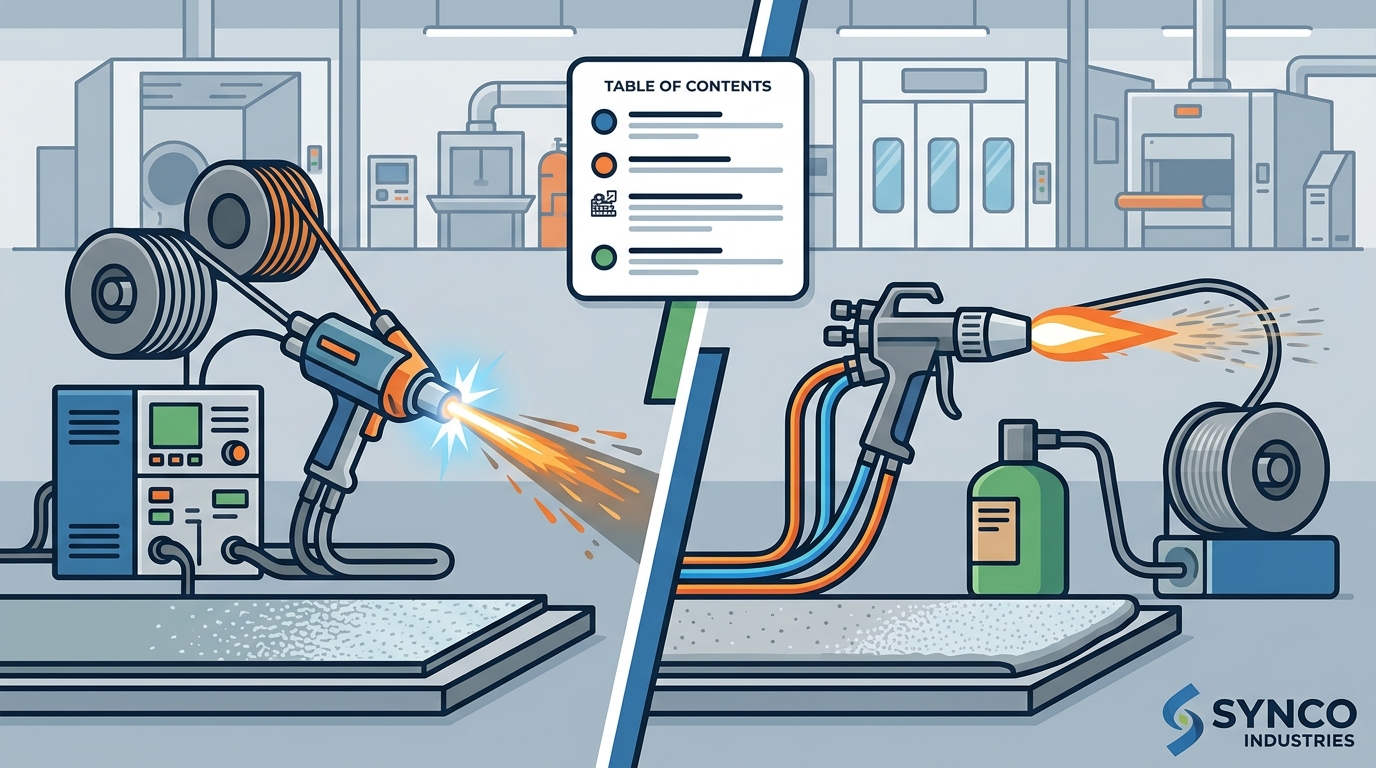
Heat source mechanisms describe how energy is transferred to the feedstock. In arc spray, the electric current passes through the wires, generating resistive heating and an arc plasma. The molten metal is then atomized by a high-velocity air stream. In flame spray, the combustion of the fuel gas creates a flame with distinct zones of preheating, melting, and atomization. The wires are heated by the flame's thermal radiation and convection. The atomization in flame spray is less aggressive than in arc spray, resulting in particles that are generally larger and slower. These mechanisms directly influence the final microstructure and properties of the coating.
Coating Quality Properties
Feedstock Material Compatibility
Feedstock material compatibility refers to the specific wire forms available for each process. Arc spray systems are compatible with a wide variety of solid wires, including zinc, aluminum, and steel alloys. The wires must have consistent electrical conductivity to ensure stable arc operation. Flame spray systems also use solid wires but may require different wire diameters or compositions to optimize melting in the flame. Some specialized alloys may be better suited to one process over the other due to their melting points and thermal properties. Manufacturers like Synco Industries offer a range of metal powders and wires to support both arc and flame spray applications.
Key Takeaways
- Arc spray offers higher deposition rates and lower operating costs, making it ideal for high-volume production.
- Flame spray provides superior bond strength and lower substrate heat input, suitable for precision and heat-sensitive parts.
- Electric arc heat sources are more consistent and energy-efficient than fuel gas flames.
- Arc spray equipment is more portable and easier to deploy in field environments.
- Coating density is generally higher in arc spray, while surface finish is often smoother in flame spray.
- Material compatibility is broad for both processes, but specific alloys may perform better in one system.
- Substrate heat management is a critical factor when selecting between arc and flame spray.
- Both processes are widely used in industrial applications for corrosion protection and wear resistance.
Frequently Asked Questions
Which process is better for corrosion protection?
Both processes are effective for corrosion protection. Arc spray is often preferred for zinc and aluminum coatings due to its high deposition rate and dense coating structure. Flame spray is also effective but may be slower for large areas. The choice depends on the specific substrate and environmental conditions.
Can arc spray be used for field repairs?
Yes, arc spray systems are highly portable and can be powered by generators, making them suitable for field repairs. They are easier to transport than flame spray systems, which require gas cylinders.
What is the main disadvantage of flame spray?
The main disadvantage of flame spray is the higher operating cost due to fuel gas consumption. It also has a lower deposition rate compared to arc spray, which can increase production time.
Does arc spray cause more substrate heating?
Yes, arc spray transfers more heat to the substrate than flame spray. This can be a concern for thin or heat-sensitive components, where flame spray might be preferred to avoid distortion.
What materials can be sprayed with arc spray?
Arc spray can process a wide range of metals, including zinc, aluminum, steel, and various alloys. The wires must have good electrical conductivity to ensure stable arc operation.
Is flame spray more expensive to maintain?
Flame spray systems often require more frequent maintenance of the burner and gas regulators. Arc spray systems generally have simpler maintenance requirements, focusing on the power source and wire feeders.
Conclusion
Selecting between arc spray and flame spray systems depends on your specific production needs, material requirements, and budget constraints. Arc spray is the go-to solution for high-volume, cost-effective coating applications, while flame spray excels in precision work and heat-sensitive substrates. Synco Industries provides robust Arc Spray Systems and comprehensive Thermal Spray Equipments designed for industrial reliability. To find the right solution for your facility, for a consultation.