
Best Shot Blasting Machines for Steel Fabrication Surface Preparation
Blast Wheel Systems
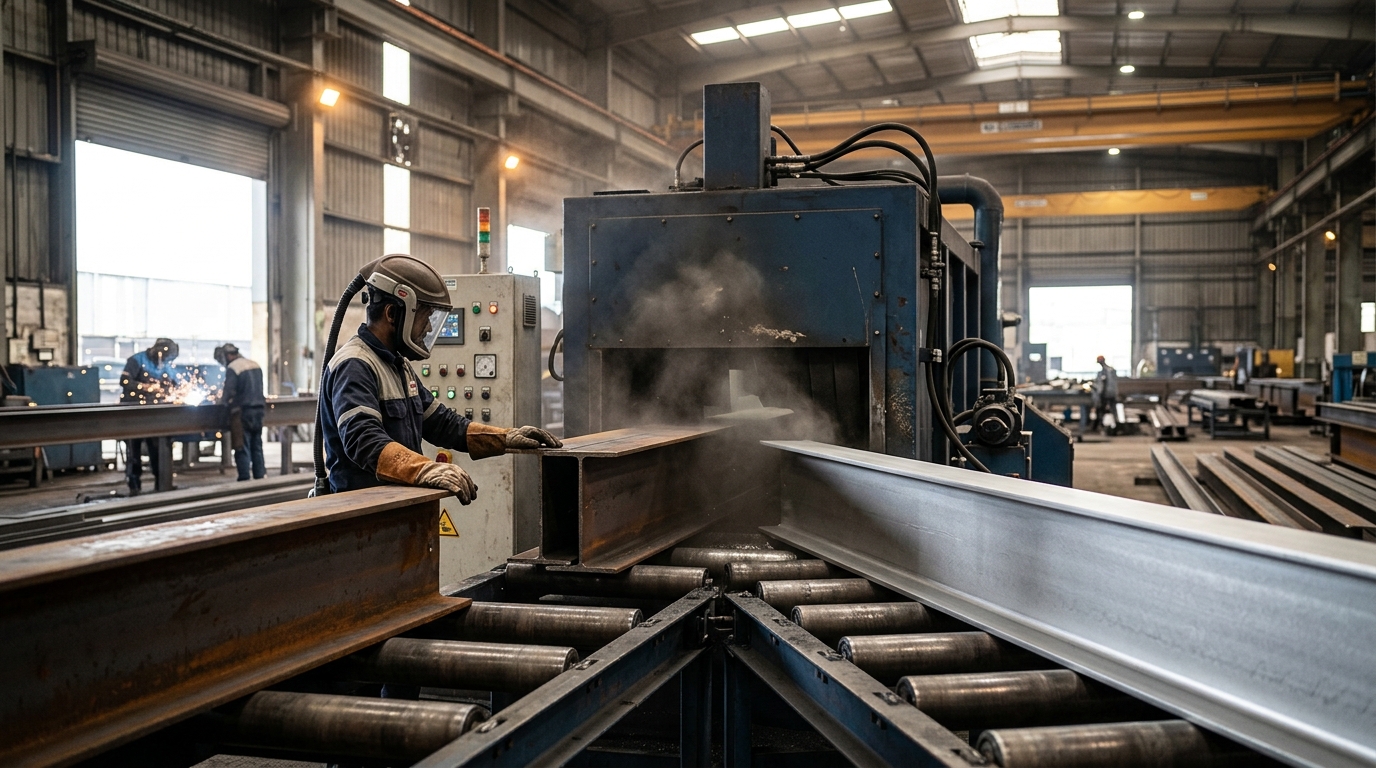
A blast wheel system is a mechanical device that accelerates abrasive media to high speeds for surface cleaning. In steel fabrication, these systems are preferred over air-assisted methods because they deliver consistent energy transfer and higher throughput. The core components include the blast wheel, wear parts, and the abrasive recovery system. For additional details, review the synco co in.
How Blast Wheels Work
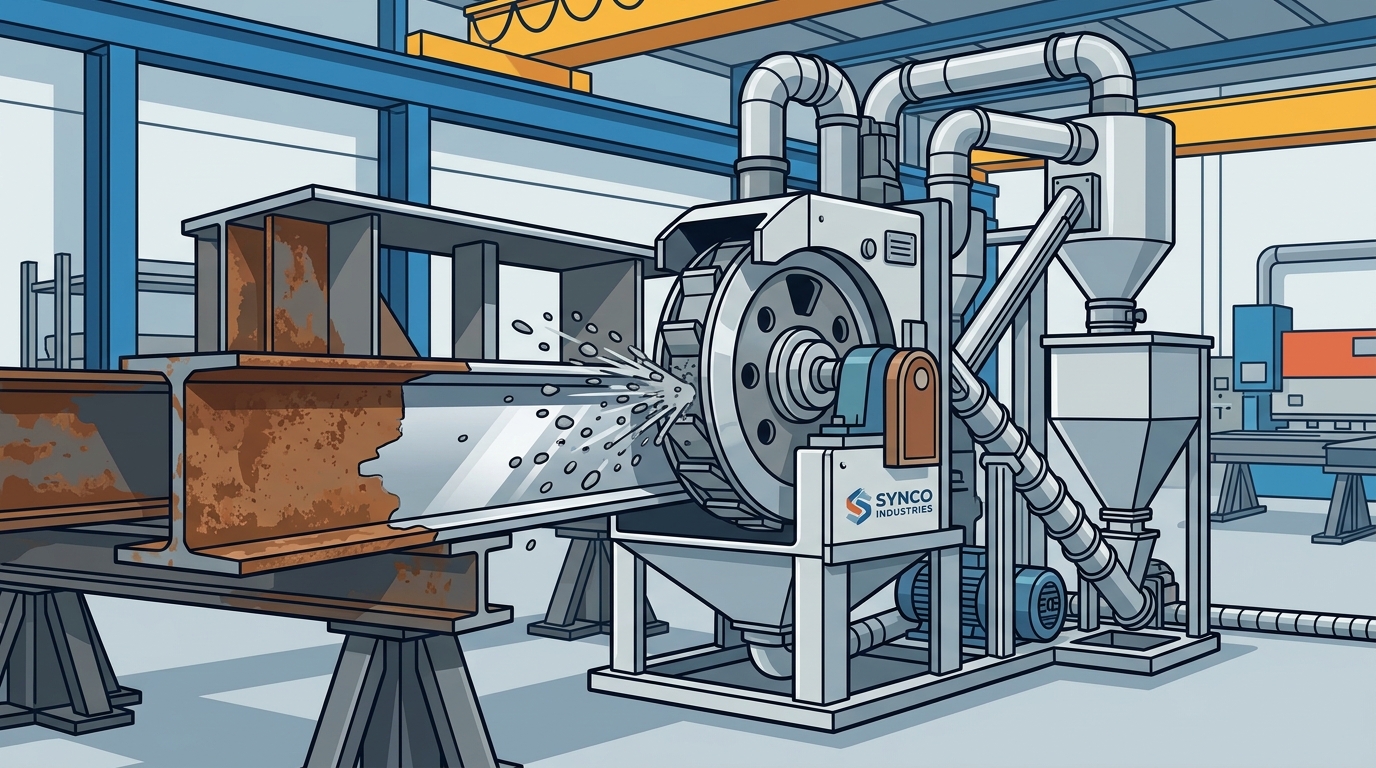
The blast wheel is a high-speed rotor with vanes that fling abrasive media at the workpiece. Typical operating speeds range from 70 to 90 meters per second. This kinetic energy removes rust, scale, and contaminants while creating a surface profile that improves paint adhesion. The wheel is housed in a casing that directs the abrasive stream and contains overspray.
Single vs. Multi-Wheel Configurations
Single-wheel machines are suitable for smaller parts or lower-volume operations. Multi-wheel systems, such as multi-satellite blasting machines, use two or more wheels to cover larger surfaces or complex geometries. For steel fabrication shops processing structural beams, plates, or fabricated assemblies, multi-wheel configurations reduce cycle time significantly. Synco Industries offers multi-satellite blasting machines designed for high-throughput applications.
Airless vs. Air-Assisted
Airless blast wheel systems use mechanical force only, while air-assisted systems combine wheel acceleration with compressed air. Airless systems are more energy-efficient and produce less dust. Air-assisted systems can reach tighter corners but require a reliable air compressor. For most steel fabrication surface preparation, airless systems are the standard choice due to their efficiency and lower operating costs.
Machine Types for Steel Fabrication
Choosing the right machine type depends on part size, shape, and production volume. Steel fabrication shops typically use one of four machine configurations: table type, hangar type, tumblast, or portable.
Table Type Shot Blasting Machines
Table type machines use a conveyor table to move parts through a blast chamber. They are ideal for flat plates, sheets, and small fabricated components. Synco Industries manufactures swing table shot blasting machines in various sizes, including 750mm, 900mm, 1200mm, 1800mm, and 2400mm widths. The swing table design allows for continuous loading and unloading, improving workflow efficiency.
Hangar Type Shot Blasting Machines
Hangar type machines, also called blast rooms, are enclosed chambers where parts are suspended or placed on racks. They are best for large structural components, welded assemblies, and irregularly shaped parts. Synco Industries offers hangar type machines with envelope sizes such as 750x1000mm and 1000x1200mm. These machines provide uniform coverage and are suitable for batch processing.
Tumblast Machines
Tumblast machines use a rotating drum to tumble small parts while blasting them. They are ideal for small, uniform components like brackets, fasteners, and small fabricated pieces. Synco Industries provides tumblast machines in sizes ranging from 16x22 inches to 36x42 inches. The tumbling action ensures all surfaces are exposed to the abrasive stream.
Portable Blasting Machines
Portable blasting machines are air-assisted units that operators use to clean large structures in place. They are suitable for on-site work, maintenance, and large structures that cannot be moved to a blast room. Synco Industries offers portable blasting machines in various models, including P7 150, P7 300, P7 500, and P7 1000. These units provide flexibility for field applications.
Abrasive Selection and Media
The abrasive media you choose directly affects surface quality, cleaning speed, and cost. Common abrasives for steel fabrication include cut wire shot, steel grit, and glass beads.
Cut Wire Shot
Cut wire shot is produced by cutting high-carbon steel wire into small, irregular particles. It is the most common abrasive for steel surface preparation because it creates a deep, durable surface profile. Synco Industries manufactures cut wire shots in various grades, including high carbon and stainless steel options. Cut wire shot is ideal for removing mill scale, rust, and preparing surfaces for heavy-duty coatings.
Steel Grit
Steel grit is produced by crushing and screening steel scrap. It has a more angular shape than cut wire shot and is suitable for general cleaning and light profiling. Steel grit is often used when a less aggressive surface profile is required, such as for decorative finishes or light maintenance.
Glass Beads and Plastic Grit
Glass beads and plastic grit are softer abrasives used for light cleaning, deburring, and surface finishing. They do not create a deep profile and are not suitable for heavy rust removal. These media are better suited for finishing operations rather than primary surface preparation for coating.
Surface Profile and Coating Readiness
Surface profile is the texture created by blasting, measured in microns. It is critical for coating adhesion. Most industrial coatings require a surface profile between 40 and 75 microns. The abrasive type, size, and blasting parameters determine the final profile.
Why Surface Profile Matters
A proper surface profile increases the surface area and provides mechanical anchoring for the coating. Without adequate profile, coatings can peel or fail prematurely. For steel fabrication, achieving a consistent profile is essential for long-term durability, especially in outdoor or corrosive environments.
Measuring Surface Profile
Surface profile is typically measured using a replica tape or a profilometer. Operators should verify the profile after blasting to ensure it meets coating specifications. Synco Industries provides guidance on abrasive selection and machine settings to achieve the desired profile for specific coating systems.
Maintenance and Wear Parts
Regular maintenance is essential for consistent performance and cost control. Blast wheel systems have several wear parts that require periodic replacement.
Key Wear Parts
The main wear parts include blast wheel vanes, wear plates, nozzles, and seals. These components are subject to high-impact abrasion and must be inspected regularly. Synco Industries supplies spare parts for both air-assisted and airless systems, including blast wheel models, nozzles, and wear plates. Using OEM-quality spares ensures consistent performance and prevents unexpected downtime.
Inspection Schedule
Inspect wear parts at least weekly for high-volume operations and monthly for lower-volume use. Replace parts when wear exceeds manufacturer specifications. Keeping a spare parts inventory on-site minimizes downtime. Synco Industries offers a range of spare parts for air-assisted and airless machines, ensuring easy access to replacements.
Key Takeaways
- Airless blast wheel systems are the best choice for most steel fabrication surface preparation due to their efficiency and consistent performance.
- Table type machines are ideal for flat plates and small parts, while hangar type machines suit large structural components.
- Cut wire shot is the preferred abrasive for steel surface preparation, creating a durable profile for heavy-duty coatings.
- Surface profile should be between 40 and 75 microns for most industrial coating applications.
- Multi-wheel configurations reduce cycle time for high-volume production.
- Regular inspection and replacement of wear parts are critical for maintaining performance and controlling costs.
- Portable blasting machines provide flexibility for on-site work and large structures that cannot be moved.
- Choosing the right machine and abrasive combination ensures optimal surface quality and coating adhesion.
Frequently Asked Questions
What is the best shot blasting machine for large steel structures?
How does cut wire shot differ from steel grit?
Cut wire shot is produced by cutting steel wire and has an irregular, elongated shape. Steel grit is produced by crushing steel scrap and has a more angular shape. Cut wire shot creates a deeper surface profile and is preferred for heavy-duty coating preparation, while steel grit is suitable for general cleaning and light profiling.
What surface profile is required for industrial coatings?
Most industrial coatings require a surface profile between 40 and 75 microns. The exact requirement depends on the coating system and application. Always verify the profile using a replica tape or profilometer after blasting to ensure compliance with coating specifications.
How often should blast wheel wear parts be replaced?
Wear parts should be inspected weekly for high-volume operations and monthly for lower-volume use. Replace parts when wear exceeds manufacturer specifications. Keeping a spare parts inventory on-site helps minimize downtime. Synco Industries supplies OEM-quality spare parts for both air-assisted and airless systems.
Are airless or air-assisted systems better for steel fabrication?
Airless systems are generally better for steel fabrication due to their energy efficiency and lower operating costs. They produce less dust and provide consistent performance. Air-assisted systems are useful for reaching tight corners or for portable applications, but they require a reliable air compressor.
Can I use the same abrasive for different steel parts?
Yes, cut wire shot can be used for a wide range of steel parts. However, the abrasive size and machine settings may need adjustment depending on the part size, shape, and desired surface profile. For small parts, a finer abrasive may be used, while larger structural components may require a coarser abrasive for faster cleaning.