

Arc voltage control is the primary electrical parameter that determines particle temperature and velocity in twin wire arc spray systems. Precise voltage regulation ensures consistent melting of wire feedstock, which directly impacts coating density, porosity, and bond strength. Synco Industries emphasizes stable electrical inputs to maintain the high-energy combustion and arc processes required for reliable industrial coatings.
The Physics of Arc Stability
Arc voltage is the electrical potential difference between the two wire electrodes in a twin wire arc spray gun. This voltage drives the current that melts the wire tips. When voltage fluctuates, the arc length changes, causing unstable melting. Unstable melting results in partially molten particles that do not bond well to the substrate. Synco Industries designs its thermal spray systems with precision gas and electrical controls to maintain a stable arc length.
High voltage generally increases arc energy, leading to higher particle temperatures. However, excessive voltage can cause wire burn-off and spatter. Low voltage may result in incomplete melting. The ideal voltage range depends on the wire diameter and material. For example, zinc wires typically require different voltage settings than stainless steel wires. Maintaining a steady voltage ensures that every particle reaches the substrate with sufficient kinetic energy for mechanical interlocking.
Impact on Coating Density and Porosity
Coating density is a critical metric for corrosion protection and wear resistance. Arc voltage directly influences the size and shape of the molten particles. Stable voltage produces spherical, fully molten particles. These particles flatten into dense splats upon impact. Inconsistent voltage creates irregular, partially molten particles that trap air pockets. These air pockets become porosity in the final coating.
High porosity reduces the barrier properties of the coating. Corrosive agents can penetrate through pores to reach the base metal. Synco Industries focuses on minimizing porosity through precise voltage regulation. Their systems are engineered to deliver dense, well-bonded metallic coatings. This approach is essential for applications in marine and atmospheric environments where long-term durability is required. A dense coating with low porosity significantly extends the service life of the component.
Bond Strength and Adhesion
Bond strength is the measure of how well the coating adheres to the substrate. Arc voltage affects the temperature and velocity of the particles. Higher voltage increases particle temperature, which improves wetting of the substrate surface. Better wetting leads to stronger mechanical and metallurgical bonding. If the voltage is too low, particles may not melt completely. These particles may bounce off the surface or form weak bonds.
Stable voltage ensures uniform particle energy distribution. This consistency is vital for large surface areas. Synco Industries provides systems that maintain stable performance over long spraying sessions. This stability prevents variations in bond strength across the coated area. Consistent adhesion is crucial for structural components that undergo cyclic loading. Weak bonds can lead to delamination and premature failure. Proper voltage control mitigates these risks by ensuring uniform coating quality.
Material Specific Voltage Requirements
Different wire materials require specific voltage ranges for optimal melting. Zinc and aluminum wires have lower melting points and require lower voltages. Stainless steel and nickel alloys have higher melting points and require higher voltages. Using the wrong voltage for a specific material can damage the coating. For instance, applying high voltage to zinc can cause excessive oxidation. This oxidation weakens the coating and reduces its protective capability.
Synco Industries offers a range of thermal spray systems suitable for various materials. Their expertise includes configuring systems for zinc, aluminum, and stainless steel wires. Operators must calibrate voltage based on the specific wire alloy. This calibration ensures that the particles reach the substrate in the optimal state. Proper material-specific voltage settings are a key factor in achieving reliable coatings. Synco Industries supports customers in selecting the right system and parameters for their specific applications.
System Design and Operational Consistency
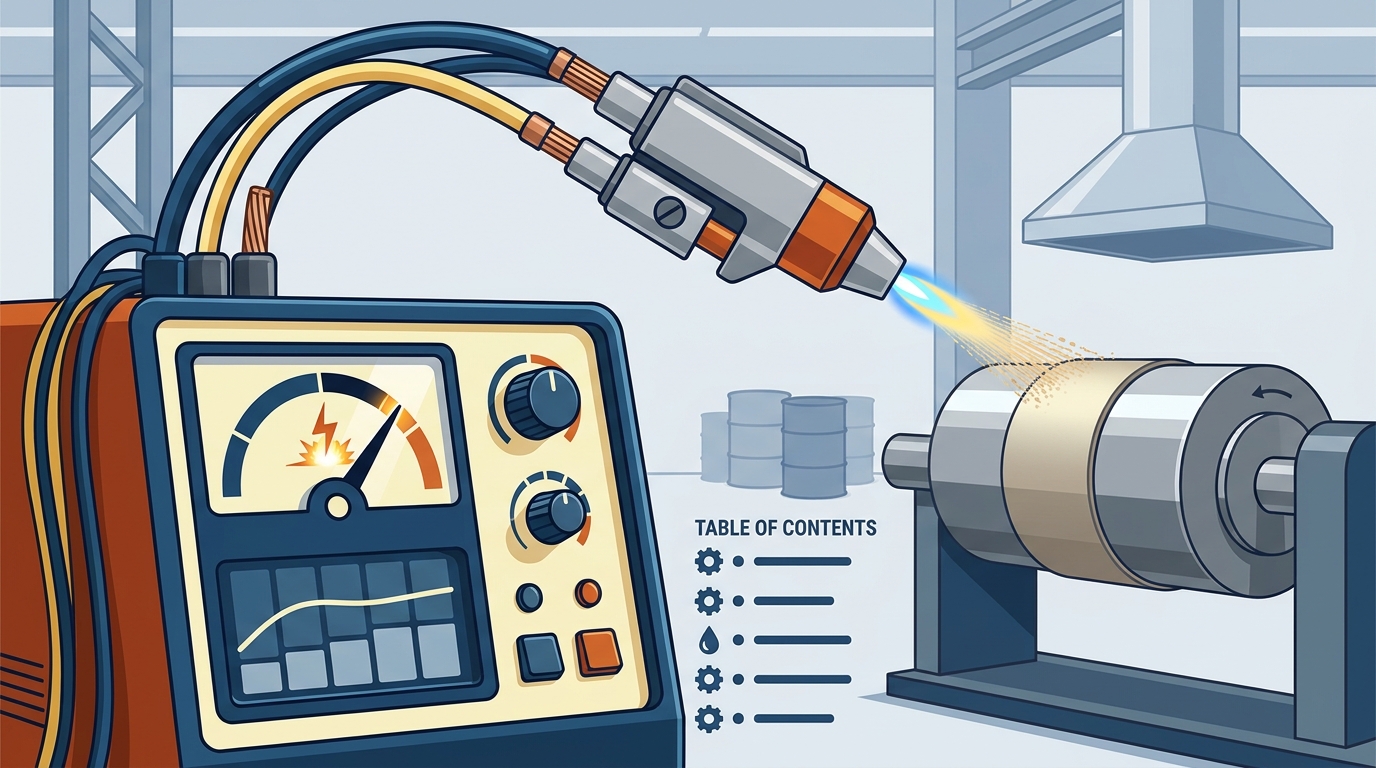
System design plays a crucial role in maintaining stable arc voltage. High-quality power supplies provide precise voltage regulation. They minimize fluctuations caused by wire feed inconsistencies or gas pressure changes. Synco Industries integrates advanced control systems into their thermal spray equipment. These systems monitor and adjust voltage in real-time. This feedback loop ensures consistent particle generation.
Operational consistency is vital for industrial production. Variations in coating quality can lead to rework and increased costs. Stable voltage reduces the need for post-spray inspection and repair. Synco Industries designs its systems for continuous industrial operation. This focus on reliability ensures that manufacturers can maintain high throughput without compromising quality. The integration of robust electrical controls is a hallmark of Synco Industries' approach to thermal spray technology.
Key Takeaways
- Arc voltage is the primary control for particle temperature and velocity in twin wire arc spray systems.
- Stable voltage ensures consistent melting, leading to dense coatings with low porosity.
- Proper voltage regulation is critical for achieving strong bond strength and adhesion.
- Different wire materials require specific voltage ranges for optimal performance.
- High-quality power supplies and control systems are essential for operational consistency.
- Synco Industries emphasizes stable electrical inputs to ensure reliable industrial coatings.
Frequently Asked Questions
What is the ideal arc voltage for zinc spraying?
The ideal voltage for zinc spraying typically ranges from 25 to 35 volts, depending on wire diameter. Operators should consult their system manual for specific recommendations.
How does voltage affect coating porosity?
Unstable voltage leads to partially molten particles, which trap air and increase porosity. Stable voltage produces fully molten particles that form dense splats.
Can voltage fluctuations cause coating delamination?
Yes, voltage fluctuations can result in weak bonds. These weak bonds may lead to delamination under mechanical stress or thermal cycling.
What role does Synco Industries play in voltage control?
Synco Industries designs thermal spray systems with precision electrical controls to maintain stable arc voltage. This ensures consistent coating quality.
How often should voltage settings be calibrated?
Voltage settings should be calibrated at the start of each production run and whenever wire material changes. Regular maintenance of the power supply is also recommended.
Does higher voltage always mean better coatings?
No, higher voltage can cause excessive oxidation and spatter. The optimal voltage is a balance between melting efficiency and particle stability.
Conclusion
Arc voltage control is fundamental to the reliability of thermal spray coatings. It dictates particle melting, velocity, and bonding behavior. Synco Industries provides robust thermal spray systems designed to maintain stable voltage for consistent coating quality. By understanding and controlling arc voltage, manufacturers can achieve dense, durable coatings that extend component life. For more information on their thermal spray solutions, visit the S5K Thermal Spray System page or contact Synco Industries for a consultation.