
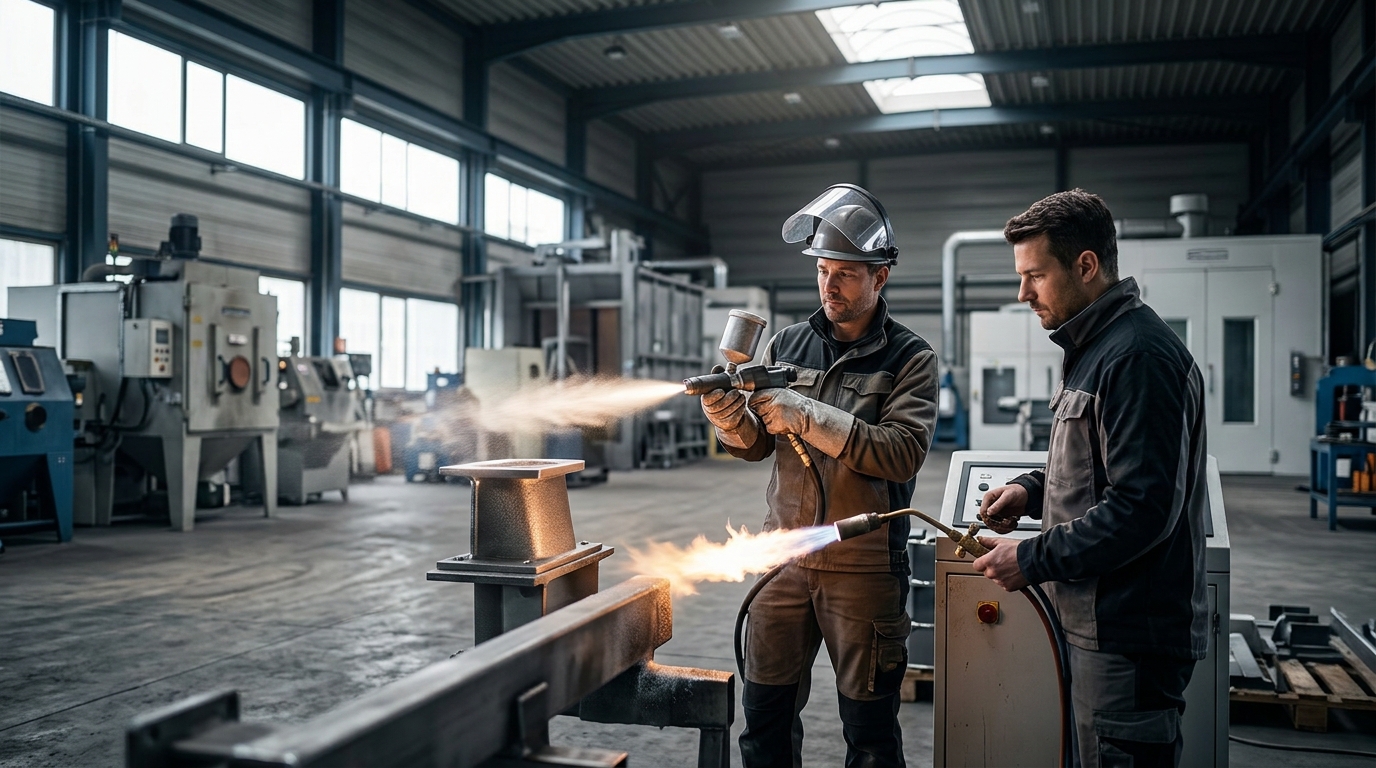
Arc Spray vs Flame Spray: Cost-Benefit Analysis for Industrial Coating Systems
Thermal spray coating is a critical surface engineering process used to enhance the durability, corrosion resistance, and wear properties of industrial components. According to recent industry data, the global thermal spray market is projected to grow at a significant compound annual growth rate through 2030, driven by demand in aerospace, power generation, and heavy manufacturing sectors. Understanding the economic and technical differences between Arc Spray and Flame Spray systems is essential for facility managers and engineering directors making capital expenditure decisions. This analysis evaluates the operational costs, efficiency metrics, and application suitability of both technologies to help you determine the optimal investment for your production environment. (Contact Us 8211 Synco)
Understanding Arc Spray Technology
Arc spray thermal coating is a process that utilizes an electric arc to melt two consumable wire electrodes. The molten material is then atomized and propelled onto a substrate using compressed air. This method is widely recognized for its high deposition rates and cost-effective operation for large-scale industrial applications. (Synco Industries)
Arc Spray is a thermal spray process where an electric arc melts two consumable wire electrodes, which are then atomized by compressed air and sprayed onto a workpiece.
The primary advantage of arc spray systems lies in their operational efficiency. Because the energy source is electrical rather than chemical, the process generates less heat in the surrounding environment compared to flame-based methods. This makes arc spray particularly suitable for heat-sensitive substrates or large components that require rapid material buildup. Synco Industries offers advanced Arc Jet Systems designed to deliver consistent, high-quality coatings with minimal waste.
Furthermore, arc spray systems are known for their versatility in material selection. They can process a wide range of metals and alloys, including aluminum, zinc, and various steel grades, making them indispensable for corrosion protection in infrastructure and marine environments.
Understanding Flame Spray Technology
Flame spray thermal coating relies on the combustion of fuel gases, such as acetylene or propane, mixed with oxygen to generate the heat required to melt the coating material. This material can be in powder or wire form. The resulting molten or semi-molten particles are accelerated toward the substrate, forming a protective layer.
Flame Spray is a thermal spray process that uses the heat from a fuel gas and oxygen combustion to melt coating materials, which are then propelled onto a surface to form a protective coating.
One of the distinct benefits of flame spray systems is their portability and lower initial capital cost. Flame spray equipment is generally more compact and does not require high-amperage electrical connections, making it ideal for on-site repairs and large-scale field applications. Synco Industries provides robust S5k Flame Spray Systems that are engineered for reliability and ease of use in demanding field conditions.
However, flame spray systems often have lower deposition rates compared to arc spray. The quality of the coating can also be influenced by the combustion process, potentially leading to higher oxidation levels in the coating material. Despite these factors, flame spray remains a preferred choice for applications requiring specialized materials that may not be suitable for arc melting.
Cost-Benefit Analysis: Capital vs Operational
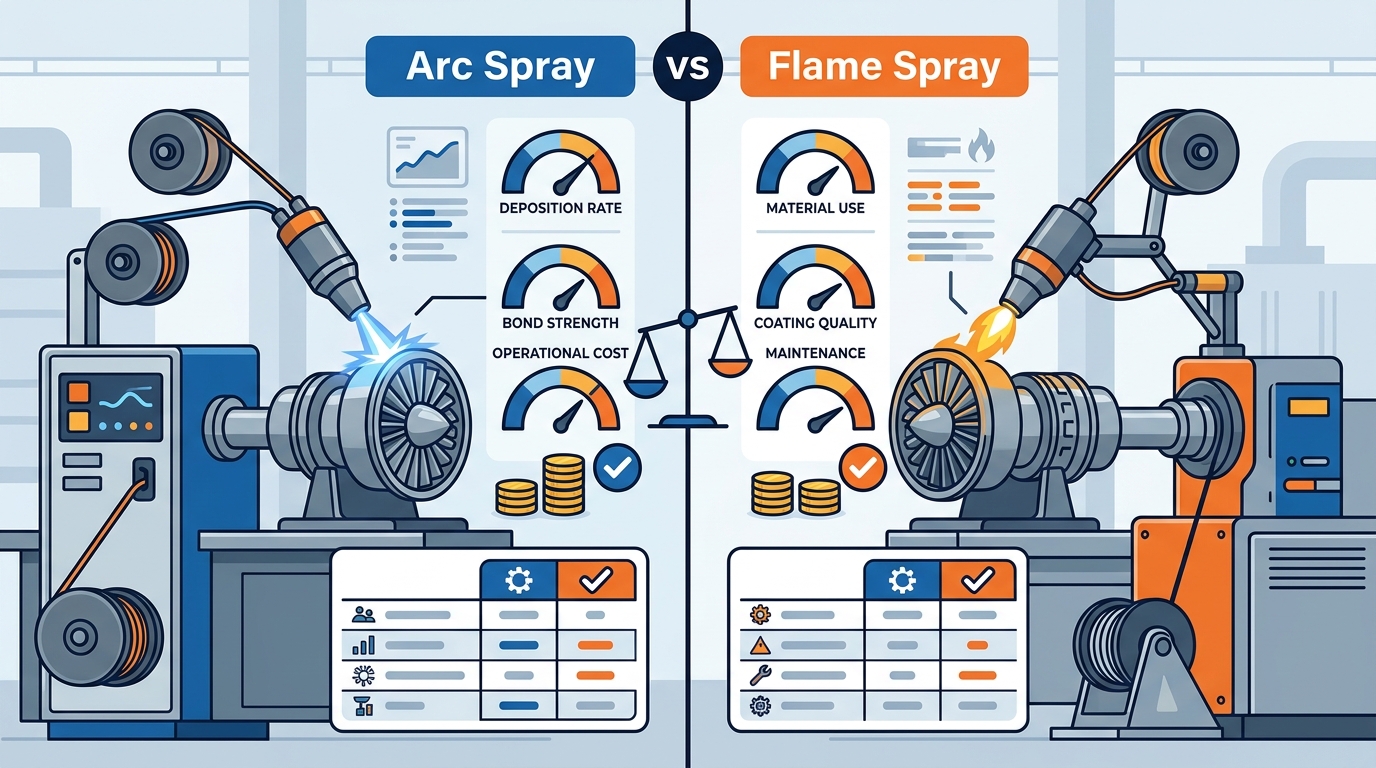
When evaluating the cost-benefit ratio of Arc Spray versus Flame Spray, it is crucial to look beyond the initial purchase price. The total cost of ownership includes energy consumption, consumable costs, maintenance, and labor efficiency.
Capital Expenditure (CapEx): Flame spray systems typically have a lower upfront cost. The equipment is simpler, requiring fewer complex electrical components. Arc spray systems, while more expensive initially, offer higher long-term value through increased productivity.
Operational Expenditure (OpEx): Arc spray systems are generally more energy-efficient for high-volume applications. The cost of electricity is often lower than the continuous consumption of fuel gases and oxygen required for flame spray. Additionally, arc spray wires are often more cost-effective per unit of deposited material compared to flame spray powders.
Maintenance and Lifespan: Arc spray systems require regular maintenance of electrodes and nozzles. Flame spray systems need frequent cleaning of burners and gas lines. Synco Industries ensures that both Thermal Spray Equipments are built for durability and ease of service, minimizing downtime.
| Factor | Arc Spray Systems | Flame Spray Systems |
|---|---|---|
| Initial Cost | Higher | Lower |
| Deposition Rate | High | Moderate |
| Energy Source | Electricity | Fuel Gas + Oxygen |
| Portability | Lower (Requires Power) | Higher |
| Coating Quality | Low Oxidation | Potential Oxidation |
Efficiency and Deposition Rates
Deposition rate is a critical metric in industrial coating applications. It determines how quickly a component can be coated, directly impacting production throughput. Arc spray systems typically achieve deposition rates of 10 to 20 kg per hour, depending on the wire diameter and current settings. This high efficiency makes arc spray ideal for large-scale industrial projects.
Flame spray systems generally have lower deposition rates, ranging from 2 to 5 kg per hour for powder systems. While this may seem slower, the flexibility of flame spray allows for precise application in complex geometries where arc spray guns might struggle.
The efficiency of the coating process also affects the final bond strength. Arc spray coatings often exhibit higher bond strengths due to the cleaner melting process and reduced oxidation. This is particularly important for applications requiring high mechanical integrity, such as aerospace and automotive components.
Selecting the Right System for Your Needs
Choosing between Arc Spray and Flame Spray depends on your specific application requirements. Consider the following factors when making your decision:
Material Compatibility
Arc spray is best suited for metallic wires, particularly for corrosion protection. Flame spray is more versatile for powders, including ceramics and specialized alloys that may degrade in an arc environment.
Production Volume
For high-volume production, the speed and consistency of arc spray provide a significant cost advantage. For low-volume or custom jobs, the flexibility of flame spray may be more economical.
Site Conditions
If your operations involve on-site repairs or large structures that cannot be moved, flame spray offers superior portability. For shop-based applications, arc spray systems provide greater efficiency.
Synco Industries provides Customized Solutions to help you select the optimal thermal spray system for your unique operational needs. Our engineering team can assist in evaluating your specific requirements to ensure you invest in the right technology.
Key Takeaways
- Arc spray systems offer higher deposition rates and lower operational costs for high-volume metallic coating applications.
- Flame spray systems provide greater portability and material versatility, making them ideal for field repairs and specialized powders.
- The initial capital cost for flame spray is typically lower, but arc spray offers better long-term value through efficiency.
- Synco Industries has over 30 years of experience in manufacturing precision thermal spray equipment.
- Both Arc Jet and S5k systems from Synco are designed for industrial reliability and consistent performance.
- Coating quality is influenced by the melting process, with arc spray generally producing lower oxidation coatings.
- Choosing the right system requires a detailed analysis of your material, volume, and site-specific constraints.
Frequently Asked Questions
Which thermal spray method is more cost-effective for large-scale projects?
Arc spray is generally more cost-effective for large-scale projects due to its higher deposition rates and lower consumable costs per unit of coating applied.
Can flame spray be used for on-site repairs?
Yes, flame spray systems are highly portable and do not require high-amperage electrical connections, making them ideal for on-site repairs and large structures.
What materials are best suited for arc spray?
Arc spray is best suited for metallic wires, particularly for corrosion protection using materials like aluminum, zinc, and various steel alloys.
How does Synco Industries ensure the quality of its thermal spray equipment?
Synco Industries employs robust quality control processes, including third-party inspections and ISO certification, to ensure the highest standards of quality and reliability.
Is arc spray suitable for heat-sensitive substrates?
Yes, arc spray generates less heat in the surrounding environment compared to flame spray, making it suitable for heat-sensitive substrates.
What is the typical lifespan of Synco thermal spray equipment?
Synco thermal spray equipment is designed for long operational life and industrial reliability, with regular maintenance ensuring consistent performance over many years.
Does Synco offer customized thermal spray solutions?
Yes, Synco Industries provides tailored thermal spray solutions designed to match specific industry applications and production needs.
Contact Synco Industries for Your Thermal Spray Needs
Choosing the right thermal spray system is a critical decision that impacts your production efficiency and coating quality. Synco Industries offers a comprehensive range of Arc Jet Systems and S5k Flame Spray Systems engineered for industrial excellence. With over 30 years of experience and a global client base, we provide the expertise and support you need to optimize your surface finishing operations.
Contact our team today to discuss your specific requirements and receive a customized quote for your thermal spray solution. Visit our Contact Us page to get started.