

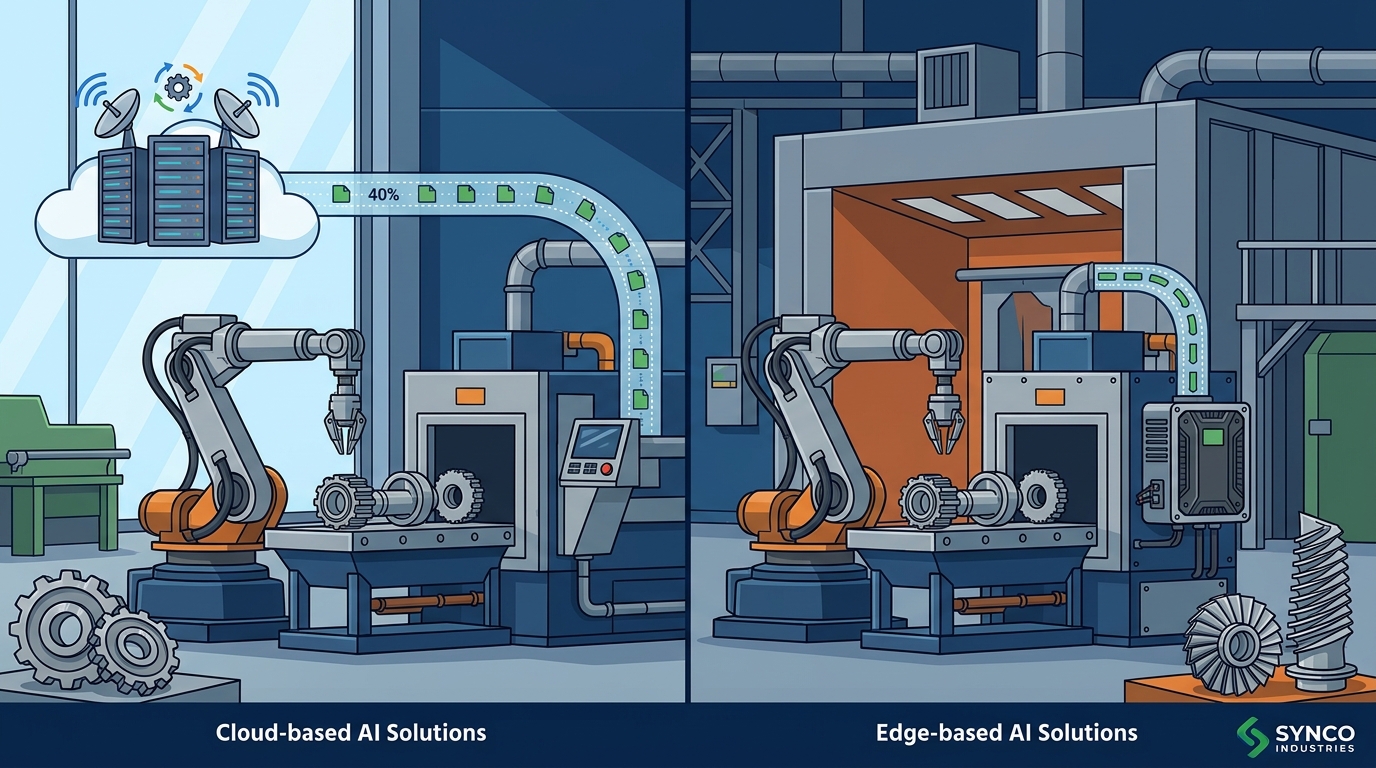
Enterprises today face a critical infrastructure dilemma that directly impacts their operational efficiency and data sovereignty. According to recent industry analysis, organizations leveraging hybrid AI architectures report a 40% reduction in latency compared to purely cloud-based deployments. This statistic highlights the growing necessity for businesses to evaluate where their data processing should occur. Synco offers robust solutions that address these divergent needs, allowing companies to choose the optimal path for their specific digital transformation goals. Understanding the nuances between centralized cloud computing and decentralized edge processing is essential for modern IT leaders. (Contact Us)
The Case for Cloud-Centric AI
Cloud computing remains the backbone of modern enterprise scalability. It provides virtually unlimited storage and computational power, enabling businesses to handle massive datasets without upfront hardware investments. For organizations prioritizing rapid deployment and global accessibility, the cloud offers a streamlined pathway to innovation.
One of the primary benefits of cloud-based AI is the ease of maintenance. Updates and patches are managed centrally by the provider, reducing the burden on internal IT teams. This model allows companies to focus on core business logic rather than infrastructure management. Synco's cloud solutions leverage this architecture to deliver consistent performance across distributed teams.
However, cloud reliance introduces challenges regarding data latency and privacy. Transmitting large volumes of data to and from central servers can introduce delays that are unacceptable in real-time applications. Furthermore, regulatory frameworks in various regions require data to remain within specific geographic boundaries, complicating global cloud strategies.
The Power of Edge Computing
Edge computing processes data closer to the source of generation, such as IoT devices or local servers. This proximity significantly reduces latency, enabling real-time decision-making capabilities that cloud-only architectures struggle to match. For industries like manufacturing, healthcare, and autonomous systems, this speed is not just a luxury but a necessity.
Data sovereignty is another critical advantage of edge computing. By keeping sensitive information local, organizations can comply with strict privacy regulations without relying on complex data routing protocols. This approach minimizes the risk of data breaches during transmission, providing an additional layer of security for enterprise assets.
Despite these benefits, edge computing requires more complex management. Each edge node must be monitored, updated, and secured individually. This distributed nature can increase operational overhead for IT departments lacking specialized skills. Synco addresses this complexity through intelligent orchestration tools that simplify edge management.
Synco's Hybrid Architecture
Synco recognizes that few enterprises fit neatly into a purely cloud or purely edge category. The most effective strategy often involves a hybrid approach that leverages the strengths of both. This model allows for real-time processing at the edge while utilizing the cloud for heavy training and long-term storage.
This synergy enables businesses to optimize costs and performance simultaneously. For instance, raw data can be filtered and processed locally, with only insights or aggregated metrics sent to the cloud. This reduces bandwidth usage and lowers storage costs while maintaining the agility of cloud resources. Synco's platform is designed to facilitate this seamless integration.
Implementing a hybrid architecture requires careful planning and robust connectivity. Network reliability becomes paramount, as disruptions can impact the synchronization between edge and cloud components. Synco provides comprehensive support to ensure that your hybrid deployment is resilient and scalable. Learn more about our AI Integration Services to understand how we can tailor this approach to your needs.
Detailed Feature Comparison
The following table outlines the key differences between Synco's cloud and edge offerings to help you make an informed decision.
| Feature | Cloud-Centric Solution | Edge-Centric Solution | Hybrid Approach |
|---|---|---|---|
| Latency | Higher (Network Dependent) | Minimal (Local Processing) | Optimized |
| Scalability | Unlimited | Hardware Limited | Flexible |
| Data Privacy | Requires Encryption | High (Local Storage) | Enhanced |
| Management | Centralized | Distributed | Unified Platform |
| Best For | Big Data Analytics | Real-Time Control | Complex Enterprises |
Key Takeaways
- Cloud solutions offer superior scalability for large-scale data analytics and global collaboration.
- Edge computing is essential for applications requiring sub-millisecond response times and strict data sovereignty.
- Synco's hybrid model combines the best of both worlds, optimizing for both cost and performance.
- Data privacy regulations increasingly favor edge processing to keep sensitive information local.
- Implementation complexity is higher for edge and hybrid models, requiring specialized IT support.
- Cost structures differ significantly, with cloud favoring operational expenditure and edge favoring capital expenditure.
- Future-proofing your infrastructure often involves starting with a hybrid strategy to allow for flexibility.
Frequently Asked Questions
What is the primary difference between cloud and edge AI?
Cloud AI processes data in centralized data centers, offering scalability but higher latency. Edge AI processes data locally on devices or nearby servers, offering speed and privacy but limited compute power.
Can Synco help migrate from cloud to edge?
Yes, Synco provides comprehensive migration services to help enterprises transition their workloads to edge environments or hybrid setups seamlessly. Visit our About Us page for more details on our team.
Is edge computing more secure than cloud?
Edge computing can be more secure regarding data privacy as it reduces the attack surface during transmission. However, it requires robust physical security for the edge devices themselves.
How does Synco ensure data consistency in hybrid models?
Synco uses advanced synchronization protocols to ensure that data processed at the edge is consistently updated in the cloud, maintaining a single source of truth for your enterprise.
What industries benefit most from edge AI?
Industries such as manufacturing, healthcare, autonomous vehicles, and retail benefit significantly from edge AI due to their need for real-time processing and low latency.
Does Synco offer managed services for edge devices?
Absolutely. We offer managed services that include monitoring, maintenance, and security updates for your edge infrastructure, ensuring high availability and performance.
How do I choose the right architecture for my business?
The choice depends on your latency requirements, data privacy needs, and budget. Synco's consultants can help you assess your specific use cases to determine the optimal path.
Contact Synco for a Demo
Ready to optimize your enterprise infrastructure? Whether you need cloud scalability, edge speed, or a hybrid approach, Synco has the expertise to guide you. Contact our team today to schedule a personalized demo and discover how our solutions can drive your business forward. Visit contact to get started.