
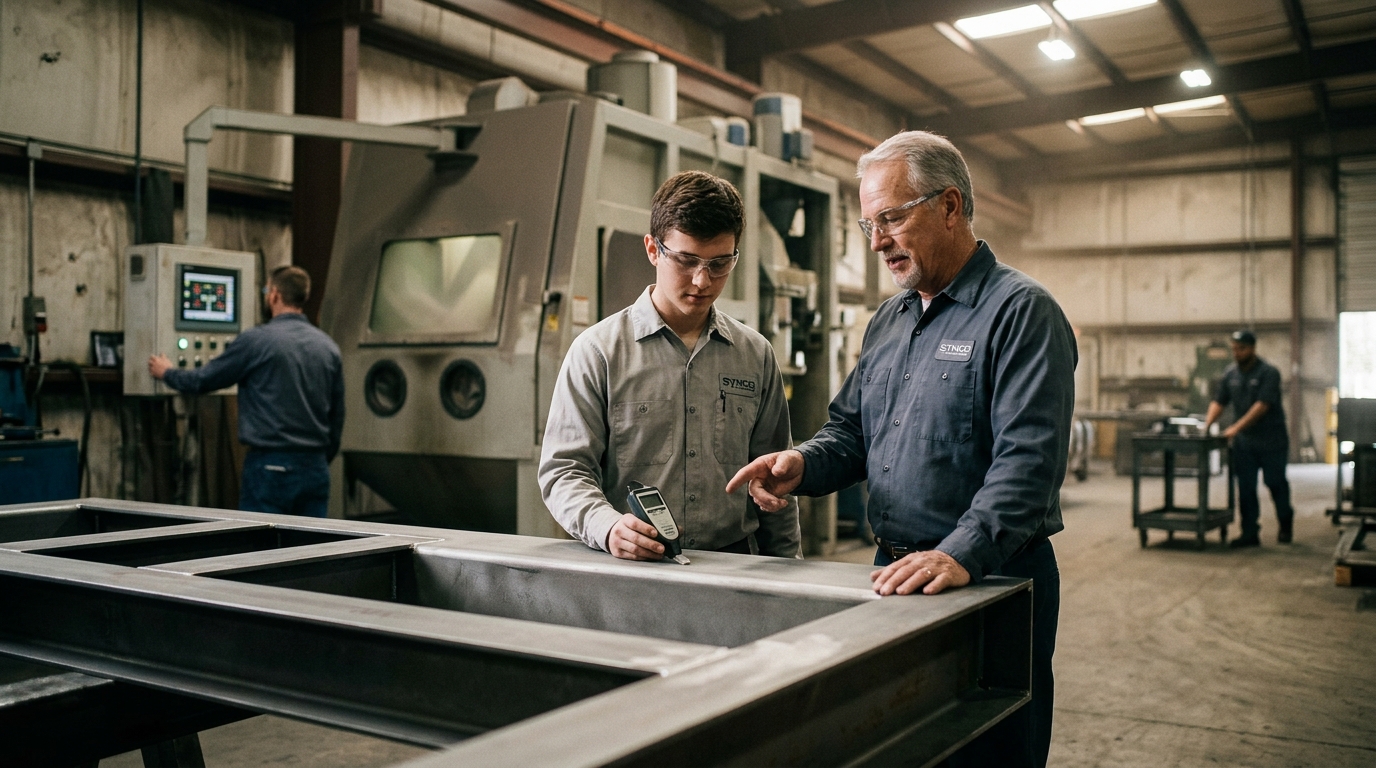
Blast wheel systems improve steel surface preparation by delivering high-velocity abrasive media that removes rust, scale, and contaminants faster than manual methods. This mechanical impact creates a uniform surface profile that enhances paint adhesion and corrosion resistance. Synco Industries designs these systems to maximize throughput while maintaining strict quality control standards for industrial applications.
The Mechanics of High-Velocity Impact
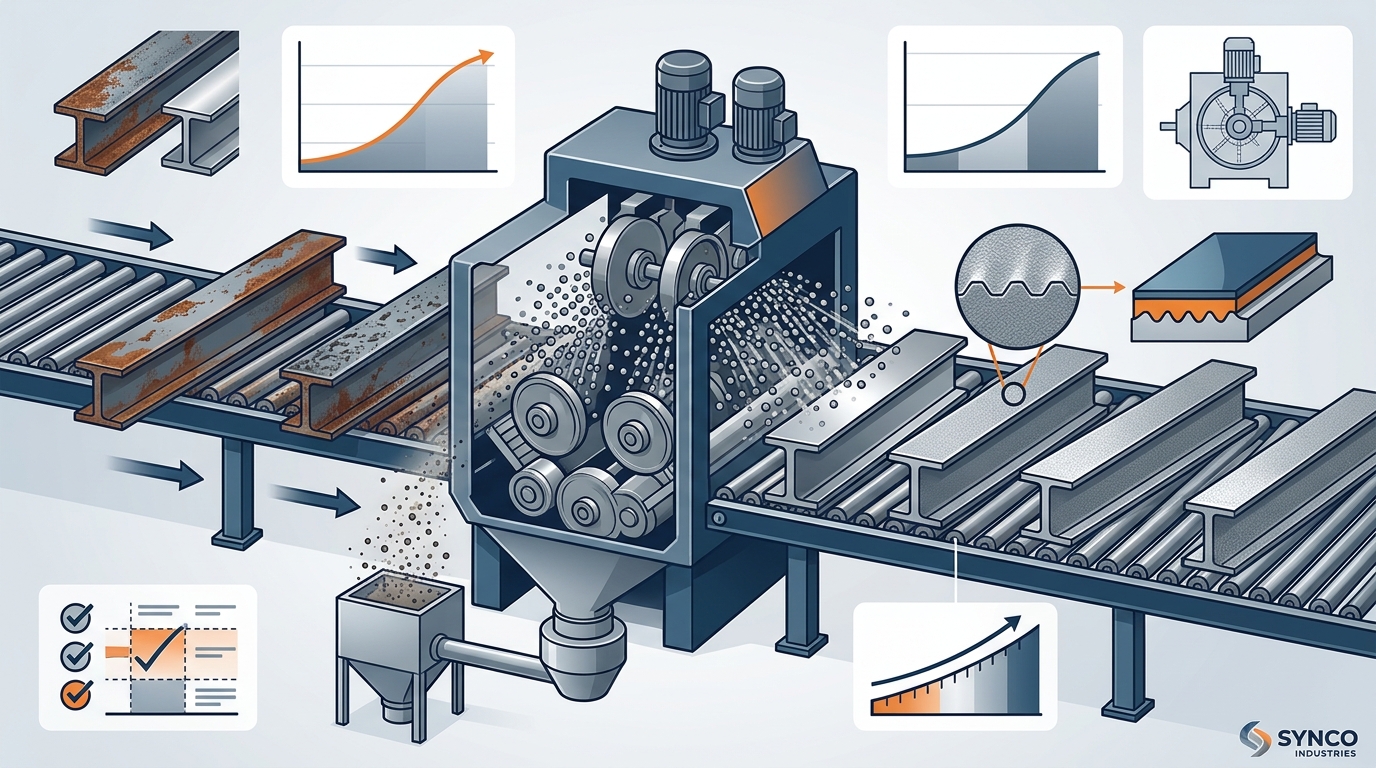
Blast wheel systems operate on the principle of centrifugal force. A rotating wheel accelerates abrasive media to high speeds before projecting it onto the workpiece. This kinetic energy is the primary driver of surface cleaning efficiency. The impact strips away mill scale and oxidation layers that are difficult to remove with lower-energy methods.
The velocity of the media is a critical factor in determining the final surface finish. Higher velocities generally result in a more aggressive cleaning action. This is essential for heavy steel fabrication where thick oxide layers are present. The system ensures that the energy transfer is consistent across the entire surface area.
Surface profile is the texture created by the abrasive impact. A well-defined profile increases the mechanical interlock between the steel and the subsequent coating. This physical anchor is more reliable than chemical adhesion alone. It significantly extends the lifespan of protective coatings in harsh environments.
Efficiency Gains in Industrial Throughput
Traditional manual cleaning methods are slow and labor-intensive. Blast wheel systems automate the cleaning process, allowing for continuous operation. This automation drastically reduces the time required to prepare large steel structures. Factories can process more units per hour without increasing headcount.
The consistency of automated systems eliminates human error. Every part receives the same level of cleaning intensity. This uniformity is crucial for quality assurance in high-volume production lines. It reduces the need for rework and secondary inspection. The result is a more predictable and efficient manufacturing workflow.
Energy efficiency is another key benefit of modern blast wheel designs. These systems are engineered to recycle abrasive media effectively. The recovery systems capture spent media and return it to the blast wheel. This reduces the consumption of new abrasives and lowers operational costs. It also minimizes waste disposal requirements.
Achieving Consistent Surface Quality
Quality in surface preparation is measured by the cleanliness and profile of the steel. Blast wheel systems provide a controlled environment for this process. Operators can adjust the media flow and wheel speed to meet specific standards. This precision ensures that the surface meets the requirements for high-performance coatings.
The removal of contaminants is not just about aesthetics. It is about preventing future corrosion. Blast wheel systems remove all visible rust, mill scale, and other foreign matter. This creates a clean substrate for painting. The absence of contaminants prevents blistering and peeling of the paint film.
Anchor pattern is a specific type of surface profile created by blasting. It provides a rough texture that improves the mechanical bonding of coatings. This pattern is essential for ensuring long-term durability. It is a standard requirement in many industrial specifications. Synco Industries focuses on creating these precise profiles for its clients.
Selecting the Right Abrasive Media
The choice of abrasive media directly impacts the outcome of the blasting process. Different media have different hardness, shape, and density. These properties determine the cleaning speed and the final surface texture. Selecting the correct media is a critical step in system design.
Steel shot is a common choice for heavy-duty cleaning. It is durable and provides a strong impact. It is ideal for removing thick scale and rust. The media is reusable, which makes it cost-effective for long-term operations. It also provides a good surface profile for painting.
System Design and Integration
Effective blast wheel systems are integrated into the production line. They are designed to fit the specific dimensions and weight of the workpiece. This integration ensures that the cleaning process is seamless and efficient. It minimizes the need for manual handling and repositioning.
Automation and control systems are key components of modern blast wheel machines. They allow for precise control of the blasting parameters. This includes media flow, wheel speed, and cycle time. These controls ensure that the process is repeatable and consistent. They also provide data for quality tracking and analysis.
Key Takeaways
- Blast wheel systems use centrifugal force to accelerate abrasive media for high-impact cleaning.
- Automated systems significantly increase throughput and reduce labor costs in steel fabrication.
- Consistent surface profiles created by blasting improve the adhesion and durability of coatings.
- The selection of abrasive media is critical for achieving the desired cleaning speed and finish.
- Modern systems include media recovery and filtration to reduce waste and ensure environmental compliance.
- Integration with production lines and advanced controls ensures repeatable and high-quality results.
Frequently Asked Questions
What is the main advantage of blast wheel systems over manual cleaning?
The main advantage is speed and consistency. Blast wheel systems clean large surfaces much faster than manual methods. They also provide a uniform surface profile, which is difficult to achieve manually.
How does a blast wheel system work?
A blast wheel system uses a rotating wheel to accelerate abrasive media. The media is then projected onto the workpiece at high velocity. The impact removes contaminants and creates a surface profile.
What type of media is best for steel surface preparation?
Steel shot is often the best choice for heavy-duty steel preparation. It is durable, reusable, and provides a strong impact. It effectively removes mill scale and rust.
Can blast wheel systems be customized for specific workpieces?
Yes, blast wheel systems can be customized. The design can be tailored to the size, shape, and weight of the workpiece. This ensures efficient and effective cleaning.
How does blasting affect paint adhesion?
Blasting creates a rough surface profile that improves paint adhesion. The mechanical interlock between the coating and the steel is stronger. This leads to more durable and long-lasting coatings. Learn more: Contact Us 8211 Synco.