
Deposition Rates and Productivity
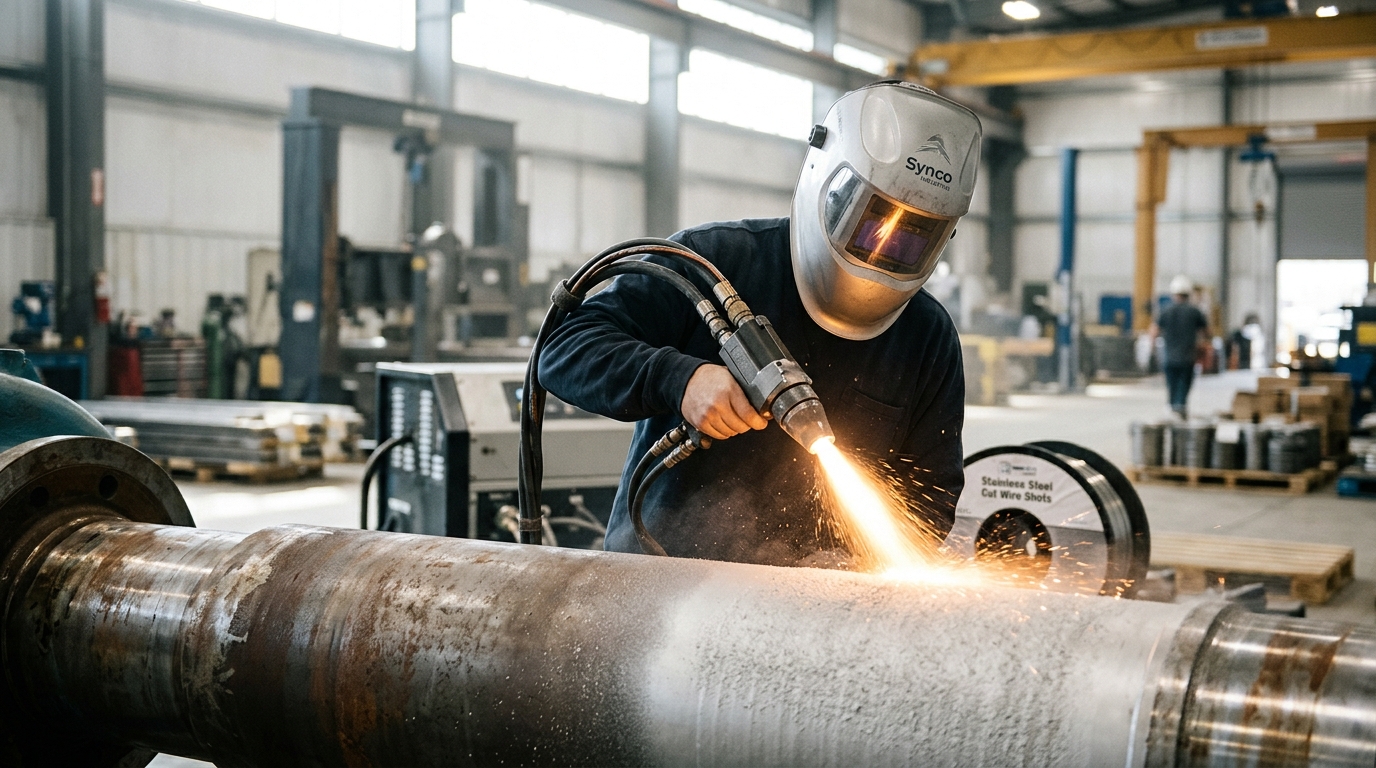
When extending the life of large industrial components, time is money. The core advantage of the electric arc spray process is its high material utilization. Unlike other thermal spray methods that waste significant powder, arc spray melts twin consumable wires directly. This results in a high deposition rate, allowing operators to build up thick coatings quickly. For heavy industrial applications, this speed is a primary driver for extending component life by reducing downtime.
Understanding Deposition Efficiency
Deposition efficiency is the percentage of material that actually bonds to the substrate. In arc spray systems, this efficiency is typically very high. The process uses an electric arc to melt the wire and compressed air to atomize the molten metal. This creates a spray of fine droplets that impact the surface at high velocity. The result is a dense, well-adhered coating that resists spalling. High efficiency means lower operating costs per kilogram of coating, which is vital for continuous production environments.
Impact on Component Lifespan
High deposition rates allow for the application of thicker protective layers. Thicker coatings provide a longer barrier against corrosion and wear. For example, in the oil and gas sector, protecting large pipes or structural steel requires substantial coating thickness. A system that can deposit material rapidly ensures that the component is protected before it returns to service. This directly extends the operational life of the asset. Synco Industries designs its arc spray systems with this productivity in mind, ensuring robust power sources and precision wire feeders for stable arc performance.
Surface Restoration and Dimensional Build-Up
Extending component life is not just about protection; it is often about restoration. Many industrial parts, such as shafts, rollers, and gears, wear down over time. When a part wears below its minimum tolerance, it is often scrapped. Arc spray systems excel at dimensional build-up, allowing manufacturers to restore worn parts to their original specifications. This process saves significant capital expenditure on new parts.
Corrosion Protection vs. Wear Resistance
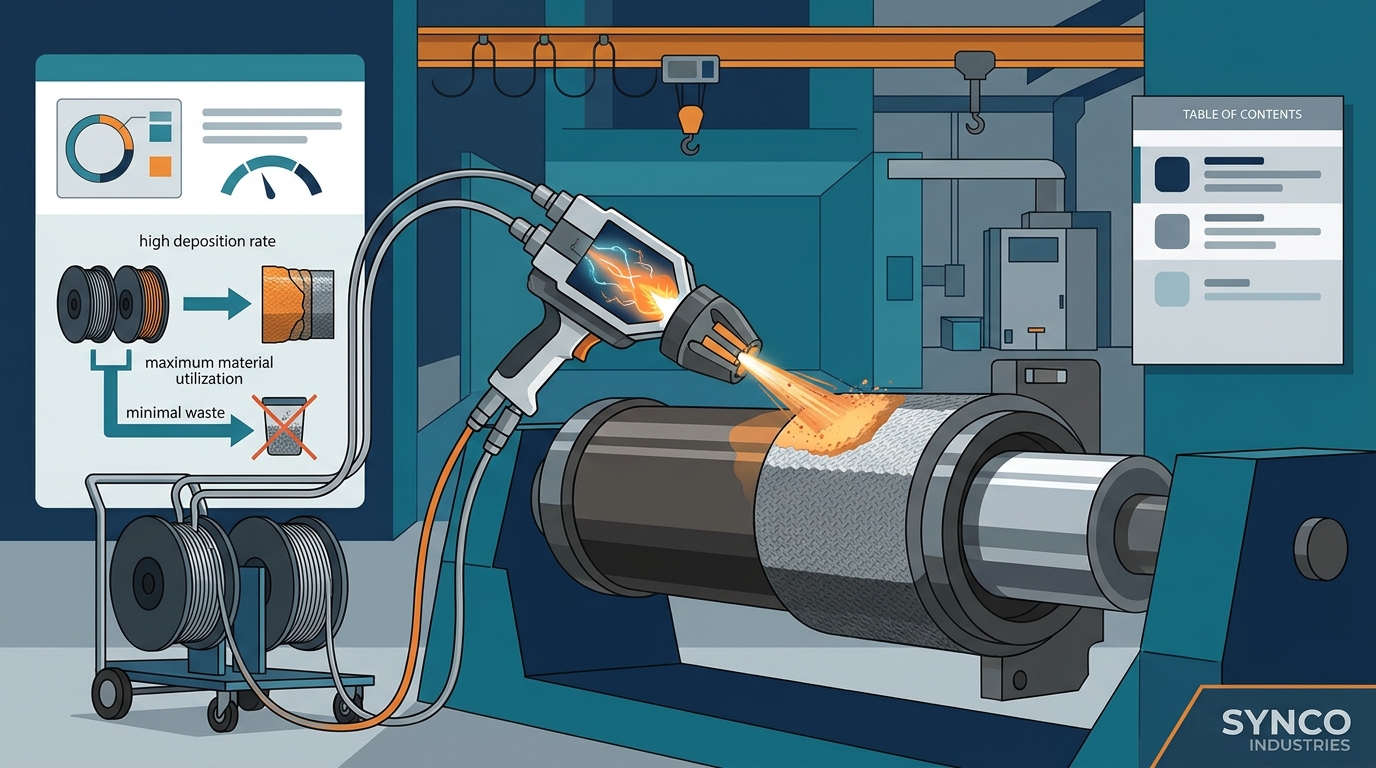
The choice of wire material determines the function of the coating. For corrosion protection, zinc and aluminum wires are standard. These metals provide sacrificial protection, similar to galvanizing, but with the flexibility of thermal spray. For wear resistance, alloys like nickel-chromium or copper-nickel are used. These materials harden the surface, resisting abrasion and impact. The best system for extending life is one that can handle the specific wire alloy required for your application. Synco Industries offers a range of thermal spray powders and wires to match these needs.
Adhesion and Coating Integrity
Restoration requires a coating that stays on. Arc spray coatings achieve excellent adhesion through mechanical interlocking and metallurgical bonding. The high velocity of the sprayed particles creates a strong bond with the substrate. This integrity is crucial for components under high stress. A coating that delaminates fails to extend life. Robust system design, including industrial-grade spray guns and stable power, ensures consistent coating quality. This reliability is why arc spray is trusted in infrastructure, power, and steel industries.
Key Takeaways
- High Deposition Rate: Arc spray offers one of the highest deposition rates among thermal spray processes, ideal for large components.
- Cost-Effective: The process has a low cost per kilogram of coating due to high material utilization and low energy consumption.
- Dimensional Build-Up: Arc spray is excellent for restoring worn parts to original dimensions, saving on replacement costs.
- Corrosion Protection: Zinc and aluminum arc spray coatings provide long-term corrosion resistance for structural steel.
- Wear Resistance: Alloy wires can be used to create hard, wear-resistant surfaces for moving parts.
- System Robustness: A reliable system with a heavy-duty power source and precision wire feeders is essential for consistent quality.
- 24/7 Duty: Modern arc spray systems are designed for continuous industrial operation, minimizing downtime.
Frequently Asked Questions
What is the best arc spray system for corrosion protection?
For corrosion protection, a twin-wire arc spray system using zinc or aluminum wire is the best choice. These systems provide high deposition rates and excellent adhesion, creating a durable sacrificial barrier against rust.
Can arc spray restore worn shafts and rollers?
Yes, arc spray is highly effective for dimensional build-up. It can restore worn shafts, rollers, and gears to their original specifications, extending their service life and avoiding the cost of new parts.
How does arc spray compare to flame spray?
Arc spray generally offers higher deposition rates and lower operating costs than flame spray. It is more energy-efficient and produces a denser coating, making it the preferred choice for most industrial applications.
What wire materials are used in arc spray?
Is arc spray suitable for large structural components?
Yes, arc spray is ideal for large structural components. Its high productivity allows for the rapid application of thick coatings on large surface areas, such as bridges, pipelines, and storage tanks.
How important is the power source in an arc spray system?
The power source is critical. A heavy-duty, stable power source ensures a consistent arc, which leads to uniform coating quality and strong adhesion. Synco Industries uses robust power sources in its systems to ensure reliability.
Conclusion
Choosing the right arc spray system is a strategic decision that directly impacts your operational costs and asset longevity. By focusing on high deposition rates and robust surface restoration capabilities, you can extend the life of your critical components significantly. Synco Industries provides industrial-grade arc spray systems engineered for corrosion protection, dimensional build-up, and wear resistance. To discuss your specific application and find the right solution, .