
Common Mistakes in Shot Blasting and Thermal Spray Operations and Prevention Strategies
Surface preparation and coating application are the foundational pillars of industrial asset protection. Recent industry data indicates that over 60% of coating failures are directly attributable to improper surface preparation rather than material defects. This statistic highlights a critical vulnerability in maintenance workflows where speed is often prioritized over precision. When operators overlook the nuanced requirements of shot blasting and thermal spray processes, the result is premature corrosion, delamination, and significant financial loss. Understanding these operational pitfalls is essential for maintaining asset integrity and extending the lifecycle of critical infrastructure. (Contact Us)
Surface Preparation Errors in Shot Blasting
Shot blasting is a mechanical process that uses high-speed projectiles to clean, strengthen, or finish a surface. The primary goal is to achieve a specific surface profile that ensures optimal coating adhesion. However, several common mistakes can compromise this objective. (About)
Inadequate Surface Profile Depth
One of the most frequent errors is failing to achieve the correct surface profile depth. The surface profile refers to the average roughness of the blasted surface. If the profile is too shallow, the coating lacks the mechanical key to adhere properly. Conversely, an overly aggressive profile can trap air or contaminants, leading to pinholes and blistering. Operators must calibrate their blasting media size and velocity to match the coating manufacturer's specifications.
Improper Media Selection
Selecting the wrong blasting media is a critical error. Steel shot, steel grit, aluminum oxide, and glass beads each serve different purposes. Using steel shot on a delicate aluminum surface can cause embedding and subsequent corrosion. Media selection must align with the substrate material and the desired surface finish. Synco provides expert consultation to help you choose the right media for your specific application, ensuring optimal results without damaging the base material.
Neglecting Surface Cleanliness
Even with perfect blasting, residual contaminants can ruin the finish. Oil, grease, salt, or dust left on the surface before blasting will be driven into the pores or remain as a barrier. A thorough pre-blast inspection and cleaning protocol are non-negotiable. Regular monitoring of the blasting chamber's vacuum system ensures that debris is effectively removed, maintaining a clean working environment.
Thermal Spray Process Failures
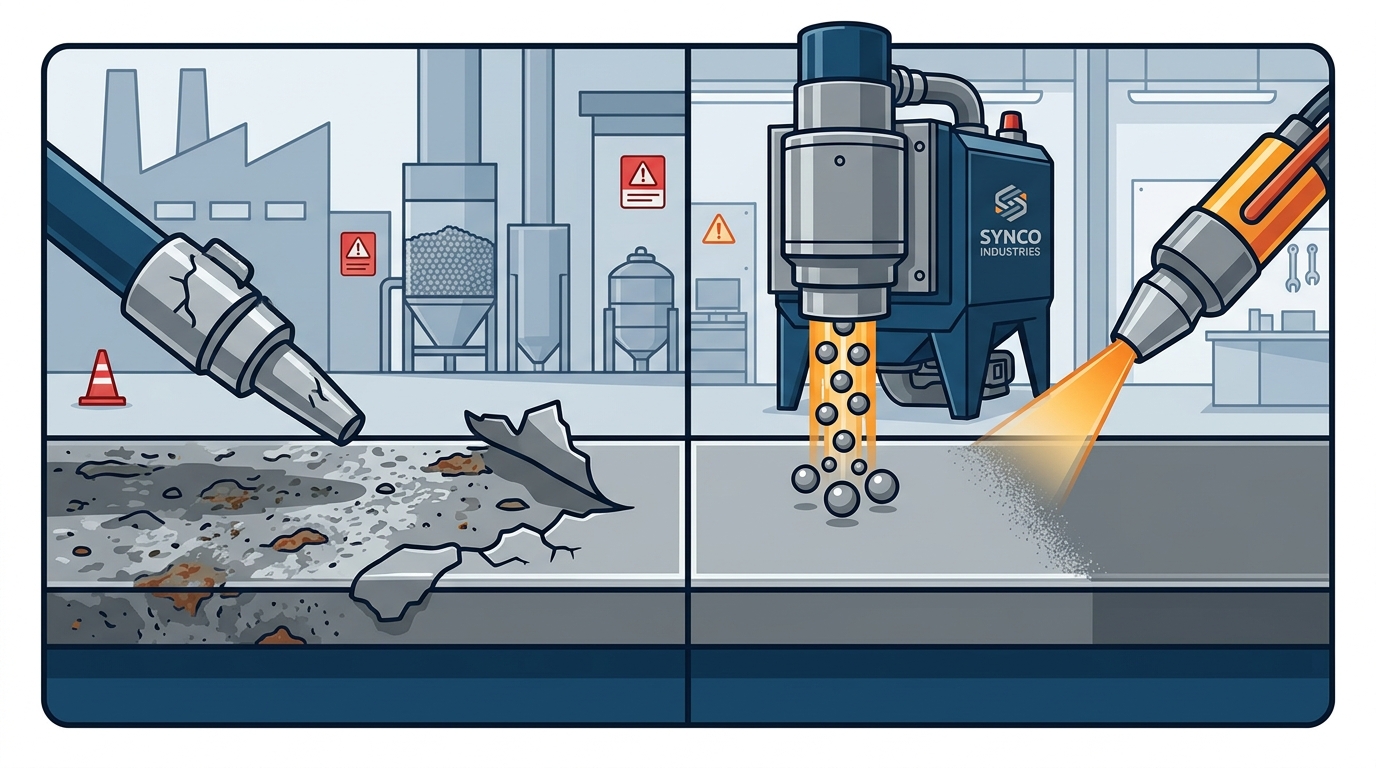
Thermal spray is a group of processes used to create coatings by depositing melted or molten material onto a substrate. This technique is widely used for wear resistance, corrosion protection, and thermal barriers. Despite its versatility, it is prone to specific operational failures.
Inconsistent Feed Rate
The consistency of the feed rate is crucial for uniform coating thickness. Variations in the powder or wire feed rate lead to uneven coatings, which can result in weak spots and premature failure. Modern thermal spray systems often include automated feed controls to mitigate this risk. Regular calibration of these systems ensures that the deposition rate remains stable throughout the process.
Incorrect Gas Pressure and Flow
The velocity and temperature of the spray particles are determined by the gas pressure and flow rate. Incorrect settings can lead to incomplete melting of the material, resulting in poor bonding and high porosity. Operators must strictly adhere to the technical data sheets for the specific material being sprayed. NACE International provides extensive guidelines on surface preparation and coating application that emphasize the importance of process control.
Substrate Preheating Oversights
Preheating the substrate is often overlooked but is essential for several reasons. It removes moisture, reduces thermal shock, and improves coating adhesion. Failure to preheat can lead to hydrogen embrittlement in steel substrates or poor bond strength. The preheating temperature must be carefully controlled to avoid altering the metallurgical properties of the base material.
Environmental Controls and Contamination
The environment in which surface preparation and coating application take place plays a significant role in the final outcome. Humidity, temperature, and airborne contaminants can all affect the quality of the work.
Humidity and Dew Point Management
High humidity can cause condensation on the substrate, even if the surface appears dry. This moisture prevents proper coating adhesion and can lead to rapid corrosion under the coating. Monitoring the dew point is critical. The substrate temperature should always be at least 3 degrees Celsius above the dew point. ISO 8502-6 outlines the methods for measuring humidity and dew point in surface preparation.
Airborne Contaminants
Dust, salt, and other airborne particles can settle on the prepared surface before the coating is applied. This contamination creates a barrier that weakens the bond. Enclosed blasting cabinets and controlled spray booths are essential for maintaining a clean environment. Regular air quality monitoring helps ensure that the workspace meets the necessary standards for high-performance coating application.
Equipment Maintenance and Calibration
Reliable equipment is the backbone of successful shot blasting and thermal spray operations. Neglecting maintenance leads to inconsistent results and increased downtime.
Nozzle Wear and Replacement
In shot blasting, the nozzle is a critical component that wears down over time. A worn nozzle alters the blast pattern and reduces efficiency, leading to uneven surface preparation. Regular inspection and timely replacement of nozzles are necessary to maintain consistent performance. Synco's shot blasting services utilize state-of-the-art equipment with regular maintenance schedules to ensure optimal performance.
Thermal Spray Gun Maintenance
Thermal spray guns require meticulous maintenance to function correctly. Clogged nozzles, worn liners, and damaged electrodes can all affect the spray quality. Following the manufacturer's maintenance guidelines and performing regular inspections can prevent unexpected failures. Proper cleaning and storage of the equipment also extend its lifespan and ensure consistent results.
Calibration of Measurement Tools
Accurate measurement of surface profile, coating thickness, and environmental conditions is vital. Uncalibrated tools can provide false readings, leading to incorrect process adjustments. Regular calibration of profilometers, thickness gauges, and hygrometers ensures that the data used for decision-making is reliable.
Safety Compliance and Risk Management
Both shot blasting and thermal spray operations involve significant hazards, including high-pressure systems, toxic fumes, and noise. Adhering to safety protocols is not just a regulatory requirement but a critical component of operational success.
Respiratory Protection
Blasting generates fine dust that can be harmful if inhaled. Operators must wear appropriate respiratory protection, such as supplied-air respirators, to prevent silicosis and other respiratory diseases. Similarly, thermal spray can produce metal fumes that require ventilation and filtration systems. OSHA regulations provide detailed guidelines on respiratory protection and ventilation requirements for these industries.
Noise Control
Shot blasting is a noisy process that can cause hearing damage over time. Using noise-dampening materials and providing hearing protection to operators is essential. Regular audiometric testing helps monitor the health of workers exposed to high noise levels.
Fire and Explosion Prevention
Certain blasting media and coating materials can be flammable or explosive. Proper storage, handling, and disposal of these materials are necessary to prevent accidents. Grounding equipment to prevent static discharge is also crucial, especially when using combustible dusts.
Key Takeaways
- Surface Profile is Critical: Achieving the correct surface profile depth is essential for coating adhesion and must be verified with calibrated tools.
- Media Selection Matters: Using the wrong blasting media can damage the substrate or fail to clean it effectively, leading to coating failure.
- Environmental Control is Non-Negotiable: Humidity and dew point must be monitored closely to prevent condensation and ensure proper curing.
- Equipment Maintenance Prevents Downtime: Regular inspection and replacement of worn parts like nozzles and liners ensure consistent quality.
- Safety is Paramount: Adhering to OSHA and local safety regulations protects workers and ensures operational continuity.
- Process Consistency Reduces Waste: Stable feed rates and gas pressures minimize rework and material waste.
- Expert Consultation Adds Value: Partnering with specialists like Synco provides access to advanced techniques and proven strategies for surface treatment.
Frequently Asked Questions
What is the most common cause of coating failure?
The most common cause of coating failure is inadequate surface preparation. This includes improper cleaning, incorrect surface profile, and contamination. Ensuring a clean, properly profiled surface is the first step to a successful coating application.
How often should blasting nozzles be replaced?
Blasting nozzles should be replaced when the orifice diameter increases by more than 10% from its original size. This typically happens after hundreds of hours of operation, depending on the media used. Regular measurement is recommended.
What is the ideal dew point for coating application?
The substrate temperature should be at least 3 degrees Celsius above the dew point. This prevents condensation on the surface, which can compromise adhesion. Monitoring the dew point in real-time is best practice.
Can thermal spray be used on all metals?
Thermal spray can be applied to a wide range of metals, including steel, aluminum, and titanium. However, the substrate must be able to withstand the heat of the process without being damaged. Preheating and post-treatment may be required for some materials.
What safety equipment is required for shot blasting?
Operators must wear supplied-air respirators, hearing protection, and protective clothing. The blasting area must be well-ventilated and equipped with dust collection systems. Compliance with local safety regulations is mandatory.
How does Synco ensure quality in its services?
Synco employs rigorous quality control measures, including regular equipment calibration, trained personnel, and adherence to international standards. We use advanced technology and proven methodologies to deliver consistent, high-quality results.
What is the difference between shot blasting and sandblasting?
Shot blasting uses spherical steel shots for peening and cleaning, while sandblasting uses angular abrasives for aggressive cutting. Shot blasting is generally preferred for strengthening and uniform cleaning, whereas sandblasting is used for heavy rust removal.
Partner with Synco for Surface Solutions
Avoiding these common mistakes requires expertise, precision, and the right equipment. Synco is your trusted partner for comprehensive shot blasting and thermal spray solutions. We help industries optimize their surface treatment processes to achieve superior durability and performance. Contact us today to discuss your project requirements and discover how our services can protect your assets.