

Heavy industrial manufacturers implement thermal spray technology by integrating specialized coating systems into existing production lines to enhance surface durability and corrosion resistance. Synco Industries supports this transition by providing robust equipment and consumables tailored for demanding environments. This approach ensures that critical components withstand extreme mechanical and chemical stress, thereby extending asset life and reducing maintenance downtime.
Assessing Surface Requirements and Coating Selection
Successful implementation begins with a rigorous assessment of the substrate and the specific failure modes it faces. Manufacturers must identify whether the primary threat is wear, corrosion, or thermal fatigue. For example, a steel shaft in a heavy press may require a hardfacing alloy to resist abrasive wear, while a marine component might need a corrosion-resistant nickel-based coating. Synco Industries offers a range of thermal spray powders that allow engineers to match the coating chemistry to the operational environment.
The choice of coating material directly impacts the longevity of the component. By selecting the right powder, manufacturers can achieve the desired hardness and adhesion without altering the base material's core properties. This precision is critical in heavy industry, where downtime is costly and component replacement is complex. according to Flame Spray Thermal
Selecting the Right Thermal Spray System
Integrating Coating Processes into Production Lines
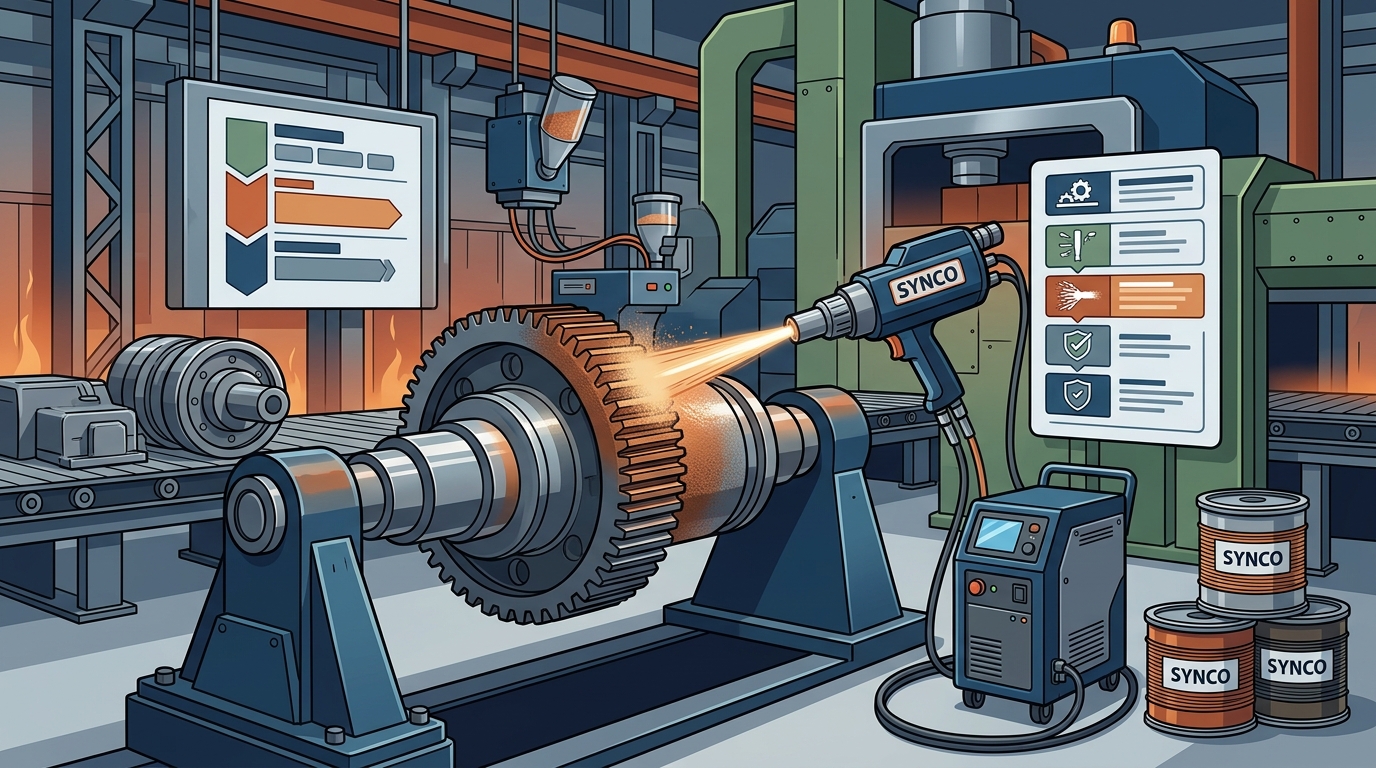
Integrating thermal spray into an existing production line requires careful planning to avoid bottlenecks. The process involves surface preparation, coating application, and post-treatment. Each step must be synchronized with the rest of the manufacturing workflow. Synco Industries provides thermal spray equipments that can be configured to fit into automated or semi-automated lines.
Surface preparation is a critical step that determines coating adhesion. Inadequate cleaning or blasting can lead to delamination, a common failure mode in poorly implemented systems. By using compatible shot blasting machines for surface preparation, manufacturers ensure that the substrate is clean and roughened to the optimal profile for coating adhesion. This integration of blasting and spraying creates a seamless workflow that enhances overall productivity.
Ensuring Quality Control and Consistency
Quality control is non-negotiable in heavy industry, where coating defects can lead to catastrophic failures. Manufacturers must implement rigorous inspection protocols to verify coating thickness, adhesion, and porosity. Synco Industries emphasizes quality assurance in its equipment design, ensuring that the systems provide consistent output over long operating periods. according to Flame Spray Thermal
Regular maintenance of the spray equipment is also essential to maintain coating quality. Wear parts such as nozzles and electrodes must be inspected and replaced according to a strict schedule. By adhering to these maintenance protocols, manufacturers can ensure that every component meets the required specifications, thereby protecting their reputation and customer trust.
Training Operators and Building Technical Expertise
Even the most advanced thermal spray system is only as good as the operator who runs it. Training is a critical component of successful implementation. Operators must understand the physics of the spray process, the properties of the coating materials, and the importance of process parameters. Synco Industries provides support to help manufacturers build the technical expertise needed to operate their equipment effectively.
Building a culture of continuous improvement is also important. Operators should be encouraged to document process parameters and outcomes, creating a knowledge base that can be used to optimize future runs. This approach not only improves coating quality but also helps in troubleshooting issues when they arise. By investing in training and knowledge management, manufacturers can maximize the return on their investment in thermal spray technology.
Key Takeaways
- Assess substrate failure modes to select the appropriate coating material.
- Choose a thermal spray system that matches the required coating thickness and material.
- Integrate surface preparation and coating application into a synchronized workflow.
- Implement rigorous quality control protocols to verify coating adhesion and thickness.
- Train operators thoroughly to ensure consistent process execution.
- Maintain equipment regularly to prevent wear-related defects.
- Document process parameters to build a knowledge base for continuous improvement.
Frequently Asked Questions
What is thermal spray technology?
Thermal spray technology is a process that applies coatings to a substrate by projecting molten or semi-molten material at high velocity.
Why is surface preparation important for thermal spray?
Surface preparation is important because it ensures proper adhesion between the coating and the substrate, preventing delamination.
What types of materials can be used in thermal spray?
Thermal spray can use a wide range of materials, including metals, ceramics, and polymers, depending on the application.
How does Synco Industries support thermal spray implementation?
Synco Industries supports implementation by providing a range of thermal spray systems, powders, and equipment tailored to industrial needs.
What are the common failure modes in thermal spray coatings?
Common failure modes include delamination, cracking, and excessive porosity, often caused by poor surface preparation or process errors.
How long does it take to implement a thermal spray system?
The time required for implementation varies depending on the complexity of the integration, but it typically involves planning, installation, and training phases.