
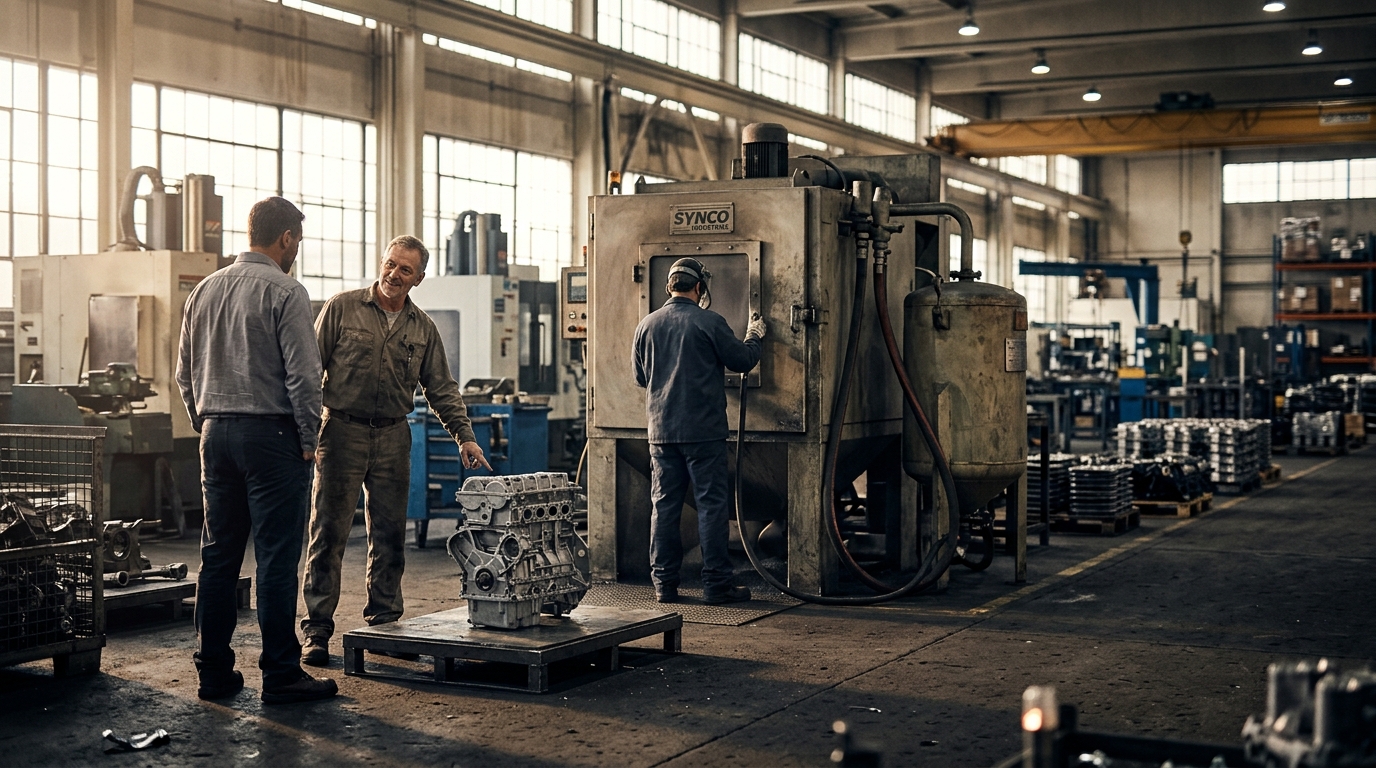
How to Select and Install Shot Blasting Machines for Automotive and Foundry Operations
Industrial surface preparation is the critical first step in ensuring the longevity and structural integrity of automotive components and heavy castings. According to recent industry data, over 60% of premature component failures in the automotive sector stem from inadequate surface preparation before coating or welding. This statistic highlights why selecting the correct shot blasting technology is not merely an operational choice but a fundamental quality control mandate. Synco Industries has been a leader in this space since 1982, providing precision engineering solutions that meet the rigorous demands of modern manufacturing. (Contact Us 8211 Synco)
Understanding Shot Blasting Fundamentals
Shot blasting is a cold working process that uses high-speed projectiles to clean, strengthen, or finish metal surfaces. Shot blasting is the mechanical process of propelling abrasive media at high velocity against a workpiece to remove contaminants and induce compressive stress. This process is essential in automotive manufacturing for removing rust, scale, and sand from engine blocks, chassis parts, and suspension components.
In foundry operations, the primary goal is often deflashing and cleaning castings. The abrasive media, typically cut wire shots or steel grit, impacts the surface to create a uniform profile. This profile increases the surface area, allowing coatings to adhere more effectively. The choice of media and machine type directly influences the final surface finish and the structural durability of the part.
Synco Industries specializes in manufacturing these high-performance systems. Their expertise spans from standard airless blasting machines to customized solutions for complex geometries. With over 30 years of experience, the company has established a reputation for reliability in heavy industrial environments. For more details on their product range, visit the Shot Blasting Machines page.
Key Selection Criteria for Automotive and Foundry
Selecting the right shot blasting machine requires a detailed analysis of your production needs. The wrong choice can lead to excessive downtime, high operational costs, and inconsistent quality. Here are the critical factors to consider.
1. Component Geometry and Size
The size and shape of the workpiece dictate the machine type. Large structural steel beams require hangar-type machines, while small automotive parts may benefit from table-type or centrifugal wheel blasters. Synco offers Hangar Type Shot Blasting Machines for large-scale infrastructure and Table Type Shot Blasting Machines for smaller, precision components.
2. Surface Finish Requirements
Different industries have different surface roughness standards. Automotive parts often require a specific anchor profile for paint adhesion, while foundry castings may need a smoother finish for aesthetic purposes. The abrasive media size and velocity must be matched to these requirements. Synco provides various Cut Wire Shots designed to achieve optimal surface profiles.
3. Production Volume and Throughput
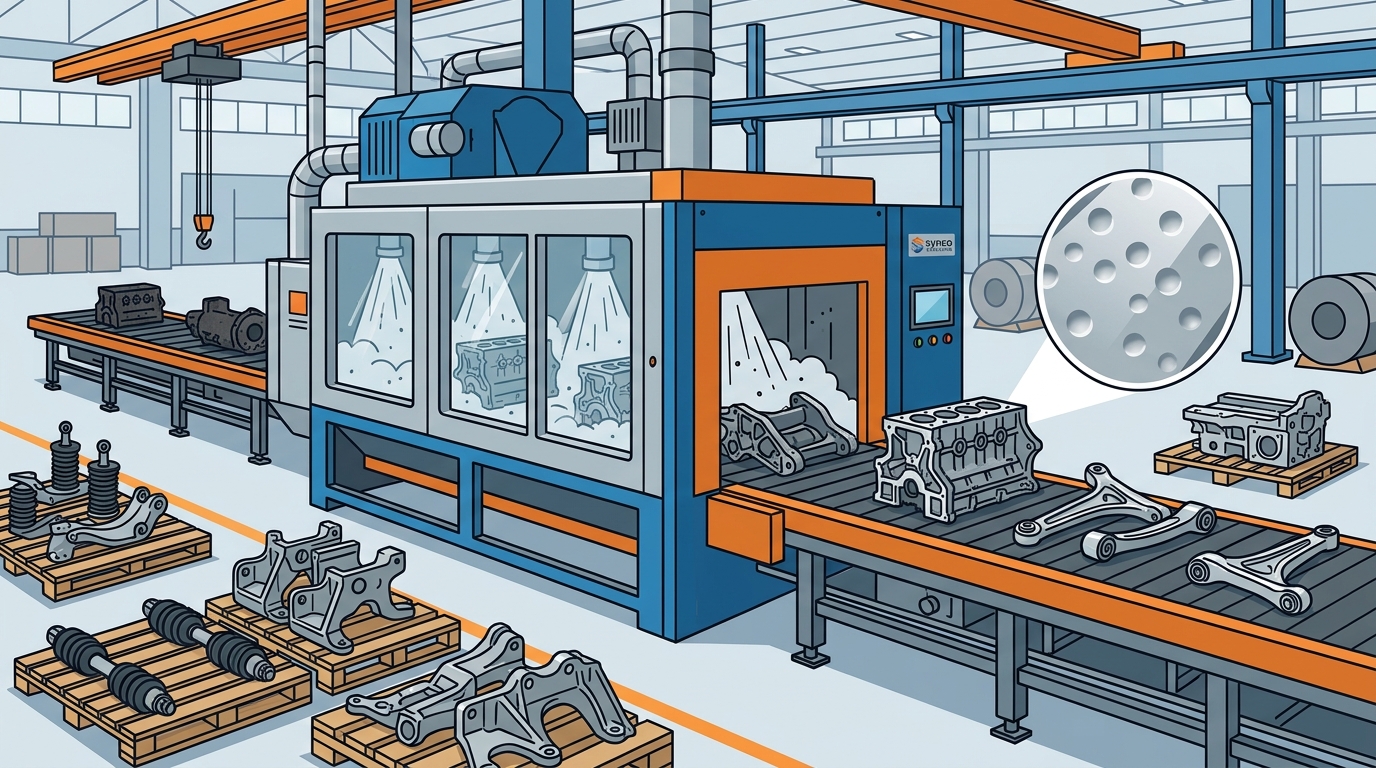
High-volume automotive lines demand machines with rapid cycle times and automated loading systems. Foundry operations may prioritize robustness and ease of maintenance over speed. Synco’s Multi Satellite Blasting Machines are engineered for high-throughput applications, ensuring consistent results across large batches.
4. Dust Collection and Environmental Compliance
Modern industrial regulations require strict control over airborne particulates. A well-designed blasting system must include an integrated dust collector. Synco’s systems are designed with efficient separation mechanisms to minimize media loss and maintain a clean working environment. Learn more about their Blast Rooms and environmental solutions.
Comparing Machine Types and Applications
Understanding the differences between machine types is crucial for making an informed decision. Below is a comparison of common shot blasting machines used in automotive and foundry sectors.
| Machine Type | Best For | Key Advantage | Typical Application |
|---|---|---|---|
| Airless Blasting Machine | Large structures, heavy fabrication | High efficiency, low media consumption | Bridge construction, ship hulls |
| Portable Blasting Machine | On-site repairs, irregular shapes | Flexibility, mobility | Field maintenance, custom projects |
| Vacuum Blasting Machine | Delicate surfaces, dust-sensitive areas | Containment, safety | Automotive interior parts, electronics |
| Tumblast Machine | Small, high-volume parts | Uniform coverage, automation | Forgings, castings, springs |
For specialized needs, Synco also offers Deflashing Machines and Cryogenic Deflashing Machines for thermoset components, ensuring comprehensive surface treatment capabilities.
Step-by-Step Installation Protocol
Proper installation is as critical as machine selection. A poorly installed system can lead to safety hazards, inefficient performance, and premature wear. Follow these steps for a successful installation.
Step 1: Site Preparation and Foundation
Ensure the installation site has a solid, level foundation capable of supporting the machine’s weight and vibration. For large hangar-type machines, this may require reinforced concrete pads. Check the About Us page for Synco’s engineering standards.
Step 2: Utility Connections
Connect the machine to power, compressed air, and dust collection systems. Verify that the electrical supply matches the machine’s voltage and amperage requirements. Improper connections can damage the control panel and motors.
Step 3: Abrasive Media Loading
Load the appropriate abrasive media into the hopper. Use the recommended media size and type for your specific application. Overloading the hopper can cause mechanical strain and inconsistent blasting.
Step 4: Calibration and Testing
Calibrate the machine settings, including wheel speed, blast angle, and conveyor speed. Perform test runs with sample parts to verify the surface finish and cleanliness. Adjust settings as needed to meet quality standards.
Step 5: Safety Checks
Install all safety guards, interlocks, and emergency stop buttons. Ensure that operators are trained on safe operating procedures. Synco’s machines are CE certified, adhering to international safety standards. Read more about their Quality Assurance processes.
Maintenance and Operational Efficiency
Regular maintenance is essential for maximizing the lifespan and performance of your shot blasting machine. Key maintenance tasks include:
- Inspecting Wear Parts: Check nozzles, liners, and blades regularly for wear. Replace them before they fail to avoid costly downtime.
- Cleaning the Dust Collector: Ensure the dust collector is functioning efficiently to maintain air quality and visibility.
- Lubricating Moving Parts: Apply lubricant to bearings, gears, and chains as per the manufacturer’s recommendations.
- Monitoring Media Quality: Sieve the abrasive media to remove fines and broken particles. Poor quality media reduces efficiency and increases wear.
Synco Industries provides Spares and Air Assisted Spare Parts to support your maintenance needs. Their 24/7 support network ensures prompt assistance for any technical issues.
Key Takeaways
- Shot blasting is a critical process for surface preparation in automotive and foundry operations.
- Selecting the right machine depends on component geometry, surface finish requirements, and production volume.
- Synco Industries has been a leader in shot blasting solutions since 1982, serving over 1000 clients globally.
- Proper installation and regular maintenance are essential for optimal performance and safety.
- Synco offers a wide range of machines, including airless, portable, and vacuum blasting systems.
- Their products are ISO certified and CE compliant, ensuring high quality and safety standards.
- Investing in the right shot blasting technology can significantly reduce component failures and improve product longevity.
Frequently Asked Questions
What is the difference between shot blasting and sandblasting?
Shot blasting uses metallic abrasives like steel shot or grit, while sandblasting uses silica sand. Shot blasting is more efficient and environmentally friendly, as it does not produce harmful silica dust.
How often should I replace the abrasive media?
The frequency depends on the type of media and the application. Regular sieving and monitoring of media quality can help determine when replacement is needed. Synco’s Abrasives page provides guidance on media selection.
Can Synco Industries customize shot blasting machines?
Yes, Synco specializes in customized solutions tailored to specific industry applications and production needs. Contact their team for a detailed consultation.
What safety certifications do Synco’s machines have?
Synco’s machines are CE certified and comply with international safety standards. They also undergo rigorous quality control processes to ensure reliability.
How does Synco support its customers after installation?
Synco offers 24/7 support, ready spare parts availability, and a strong service network to ensure minimal downtime and optimal performance.
What industries does Synco serve?
Synco serves diverse industries including automotive, foundry, structural steel, heavy fabrication, and infrastructure. Their clients include ISRO, HMT, and the Indian Navy.
What is the lifespan of a shot blasting machine?
With proper maintenance and regular servicing, a shot blasting machine can last for decades. Synco’s robust engineering ensures long operational life.
Contact Synco Industries
Ready to upgrade your surface preparation capabilities? Contact Synco Industries today for a free quote and expert consultation. Their team of engineers is ready to help you select the perfect shot blasting solution for your automotive or foundry operations. Visit the Contact Us page or call +91 9829422258 to get started.