
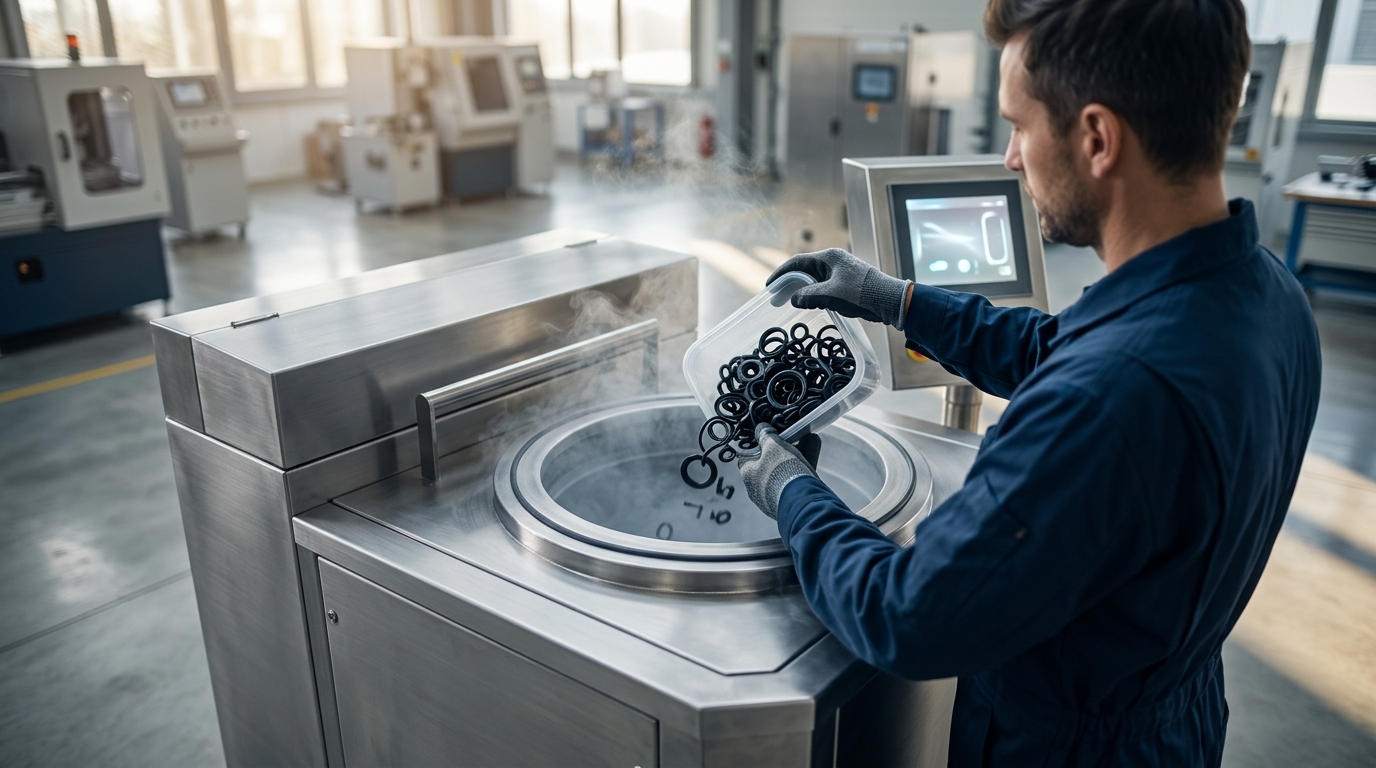
Step-by-Step Guide to Operating a Cryogenic Deflashing Machine for Rubber and Silicone Components
Cryogenic deflashing has become the industry standard for removing flash from complex rubber and silicone parts, with adoption rates increasing significantly across automotive and medical device manufacturing sectors. According to recent industrial processing reports, cryogenic methods reduce post-processing labor costs by up to 40% compared to traditional mechanical trimming. This guide outlines the precise operational workflow for Synco Industries' cryogenic deflashing systems, ensuring your team achieves consistent, high-quality results while maintaining strict safety protocols. (Contact Us 8211 Synco)
Understanding Cryogenic Deflashing Technology
Cryogenic deflashing is a surface finishing process that utilizes liquid nitrogen to embrittle rubber, silicone, and thermoset components, allowing flash to be removed without damaging the base material. Synco Industries specializes in manufacturing high-performance Cryogenic Deflashing Machines designed for consistent results and long operational life. Unlike thermal or chemical methods, this technique preserves the dimensional integrity of delicate parts. (About Us 8211 Synco)
The process relies on the differential thermal contraction between the rubber part and its flash. When cooled to temperatures near -100°C, the flash becomes brittle and shatters upon impact, while the main component retains its elasticity. This technology is critical for industries requiring high precision, such as aerospace and medical device manufacturing, where manual trimming is often inconsistent or impossible.
Safety Preparation and Machine Setup
Before initiating any operation, ensure the workspace is equipped with appropriate personal protective equipment (PPE). Liquid nitrogen poses significant risks, including frostbite and asphyxiation in confined spaces. Operators must wear insulated gloves, face shields, and safety goggles at all times.
Verify that the Synco Industries machine is installed in a well-ventilated area. The ventilation system must be capable of displacing nitrogen gas rapidly to maintain oxygen levels above 19.5%. Check that the nitrogen supply lines are secure and free of leaks. Inspect the machine's grounding connections to prevent static discharge, which can be hazardous when handling flammable materials or in dusty environments.
Ensure the blast chamber door seals are intact. Damaged seals can lead to rapid nitrogen loss and inconsistent cooling. Synco's machines are CE certified and built to meet rigorous industrial safety standards, but regular inspection of these components is the operator's responsibility.
Loading Procedure and Chamber Sealing
Proper loading is essential for uniform cooling. Place the rubber or silicone components into the blast chamber. Avoid overloading the chamber, as this can block nitrogen flow and result in uneven cooling. For optimal results, parts should be spaced to allow free movement during the blasting phase.
Insert the blasting media, typically dry ice or specialized plastic grit, into the designated hopper. The type and size of media depend on the part's geometry and the desired surface finish. Synco Industries offers a range of Abrasives and Cut Wire Shots suitable for various applications. For delicate silicone parts, softer media like plastic grit is recommended to prevent surface marring.
Seal the chamber door securely. Modern Synco cryogenic machines feature interlock systems that prevent operation if the door is not fully closed. Verify that the pressure gauge reads within the normal operating range before proceeding.
Managing the Cooling Cycle
Initiate the nitrogen injection sequence. The machine will automatically regulate the flow rate to achieve the target temperature. Cooling times vary based on part mass, material type, and ambient conditions. Typically, rubber components require 10 to 15 minutes to reach the optimal embrittlement temperature.
Monitor the temperature display closely. Overcooling can make the base material too brittle, leading to cracking, while undercooling may result in incomplete flash removal. Synco's control systems provide precise temperature management to ensure repeatability. For complex geometries, a longer cooling cycle may be necessary to ensure the core of the part reaches the target temperature.
According to industrial efficiency studies, precise temperature control reduces cycle times by up to 20% while improving part quality. This balance is critical for high-volume production environments where throughput and quality are equally important.
Executing the Abrasive Action Phase
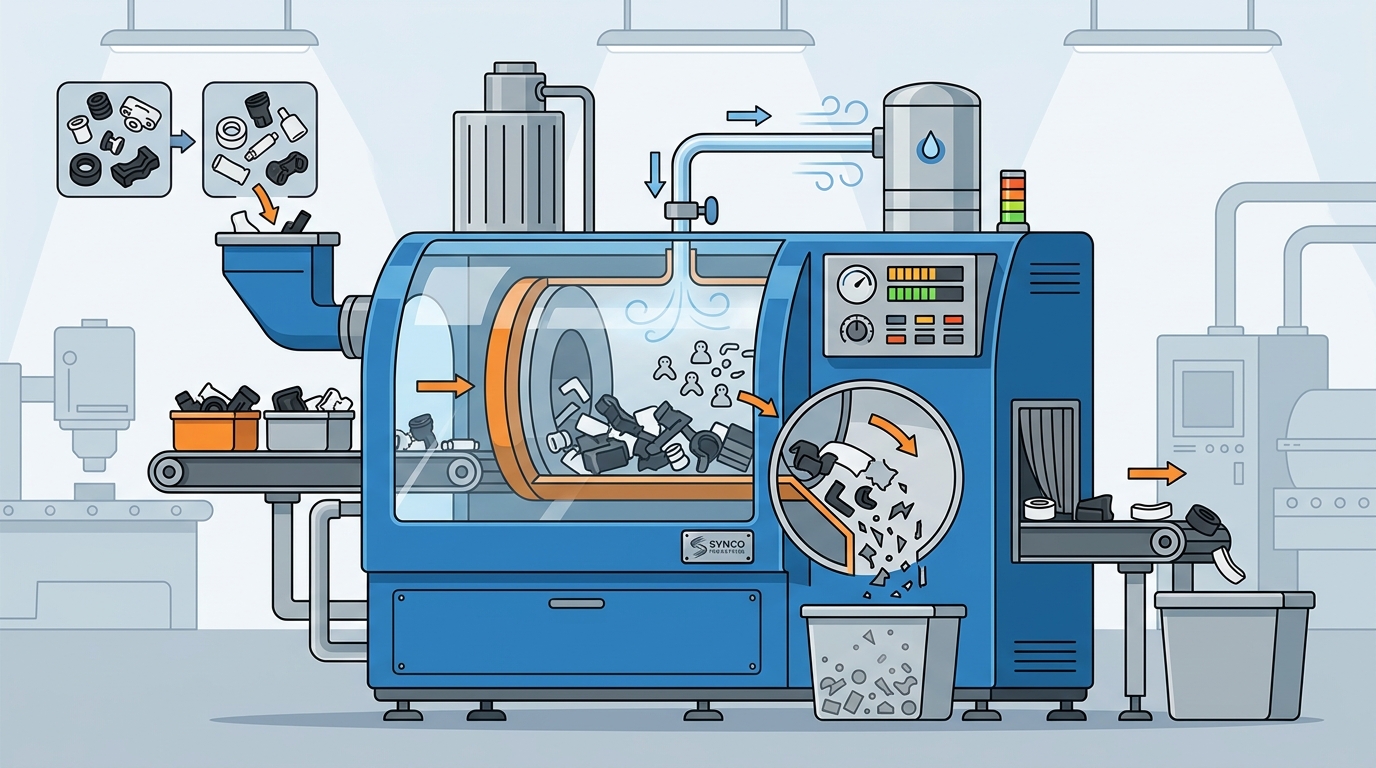
Once the target temperature is reached, the blasting phase begins. The machine activates the internal agitators or blast wheels to propel the media against the parts. This action shatters the embrittled flash while leaving the flexible base material intact.
Adjust the blast pressure and duration based on the part's requirements. Higher pressure and longer durations are suitable for thick flash, while lower settings are needed for delicate features. Synco Industries' Deflashing Machines are engineered to deliver uniform cleaning and descaling, ensuring consistent results across every batch.
Listen for changes in the sound of the blasting. A shift from a sharp cracking sound to a dull thud may indicate that the flash has been removed. Avoid excessive blasting, which can damage the part surface or cause media embedding. The goal is to remove the flash cleanly without altering the part's dimensions.
Recovery, Unloading, and Post-Processing
After the blasting cycle completes, initiate the recovery phase. The machine will vent the remaining nitrogen and allow the chamber to warm up. This step is crucial for safety, as opening the door while the chamber is still cold can cause rapid condensation and potential frostbite.
Once the temperature stabilizes, open the chamber and remove the parts. Use insulated tools to handle the components until they reach ambient temperature. Inspect the parts for any remaining flash or media residue. If necessary, perform a secondary cleaning step using compressed air or a vacuum system to remove loose media.
Synco Industries provides comprehensive support for post-processing, including Spares and maintenance kits. Regular cleaning of the blast chamber and media recovery system ensures long-term operational efficiency. Keep a log of cycle parameters for each part type to streamline future operations.
Maintenance and Operational Best Practices
Regular maintenance is key to maximizing the lifespan of your cryogenic deflashing machine. Synco Industries recommends a monthly inspection of all mechanical and electrical components. Check the nitrogen supply lines for leaks and replace worn seals promptly.
Calibrate the temperature sensors and pressure gauges annually to ensure accuracy. Use only high-purity liquid nitrogen to prevent contamination of the blast chamber. Synco's machines are designed for industrial reliability, built to perform efficiently in demanding, high-load production environments.
Train all operators on the specific protocols for your machine model. Consistent operation reduces the risk of accidents and extends the life of the equipment. Synco Industries offers 24/7 support and a network of service technicians to assist with any operational challenges.
Key Takeaways
- Cryogenic deflashing reduces labor costs by up to 40% compared to manual trimming.
- Synco Industries has over 30 years of experience in precision engineering and manufacturing.
- Proper PPE is mandatory due to the risks associated with liquid nitrogen.
- Temperature control is critical to prevent part damage and ensure consistent flash removal.
- Regular maintenance of seals and sensors ensures long-term operational efficiency.
- Synco's machines are CE certified and ISO compliant, meeting global safety standards.
- Choosing the right media is essential for delicate materials like silicone.
Frequently Asked Questions
What materials can be processed using a cryogenic deflashing machine?
Cryogenic deflashing is suitable for rubber, silicone, thermoset plastics, and some elastomers. It is not recommended for thermoplastics, which may not embrittle sufficiently.
How does Synco Industries ensure the quality of its deflashing machines?
Synco Industries employs robust quality control processes and engages third-party inspectors. All machines are CE certified and built to meet ISO standards for industrial equipment.
What safety measures are required when operating liquid nitrogen equipment?
Operators must wear insulated gloves, face shields, and safety goggles. The workspace must be well-ventilated to prevent oxygen displacement. Regular safety drills are recommended.
Can cryogenic deflashing damage delicate parts?
When operated correctly, cryogenic deflashing is safe for delicate parts. The key is precise temperature control and appropriate media selection to avoid over-blasting.
What is the typical lifespan of a Synco cryogenic deflashing machine?
With proper maintenance, Synco machines are designed for long operational life, often exceeding 10 years of continuous use in industrial environments.
Does Synco Industries offer customization for deflashing machines?
Yes, Synco Industries specializes in customized solutions tailored to specific industry applications and production needs, including blast room configurations and automated systems.
How often should the blast media be replaced?
The frequency of media replacement depends on the volume of production and the type of media used. Regular inspection for wear and contamination is essential.
Ready to Optimize Your Deflashing Process?
Enhance your production efficiency with Synco Industries' state-of-the-art cryogenic deflashing solutions. Our team of experts is ready to assist you in selecting the right machine for your specific needs. Contact us today to schedule a consultation or request a free quote for your project.